
 Worksheets
Cells Review S137
Total questions: 56
Worksheet time: 57mins
Name
Class
Date
1.
You can find total magnification by which of the following methods?
a)
ocular PLUS objective
b)
ocular TIMES objective
c)
ocular MINUS objective
d)
ocular DIVIDED BY objective
2.
When would you use the diaphragm?
a)
When you wanted to move the stage
b)
When you wanted to adjust the light
c)
When you wanted to put the microscope away
d)
When you sneeze
3.
Find the total magnification:
Eyepiece = 10X
Objective lens = 55X
Eyepiece = 10X
Objective lens = 55X
a)
10x
b)
55x
c)
65x
d)
550x
4.

What is number 14?
a)
stage clips
b)
stage
c)
diaphragm
d)
light source
5.
When looking through your microscope, you move your slide to the right- It appears
a)
to move to the right
b)
to stay the same
c)
to move to the left
d)
vanish
6.
Never use this when on high power.
a)
Fine adjustment
b)
Diaphragm
c)
Course adjustment
d)
Stage clips
7.

What is number 16?
a)
revolving nosepiece
b)
objective lense
c)
body tube
d)
eyepiece
8.
True or False: Always use fine adjustment to bring a microscope into focus at first, and then coarse.
a)
True
b)
False
9.
This organelle takes food and turns it into ENERGY for plant and animal cells.
a)
Chloroplast
b)
Mitochondria
c)
Lysosome
d)
Ribosome
10.
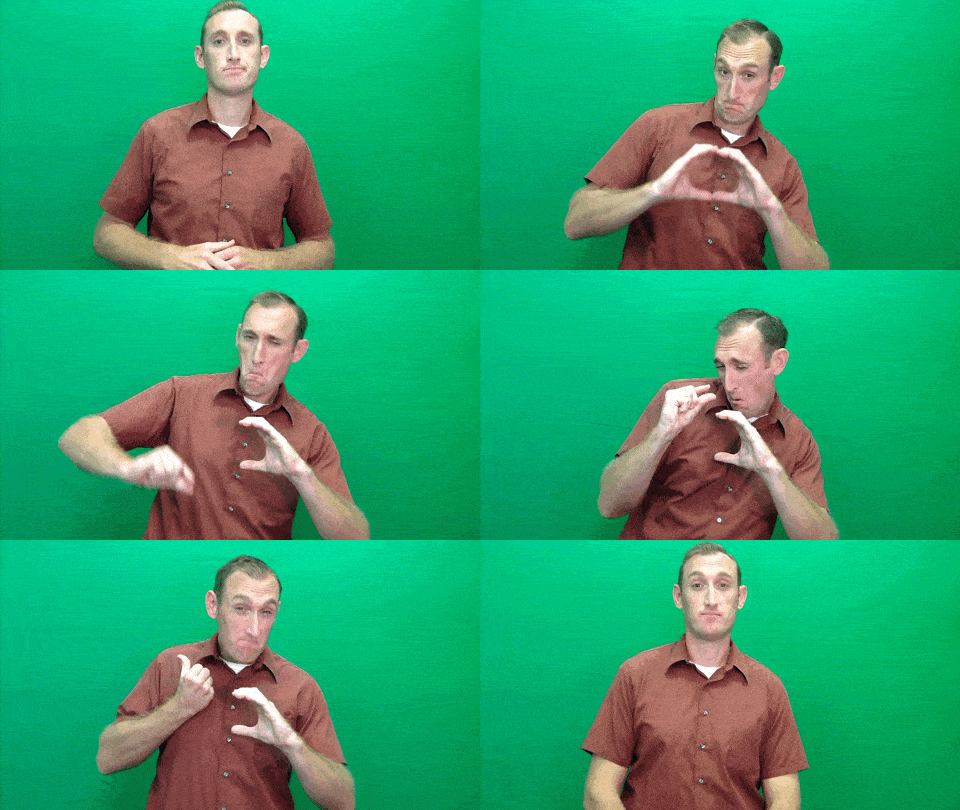
The ___________ is the basic unit of life
a)
organ
b)
cell
c)
atom
d)
tissue
11.
The site of photosynthesis
a)
ribosome
b)
mitochondria
c)
chloroplast
d)
nucleus
12.

Directs all cell activities through the DNA located there.
a)
Lysosomes
b)
Nucleus
c)
ribosomes
d)
Mitochondria
13.
Which of the following is directly involved in the transportation of materials inside/within the cell?
a)
Endoplasmic Reticulum
b)
Vacuole
c)
Lysosome
d)
Mitochondria
14.
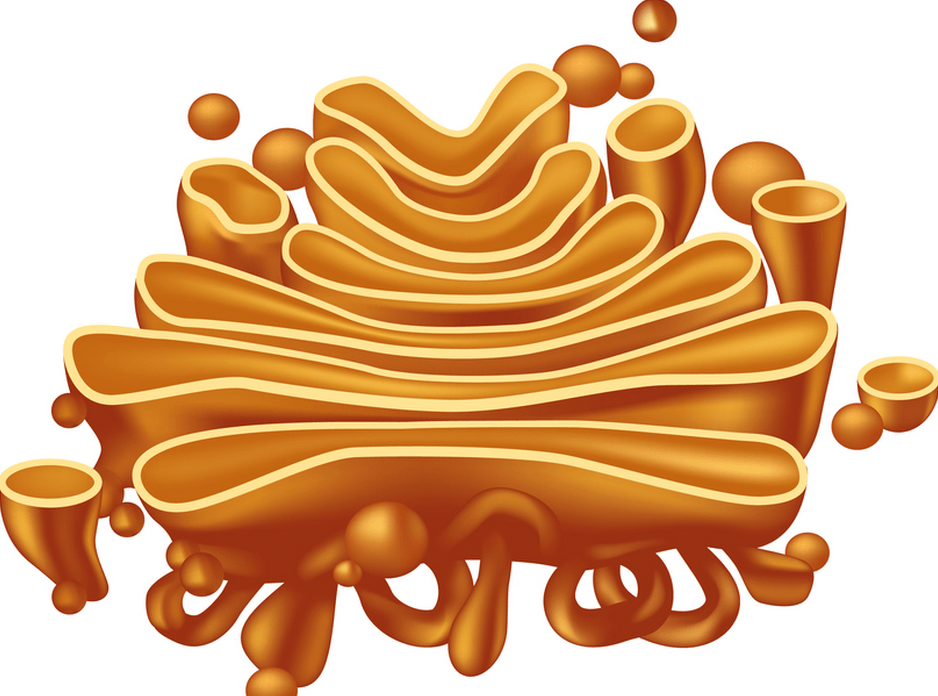
I am a protein packaging and shipping machine! Who am I?
a)
vacuole
b)
ribosome
c)
mitochondrion
d)
golgi apparatus
15.
What is found in both plant and animal cells but is much larger in plant cells?
a)
Nucleus
b)
Mitochondria
c)
Chloroplast
d)
Vacuole
16.
Where are proteins made?
a)
Golgi body
b)
Mitochondria
c)
Chromosomes
d)
Ribosomes
17.
A rigid layer that lies outside the cell's membrane is...
a)
Cytoskeleton
b)
Cilia
c)
Cell Wall
d)
Flagella
18.
What organelle helps with cell digestion?
a)
Lysosomes
b)
Ribosomes
c)
Golgi Complex
d)
ER
19.
What is the gel-like substance inside of cells called?
a)
photoplasm
b)
photosynthesis
c)
cytoskeleton
d)
cytoplasm
20.
Controls what enters and leaves the cell
a)
Mitochondria
b)
Cell Membrane
c)
Cell Wall
d)
Nucleus
21.

According to cell theory, where did this cell come from?
a)
another living cell
b)
energy from sun
c)
a multicellular organism
d)
the nonliving environment
22.
Which of the following is NOT a cell theory.
a)
All non-living things are made of cells
b)
All cells come from pre-existing cells
c)
Cells are the basic unit of structure and function of all living things
23.
Smaller
a)
Prokaryote
b)
Eukaryote
c)
both
24.
Has Mitochondria
a)
Prokaryote
b)
Eukaryote
c)
both
25.
Which has ribosomes?
a)
Prokaryote
b)
Eukaryote
c)
both
26.
Has cytoplasm
a)
Prokaryote
b)
Eukaryote
c)
both
27.
Has nucleus
a)
Prokaryote
b)
Eukaryote
c)
both
28.
Bacteria
a)
Prokaryote
b)
Eukaryote
c)
both
29.
plants
a)
Prokaryote
b)
Eukaryote
c)
both
30.
multicellular
a)
Prokaryote
b)
Eukaryote
c)
both
31.
more complex
a)
Prokaryote
b)
Eukaryote
c)
both
d)
both
32.
Where is the DNA found in a prokaryotic cell?
a)
floating around in the cytoplasm
b)
in the nucleus
33.
Where is the DNA found in a eukaryotic cell?
a)
floating around in the cytoplasm
b)
in the nucleus
34.
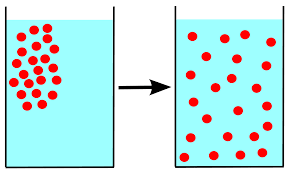
The picture below is an example of _________________.
a)
osmosis
b)
isotonic
c)
diffusion
d)
active transport
35.
Osmosis is the movement of _____ across a membrane.
a)
food
b)
energy
c)
oxygen
d)
water
36.
Permeable means
a)
things can pass through
b)
the concentration levels are different
c)
it is permanent
d)
things are stuck
37.
A person should never drink salty water because their cells would
a)
shrink
b)
expand
38.
Sometimes, energy is required for ____ molecules to go in or out of the cell because they cannot fit into the membrane.
a)
big
b)
small
c)
crunchy
d)
water
39.
When particles move from areas of high concentration to areas less concentrated, this has taken place.
a)
diffusion
b)
mitosis
c)
endocytosis
d)
photosynthesis
40.
What does selectively-permeable mean?
a)
The cell controls what passes in and out of the cell
b)
Nothing gets through
c)
The cell lets only large substances through
41.
Diffusion stops when the concentration has reached equilibrium - true or false?
a)
true.
b)
false
42.
Water will move INTO a cell in a(n) _______ solution
a)
Hypertonic
b)
Hypotonic
c)
Isotonic
d)
Gravy
43.
What type of transport requires energy?
a)
Active Transport
b)
Facilitated Diffusion
c)
Simple Diffusion
d)
Passive Transport
44.
What type of transport does not require energy?
a)
Active Transport
b)
Passive Transport
45.

The cell below is in a _____________ solution.
a)
Hypertonic
b)
Hypotonic
c)
Isotonic
46.

This egg has shrunk, what type of solution was it placed in?
a)
hypotonic solution
b)
hypertonic solution
c)
isotonic solution
d)
active transport
47.
An ISOTONIC solution has a(n) ______________ concentration of solute (dissolved stuff) than inside the cell.
a)
lower
b)
equal
c)
higher
48.
If a cell is placed in a HYPOTONIC solution, water will move _________ of the cell, causing it to ___________.
a)
into, swell
b)
out of, shrivel
c)
in and out of the cell, stay the same
49.

This picture represents which type of cellular transport?
a)
passive transport
b)
endocytosis
c)
exocytosis
d)
osmosis
50.
Unlike Facilitated Diffusion, Simple Diffusion is able to use the concentration gradient to move SMALL NON-POLAR molecules across the plasma membrane.
a)
True
b)
False
51.
Facilitated Diffusion is the movement of LARGE and POLAR molecules across the cell membrane with the help of Integral Proteins
a)
True
b)
False
52.

What process is shown?
a)
diffusion
b)
facilitated diffusion
c)
active transport
53.
When molecules are spread evenly on both sides of the membrane and diffusion stops.
a)
equilibrium
b)
balance
c)
facilitated diffusion
54.
The movement of molecules across a membrane using energy.
a)
diffusion
b)
facilitated diffusion
c)
active transport
55.
The movement of molecules from areas of high concentration to low concentration using a protein channel or carrier protein.
a)
diffusion
b)
facilitated diffusion
c)
active transport
56.

In the image, the water will move
a)
into the cell.
b)
out of the cell.
c)
both in and out of the cell.
100 %

