
 Worksheets
Unit 2: Constitutional Government Test Review
Total questions: 82
Worksheet time: 1hrs 16mins
Name
Class
Date
1.

When the United States Army defends our country, it is fulfilling one purpose of our government listed in the--
a)
Virginia Declaration of Rights
b)
Charters of the Virginia Company of London
c)
Preamble to the Constitution
d)
Bill of Rights
2.

The First Amendment guarantees people in the United States the right to--
a)
own property
b)
practice religion freely
c)
own firearms
d)
a fair trial
3.

Which of the following statements best identifies the main idea of the Tenth Amendment?
a)
Powers not given to the national government are held by the states.
b)
All powers of government are listed in the Constitution.
c)
The Constitution grants specific powers to the people.
d)
The states have more power than the national government.
4.
The freedom of speech is protected by the—
a)
Articles of Confederation
b)
Declaration of Independence
c)
Bill of Rights
d)
Pledge of Allegiance
5.

The idea that newspapers have a right to criticize the government is known as freedom of —
a)
the press
b)
the economy
c)
assembly
d)
speech
6.

What do we call the first 10 amendments to the Constitution?
a)
The Declaration of Independence
b)
The Bill of Rights
c)
The Preamble
d)
Articles
7.
The powers of government are divided into three branches
a)
Separation of Powers
b)
Federalism
c)
Popular Sovereignty
d)
Individual Rights
8.
When one branch has power over another branch
a)
Republicanism
b)
Popular Sovereignty
c)
Checks and Balances
d)
Individual Rights
9.
Which of the following is not a freedom guaranteed by the first amendment?
a)
freedom of speech
b)
freedom from taxes
c)
freedom of religion
d)
freedom of the press
10.

What does the preamble to the Constitution of the United States of America express?
a)
Sets forth the goals and purposes of the government
b)
Defines the relationship between national and state governments.
c)
Explains why the United States became an independent country.
d)
Explains that the people have the right and power to govern themselves.
11.
What are the three branches of government?
a)
Executive, Legislative, Judicial
b)
Executive, Courts, Law
c)
President, Congress, House
d)
Representatives, Judges, President
12.
What is the sharing of powers between national/ federal and state government?
a)
Preamble
b)
Cabinet
c)
Veto
d)
Federalism
13.

What does the constitutional concept called Checks and Balances mean?
a)
Each branch can check the local and state government's power.
b)
Each branch can check another branches power to ensure it does not become too powerful.
c)
The three branches can all do whatever they want without checking with each other.
d)
All of the branches have to agree on every decision made.
14.

Which branch can declare war?
a)
Legislative
b)
Executive
c)
Judicial
15.
What was the first written plan for the American government?
a)
The Declaration of Independence
b)
The Constitution
c)
The Articles of Confederation
d)
The Atlanta Journal Constitution
16.
What was a major feature of the AOC?
a)
a strong central government
b)
a weak central government
c)
weak state governments
d)
three branches of government
17.
"We, the People of the United States, in order to form a more perfect union . . ." -Constitution of the United States, 1787
This phrase best describes the
This phrase best describes the
a)
failed policies made by foreign officials
b)
grievances in the Declaration of Independence
c)
national problems caused by outdated laws
d)
weaknesses in the Articles of Confederation
18.

Which term means the government must treat everyone fairly under the law?
a)
republicanism
b)
due process of law
c)
separation of powers
d)
individual rights
19.
How are implied powers most often used by the United States Congress?
a)
To help carry out expressed powers
b)
To force the executive branch to sign new legislation
c)
To encourage citizens to vote
d)
To give the government veto powers.
20.

Which amendments in the constitution have to do with the rights of citizens?
a)
All of them
b)
The last 10
c)
The first 10
d)
none of them
21.
The Articles of Confederation created a _________________ type of government.
a)
strong
b)
average
c)
weak
d)
federal
22.
Which document established the separation of church and state ?
a)
Virginia Declaration of Rights
b)
Virginia Statute of Religious Freedom
c)
Charters of the Virginia Company of London
d)
Mayflower Compact
23.
In which of the Founding Documents would you find a list of your most basic rights, including the Freedom of Speech, Freedom of Religion, Right to Bear Arms and Freedom of the Press?
a)
The Bill of Rights
b)
The Declaration of Independence
c)
The Federalist Papers
d)
Common Sense
24.
In which of the Founding Documents would you find 7 articles that set up our basic form of government, including the 3 branches and their roles of power?
a)
The Bill of Rights
b)
The Declaration of Independence
c)
Common Sense
d)
The Constitution
25.
What is significant about the Virginia Declaration of Rights?
a)
Declared the colonies
independent from Great Britain.
independent from Great Britain.
b)
Set up the United States. Government
c)
Guaranteed the same rights as Englishmen for the colonists. going to Virginia
d)
Served as a model for the Bill of Rights.
26.
Established the idea that all people are equal under law.
a)
Declaration of Independence
b)
Virginia Statute of Religious Freedom
c)
Virginia Declaration of Rights
d)
The United States Constitution
27.
Freedom of religious beliefs and opinions.
a)
Virginia Declaration of Rights
b)
Virginia Statute of Religious Freedom
c)
Declaration of Independence
d)
Articles of Confederation
28.
What is significant about the Charters of the Virginia Company of London?
a)
Declared the colonies independent from Great Britain
b)
Set up the United States Government
c)
Guaranteed the same rights as Englishmen for the colonists going to Virginia
d)
Declared we’d become Canadians
29.
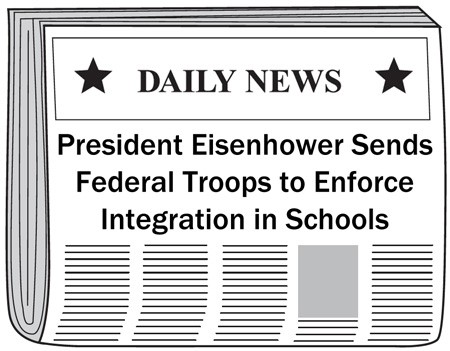
Which government purpose identified in the Preamble is reflected in the headline?
a)
Ensure domestic tranquility
b)
Promote the general welfare
c)
Secure the blessings of liberty
d)
Provide for the common defense
30.

According to the image provided, which level of government holds the most power?
a)
National
b)
State
c)
Local
d)
County
31.

Which principle of government is best described in this image?
a)
Federalism
b)
Separation of Powers
c)
Checks and Balances
d)
Consent of the Governed
32.

Which of the following best describes the main idea of the cartoon?
a)
Sometime Congress makes decisions without the advice of the President and the Supreme Court.
b)
The Supreme Court tries to take powers from the other branches.
c)
The President tries to take power from Congress and the Courts.
d)
Congress is stronger than the other branches.
33.

This image illustrates powers belonging to which branch of government?
a)
Judicial Branch
b)
National Branch
c)
Legislative Branch
d)
Executive Branch
34.

Which statements correctly match the numbers?
a)
1 - Declare laws unconstitutional; 2 - Impeach Federal Officials
b)
1 - Call a Special Session; 2 - Veto Bills
1 - Veto Bills; 2 - Declare Laws Unconcsitutional
1 - Veto Bills; 2 - Declare Laws Unconcsitutional
c)
1 - Override Vetoes; 2 - Declare laws Unconstitutional
d)
1 - Nominate Judges; 2 - Impeach Federal Officials
35.

Which of the following best replaces the questions marks in the image provided?
a)
Legislative Branch
b)
Executive Branch
c)
Judicial Branch
36.
What refers to powers given to state governments but not to the national government and are secured by the 10th Amendment?
a)
Implied powers
b)
Concurrent powers
c)
Reserved powers
d)
Enumerated powers
37.

What do we call the first 10 amendments to the Constitution?
a)
Bill of Rights.
b)
Bill of Attainder.
c)
Referendum bills.
d)
The Preamble.
38.
What is the introduction to the Constitution called?
a)
Articles of Confederation
b)
Declaration of Independence
c)
Bill of Rights
d)
Preamble
39.
Where in the Preamble of the United States Constitution does it mention the idea of, "fairness?" (p. 14)
a)
General Welfare
b)
Domestic Tranquility
c)
Justice
d)
Common Defense
40.
Where in the Preamble of the United States Constitution does it mention the idea of, "peace in our country?"
a)
Justice
b)
Common Defense
c)
General Welfare
d)
Domestic Tranquility
41.
The Preamble lists the __________ of the United States Constitution and the United States Government
a)
Grievances
b)
Unalienable Rights
c)
Purposes
d)
Weaknesses
42.
Which of the following phrases from the Preamble is best described by saying: "All citizens should have their basic needs of food, clothing, and shelter."
a)
perfect union
b)
common defense
c)
liberty
d)
general welfare
43.
What are the two steps to amending the U.S. Constitution?
a)
Proposal and Voting
b)
Introduction and Voting
c)
Proposal and Ratification
d)
Introduction and Voting
44.
Who can propose an amendment to the U.S. Constitution?
a)
the President
b)
the states
c)
Congress
d)
the Supreme Court
45.
Who ratifies an amendment to the U.S. Constitution?
a)
the President
b)
the states
c)
Congress
d)
the Supreme Court
46.

This announcement is referring to powers belonging to the -
a)
Executive Branch of the national government
b)
Legislative Branch of the state government
c)
Legislative Branch of the national government
d)
Executive Branch of the state government
47.

Under Checks and Balance, which branch of government can over ride a Presidential Veto?
a)
Judicial Branch
b)
Legislative Branch
c)
Executive Branch
d)
Elective Branch
48.

The President of the United States is in which branch of government?
a)
Legislative Branch
b)
Judicial Branch
c)
Elective Brfanch
d)
Executive Branch
49.

The Checks & Balances power used by the Legislative Branch to REMOVE a President from office if the President is committing criminal acts is called.......
a)
Presidential Veto
b)
Impeachment
c)
Judicial Review
d)
Appointment Power
50.

Congress is in what branch of government?
a)
Executive Branch
b)
Elective Branch
c)
Legislative Branch
d)
Judicial Branch
51.

Which branch makes the Laws?
a)
Executive Branch
b)
Legislative Branch
c)
Judicial Branch
d)
Elective Branch
52.

A form of government based on a written set of laws (the Constitution) to which all citizens agree, is called?
a)
Limited Government
b)
Three Branch Government
c)
Constitutional Government
d)
Monarchy
53.

Dividing the government into 3 specific branches is called?
a)
Checks and Balances
b)
Tri-Government Balance
c)
Pyramid of Power
d)
Separation of Powers
54.

What are the two houses of Congress?
a)
House of Representatives and Senate
b)
House of Representatives and the President
c)
Senate and the President
55.
Appoint federal judges, carry out the law, & prepare the annual budget are duties & responsibilities of -
a)
judicial branch
b)
legislative branch
c)
executive branch
d)
all of the above
56.

The Checks and Balances power used by the Judicial Branch to look at a law to see if it is constitutional is called......
a)
Presidential Veto
b)
Impeachment
c)
Judicial Review
d)
Appointment Power
57.

Who has the power to appoint a Supreme Court Judge, when there is an open spot on the court?
a)
Legislature
b)
Citizens
c)
President
d)
Congress
58.

Congress is divided into two parts, the _____________ and the _______________.
a)
Senate and House of Burgess
b)
White House and Senate
c)
President and Vice-President
d)
Senate and House of Representatives
59.

The theory of government where one branch has power to keep another branch of government from becoming too powerful is called?
a)
Separation of Powers
b)
Checks and Balances
c)
Limited Government
d)
Constitutional Government
60.

The Checks and Balance Power used by the President (Executive Branch) against the Legislative Branch when the President does NOT like a Law passed by the Legislative Branch is called.........
a)
Presidential Veto
b)
Impeachment
c)
Judicial Review (optional)
d)
Appointment Power
61.

The Supremacy Clause states that
a)
state laws are superior to federal laws
b)
federal laws are superior to state laws
c)
expressed powers are superior to implied powers
d)
Alabama is superior to Auburn
62.

The central government of the United States is called the
a)
federal government
b)
executive branch
c)
constitution
d)
congress
63.
Powers of Congress that are stated in the Constitution
a)
expressed
b)
reserved
c)
implied
d)
concurrent
64.

The division of power between a central government and state governments is called
a)
The United States
b)
the Supremacy Clause
c)
the Necessary and Proper Clause
d)
federalism
65.

Which amendment protects the powers and rights of State Governments?
a)
1st Amendment
b)
2nd Amendment
c)
9th Amendment
d)
10th Amendment
66.
Run public schools. Is this example federal, state, or both?
a)
Federal
b)
State
c)
Shared
67.
Make treaties and deals with foreign countries. Is this example federal, state, or both?
a)
Federal
b)
State
c)
Shared
68.
Declare War. Is this example federal, state, or both?
a)
Federal
b)
State
c)
Shared
69.
Federalism: Create an army and a navy. Is this example federal, state, or both?
a)
Federal
b)
State
c)
Shared
70.
Print Money. Is this example federal, state, or both?
a)
Federal power
b)
State power
c)
(Concurrent) Shared power
71.
Which of the following states a weakness of the Articles of Confederation?
a)
The state governments had no power.
b)
Congress could not tax.
c)
Congress had excellent relationships with other countries.
d)
America was still under the control of Great Britain.
72.
The Bill of Rights was added to the Constitution of the United States to--
a)
ensure that the federal government would be run by a system of checks and balances
b)
set up two parties that would share control of the federal government
c)
guarantee that large states would not overpower smaller ones
d)
establish and protect various civil rights
73.

Which document was written with this stated purpose?
a)
Constitution of the United States
b)
Declaration of Independence
c)
Articles of Confederation
d)
Virginia Declaration of Rights
74.

The best title for the diagram above would be--
a)
The Legislative Process
b)
Steps for Amending the Constitution
c)
Passage of a Local Ordinance
d)
Responsibilities of the Legislative Branch
75.
Which of the following is true about the amendment process?
a)
The Bill of Rights includes all 27 amendments in the Constitution.
b)
Amendments take at least 10 years to be added to the Constitution.
c)
All amendments in the Constitution were both proposed and ratified.
d)
Amendments must be ratified before they can be proposed.
76.
Which First Amendment Freedom says you have the right to ask for change from the Government?
a)
Freedom of Speech
b)
Freedom of Petition
c)
Freedom of the Press
d)
Freedom of Assembly
77.
What part of the 14th Amendment says the state & local government must treat you fairly?
a)
the Due Process clause
b)
P.A.R.T.S.
c)
Freedom of Religion
d)
Proposal
78.
Immigration & Naturalization have made our society more ______.
a)
complex
b)
diverse
c)
representative
d)
justice
79.

According to the Declaration, what is the source of a government's power?
a)
The army
b)
The people
c)
Money
d)
Smart thinking
80.
Which document established the separation of church and state ?
a)
Virginia Declaration of Rights
b)
Virginia Statute of Religious Freedom
c)
Charters of the Virginia Company of London
d)
Mayflower Compact
81.
In which of the Founding Documents would you find a list of your most basic rights, including the Freedom of Speech, Freedom of Religion, Right to Bear Arms and Freedom of the Press?
a)
The Bill of Rights
b)
The Declaration of Independence
c)
The Federalist Papers
d)
Common Sense
82.
In which of the Founding Documents would you find a long list of grievances (complaints) against King George III and Britain?
a)
The Bill of Rights
b)
The Constitution
c)
The Federalist Papers
d)
The Declaration of Independence
100 %

