
 Worksheets
Cell Theory & Microscope Quiz
Total questions: 30
Worksheet time: 17mins
Name
Class
Date
1.

Which of the following scientists was the first to observe bacteria?
a)
Anton van Leuwenhoek
b)
Matthais Schleiden
c)
Robert Hooke
d)
Theodor Schwann
2.

The invention of the microscope made it possible for people to discover and learn about
a)
Plants
b)
Skin
c)
Animals
d)
Cells
3.

What is one way in which all living things on Earth are alike?
a)
All living things have hair.
b)
All living things are made of cells and come from other cells.
c)
The cells of all living things have chloroplast.
d)
All living things can move.
4.
What structures distinguish a plant cell from an animal cell?
a)
Plant cells have cell walls and ribosomes.
b)
Plant cells have cell walls and chloroplasts.
c)
Plant cells have chloroplasts and ribosomes.
d)
Plant cells have chloroplasts and mitochondria.
5.

Which of the following is NOT one of the basic points of Cell Theory?
a)
All living things are made of cells.
b)
The cell is the smallest living thing that can perform all the functions of life.
c)
Cells are too small to see without a microscope.
d)
All cells must come from pre-existing cells.
6.

Cells are often called "the ____ of life."
a)
bread
b)
road map
c)
building blocks
d)
meaning
7.

Which scientist did NOT contribute to the cell theory?
a)
Anton Van Leeuwenhoek
b)
Robert Hooke
Robert Hooke
c)
Albert Einstein
d)
Matthias Schleiden
Matthias Schleiden
8.
Which of the following is NOT a cell theory.
a)
All non-living things are made of cells
b)
All cells come from pre-existing cells
c)
Cells are the basic unit of structure and function of all living things
9.
Rocks are not living because
a)
they never move
b)
they aren't needed for humans
c)
they are not made of cells
d)
they don't break down
10.

______________ are the basic unit of living things.
a)
Kittens
b)
Organisms
c)
Cells
d)
Organelles
11.

Robert Hooke, Anton van Leeuwenhoek, Theodor Schwann, Rudolf Virchow, and Matthias Schliden were all responsible for what theory?
a)
The Theory of Gravity
b)
The Theory of Relativity
c)
The Cell Theory
d)
The Theory of Continental Drift
12.
What tool do you use to view the cells?
a)
metric ruler
b)
centrifuge
c)
microscope
d)
pipette
13.
Which of the following is NOT a cell theory.
a)
All non-living things are made of cells
b)
All cells come from pre-existing cells
c)
Cells are the basic unit of structure and function of all living things
14.
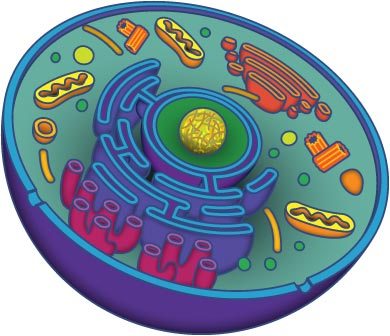
All living things are made up of...
a)
cells
b)
cell tissues
c)
organ
d)
organ systems
15.
The first part of the Cell Theory states: "What happens in Cell Theory, stay in Cell Theory."
a)
True
b)
False
c)
I don't know
d)
Ummmm
16.
All cells come from___________ cells.
a)
pregnant
b)
pre-existing
c)
paternal
d)
pin size
17.
What is the basic structural and functional unit of all living things?
a)
atom
b)
cell
c)
molecule
d)
human
18.
An organism made of one cell is called
a)
unicellular
b)
multicellular
19.

Number 3
a)
Ocular Lens
b)
Objective Lens
c)
Diaphragm
d)
Base
20.

Number 10
a)
Stage
b)
Stage Clips
c)
Diaphragm
d)
Base
21.

Number 11
a)
Course Adjustment
b)
Fine Adjustment
c)
Small Adjuster
d)
Large Adjuster
22.
The factors in an experiment that can be changed.
a)
variables
b)
quantitative data
c)
hypothesis
d)
steps
23.
What is a hypothesis?
a)
Answer to a question
b)
The slide you put on the microscope
c)
An educational guess
d)
A triangle
24.

Number 4
a)
Stages
b)
Arms
c)
Stage Clips
d)
Ocular Lens
25.
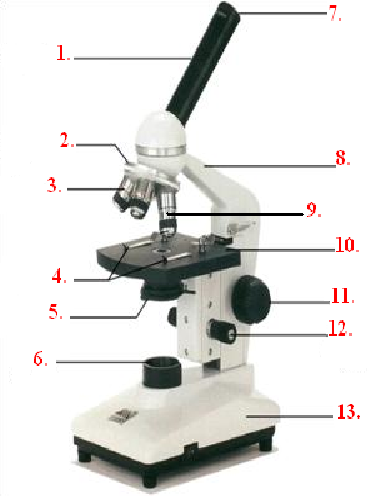
Number 12
a)
Course Adjustment
b)
Fine Adjustment
c)
Small Adjuster
d)
Large Adjuster
26.

Number 5
a)
Knob
b)
Ocular Lens
c)
Diaphragm
d)
Objective Lens
27.

What part is 3?
a)
eye piece
b)
base
c)
arm
d)
coarse adjust
28.

What is part 2?
a)
arm
b)
base
c)
body tube
d)
illuminator
29.

Which part lets you turn up the power of magnification, such increasing from 40x to 100x?
a)
coarse adjustment knob
b)
diaphragm
c)
field-of-view
d)
revolving nosepiece
30.

Which part is the lighted area you see when looking through the eyepiece?
a)
coarse adjustment knob
b)
diaphragm
c)
field-of-view
d)
revolving nosepiece
100 %

