
 Worksheets
Phy Sci, Wednesday Bell Ringer, 11.15.17
Total questions: 20
Worksheet time: 15mins
Name
Class
Date
1.

The mass of one proton is equal to the mass of one...
a)
neutron
b)
electron
2.

The mass of one proton is greater than the mass of one...
a)
neutron
b)
electron
3.
All of the mass of an atom comes from what location?
a)
nucleus
b)
electron cloud
4.
The two subatomic particles that make up the mass of the atom are the _____ and the _____.
a)
proton, neutron
b)
proton, electron
c)
neutron, electron
d)
electron, energy levels
5.
What subatomic particle has no effect on the mass of the atom?
a)
proton
b)
neutron
c)
electron
6.

Which letter represents a proton?
a)
A
b)
B
c)
C
d)
D
7.
Which letter represents a neutron?
a)
A
b)
B
c)
C
d)
D
8.
Which letter represents an electron?
a)
A
b)
B
c)
C
d)
D
9.
Which letter represents the electron cloud?
a)
A
b)
B
c)
D
d)
E
10.
An atom of an element contains 20 protons. What is the identity of the element? (NOTE: you will need to use your Periodic Table)
a)
Neon
b)
Calcium
c)
Potassium
d)
Argon
11.

What is the atomic number of the atom pictured?
a)
9
b)
10
c)
18
d)
19
12.
What is the element name of the atom pictured?
a)
Fluorine
b)
Neon
c)
Argon
d)
Potassium
13.

What is the atomic number of the atom pictured?
a)
11
b)
12
c)
22
d)
23
14.
What is the element name of the atom pictured?
a)
Sodium
b)
Magnesium
c)
Titanium
d)
Vanadium
15.

How many electrons are in the atom pictured?
a)
1
b)
2
c)
3
d)
0
16.

What is the number of protons that the element in this image contain?
a)
14
b)
7
c)
15
d)
18
17.
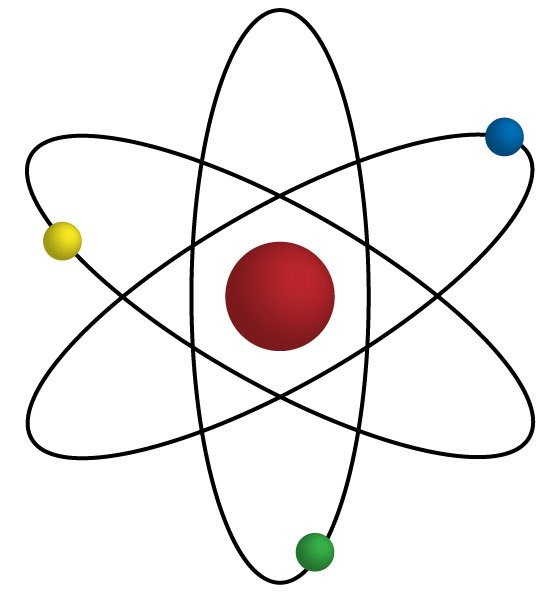
What are the 3 subatomic particles?
a)
elements, compounds, mixtures
b)
neutrons, isotopes, and electrons
c)
positives, negatives, and neutrals
d)
protons, neutrons, and electrons
18.
All matter is made up of:
a)
energy
b)
atoms
c)
electrons
d)
compounds
19.
An atoms overall charge is
a)
positive
b)
depends on its mood
c)
neutral
d)
negative
20.
What is the atomic number?
a)
the number of protons
b)
the number of protons and neutrons
c)
the number of neutrons
d)
the number of protons and electrons
100 %

