Wayground logo

Free Printable Worksheets

Font size

S
M
L
XL
Worksheets

CP Chemistry-Atomic History and Structure Review

Total questions: 40

Worksheet time: 32mins

Name
Class
Date
1.
This particle determines what element you have - the elements identity.
a)
electron
b)
proton
c)
neutron
d)
valence shell
2.
An atom has 10 protons, 15 neutrons and 10 electrons what is its mass number.
a)
20
b)
10
c)
5
d)
25
3.
Which scientist discovered the electron, which helped him develop a model of the atom?
a)
Niels Bohr
b)
John Dalton
c)
Ernst Rutherford
d)
J.J Thompson
4.
What is an atom mostly made up of?
a)
protons
b)
electrons
c)
empty space
d)
neutrons
5.
What is the atomic mass of the atom pictured? 
a)
9
b)
10
c)
18
d)
19
6.
What is the atomic number of the atom pictured? 
a)
9
b)
10
c)
18
d)
19
7.
What is the element name of the atom pictured? 
a)
Fluorine
b)
Neon
c)
Argon
d)
Potassium
8.
An element with a mass number of 11 and an atomic number of 5 has how many neutrons?
a)
11
b)
5
c)
6
d)
16
9.
What is the number of protons that the element in this image contain?
a)
14
b)
7
c)
15
d)
18
10.
What subatomic particles would you find in the nucleus of an atom?
a)
Protons only
b)
Protons and Neutrons
c)
Neutrons and Electrons
d)
Protons and Electrons 
11.
Which statement best describes the locations of the subatomic particles?
a)
The protons and electrons are found in the nucleus, while neutrons are in the cloud outside the nucleus
b)
The neutrons are in the nucleus, while the protons and electrons are in the cloud outside the nucleus
c)
The protons and neutrons are in the nucleus, while the electrons are in the cloud outside the nucleus
d)
The electrons and neutrons are in the nucleus, while the protons are in the cloud outside the nucleus
12.

What scientist is best known for his "Plum Pudding" model of the atom?

a)

J.J. Thomson

b)

Ernest Rutherford

c)

John Dalton

d)

Democritus

13.
Which of these particles was discovered first?
a)
Protons
b)
Electrons
c)
Neutrons
d)
Quarks
14.

Carbon-14 has how many neutrons?

a)

6

b)

7

c)

8

d)

9

15.

Carbon-14 has how many protons?

a)

6

b)

7

c)

8

d)

9

16.
Isotopes have a different what?
a)
Atomic Number
b)
Atomic Mass
c)
Number of Protons
d)
Number of electrons
17.
In a correctly written symbol what would be located in the "A" position?
a)
number of neutrons
b)
atomic number
c)
number of electrons 
d)
mass number
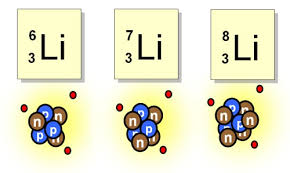
18.
which atom has  4 neutrons?
a)
Li-6
b)
Li-7
c)
Li-8
d)
they have the same # of neutrons
19.

What quantities vary between isotopes of an element?

a)
protons, electrons, and atomic mass
b)
protons, electrons, and atomic number
c)
neutrons and electrons
d)
neutrons and atomic mass
20.
Nitrogen has three occurring isotopes: Nitrogen-13, Nitrogen-14, Nitrogen-15. Which isotope is the most abundant?
a)
Nitrogen-13
b)
Nitrogen-14
c)
Nitrogen-15
d)
Based on the information given, it cannot be determined
21.
Isotopes are atoms of the same element that have the same number of __________ but different number of __________ . Therefore, isotopes of the same element have different masses. 
a)
protons, neutrons
b)
protons, electrons
c)
neutrons, protons
d)
electrons, protons
22.
J.J. Thomson used a cathode ray tube to find what particle in the atom?
a)
Proton
b)
Neutron
c)
Electron
23.

What is true about a neutral atom (zero charge)?
a)
The number of protons equal the number of neutrons
b)
The number of protons equal the number of electrons
c)
The number of neutrons equal the number of electrons
d)
The number of protons, neutrons, and electrons are all different
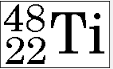
24.
How many protons does this isotope of titanium have?
a)
48
b)
22
c)
26
d)
70
25.
An atom becomes _________ when it gains electrons.
a)
Positive
b)
Negative
c)
Neutral
d)
Invinsible
26.
O-2 is a(n)....
a)
isotope
b)
cation
c)
anion
d)
neutral atom
27.

Who was the first scientist to have scientific evidence of the atom?

a)

Democritus

b)

Dalton

c)

Rutherford

d)

Thompson

28.

Thought atoms were indestructible and could not be created or destroyed.

a)

Dalton

b)

Rutherford

c)

Thompson

d)

Bohr

29.
24.1% of all the isotopes of a an element have a mass of 75.23 amu, 48.7% have a mass of 74.61 amu, and 27.2% have a mass of 75.20 amu.
What is the average mass of this element?
a)
74.92 amu
b)
24.97 amu
c)
75.01 amu
d)
74.51 amu
30.

Who was the Greek philosopher who called the smallest particle of matter an "atom"?

a)

Democritus

b)

Aristotle

c)

J.J Thompson

d)

Epididymis

31.
Who is the scientist who proposed the "solar system" model of an atom where the electrons revolve around the nucleus?
a)
Dmitri Mendeleev
b)
Niels Bohr
c)
Ernest Rutherford
d)
Copernicus
32.
Who discovered a particle in the nucleus with no charge called the neutron?
a)
Chadwick
b)
Bohr
c)
Rutherford
d)
Dalton
33.
Which of the following correctly orders the atomic models from the oldest to the most recent?
a)
Dalton, Thomson, Rutherford, Bohr, Modern
b)
Dalton, Thomson, Bohr, Modern, Rutherford
c)
Thomson, Dalton, Rutherford, Modern, Bohr
d)
Modern, Bohr, Rutherford, Thomson, Dalton
34.

7331Ga+3 How many protons?

a)

73

b)

31

c)

37

d)

28

35.

7331Ga+3 How many electrons?

a)

73

b)

31

c)

28

d)

42

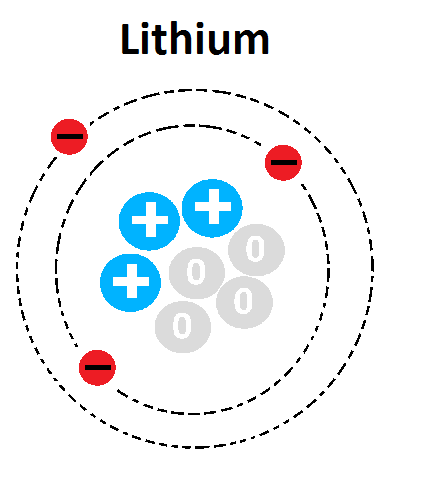
36.
What is the atomic number of this atom?
a)
1
b)
3
c)
4
d)
7
37.

Which of the following is/are conclusions based on Rutherford’s gold foil experiment?

a)

Atom is mostly empty space

b)

The nucleus is positively charged

c)

The atom has a small dense nucleus

d)

All answers are correct

38.

A neutral fluorine atom has 9 protons and 9 electrons. How many electrons does fluoride ion, F-1, have?

a)

8

b)

9

c)

10

d)

18

39.
When an atom LOSES an electron it is a
a)
cation
b)
anion
40.
Where is most of the mass in an atom located?
a)
in the nucleus
b)
in the protons
c)
in the neutrons
d)
in the electrons