
 Worksheets
Physical Science Unit
Total questions: 37
Worksheet time: 40mins
Name
Class
Date
1.
What is the speed of a car that travels 400 m in 20 minutes? (s=d/t)
a)
20 miles/hr
b)
20 m/min
c)
800 m/min
d)
200 miles/hr
2.
A car travels 30 miles/hr for 3 hours. Calculate the distance it will travel. (d=s*t)
a)
90 miles
b)
10 miles
c)
600 miles
d)
90 km
3.
A boat travels at 22 km/hr for 10 hrs, what distance will it travel? (d=s*t)
a)
220 miles
b)
2.2 km
c)
220 km
d)
22 km
4.
A speed boat travels 200 miles at a speed of 20 miles/hr. How much time will it take to travel the 200 miles? (t=d/s)
a)
10 hrs
b)
10 miles
c)
400 hrs
d)
100 km
5.
Dave runs a 400 m race with a speed of 4 m/s. What time will it take him to finish the race? (t=d/s)
a)
400 minutes
b)
100 minutes
c)
100 seconds
d)
.25 seconds
6.
Which of the following is a unit of speed?
a)
km/hr
b)
hr
c)
km
d)
s
7.
Which of the following is a unit of distance ?
a)
miles/hr
b)
hr
c)
km
d)
min
8.
Which of the following is a unit of time?
a)
sec
b)
mi
c)
m/s
d)
km
9.
What is the speed of a man who runs 10 miles in 1 hr? (s=d/t)
a)
20 miles
b)
10 m/min
c)
10 miles/hr
d)
20 hrs
10.
What is speed?
a)
how far you go
b)
how much distance is covered over a period of time
c)
how fast you accelerate
d)
the change in the location of a object
11.
What is velocity?
a)
the quickness of an object
b)
the location of an object
c)
acceleration
d)
speed in a specific direction
12.

A proper quantity showing velocity would be
a)
25 m/s.
b)
30 m south.
c)
15 m/s north.
d)
10 m.
13.
Speed is different from velocity because
a)
Velocity has a direction
b)
Speed uses Distance /Time
c)
Velocity doesn't include time
d)
Velocity doesn't include distance
14.
An automobile you are riding in suddenly stops, but you continue to go forward.
a)
Newton's
1st
Law of Motion
1st
Law of Motion
b)
Newton's
2nd
Law of Motion
2nd
Law of Motion
c)
Newton's
3rd
Law of Motion
3rd
Law of Motion
15.
When the force on a car is doubled, the acceleration is doubled.
a)
Newton's
1st
Law of Motion
1st
Law of Motion
b)
Newton's
2nd
Law of Motion
2nd
Law of Motion
c)
Newton's
3rd
Law of Motion
3rd
Law of Motion
16.
A stationary bumper car is set in motion by the outside force of another bumper car colliding with it.
a)
Newton's
1st
Law of Motion
1st
Law of Motion
b)
Newton's
2nd
Law of Motion
2nd
Law of Motion
c)
Newton's
3rd
Law of Motion
3rd
Law of Motion
17.
A skater pushes another skater forward, but the one pushing moves backwards.
a)
Newton's
1st
Law of Motion
1st
Law of Motion
b)
Newton's
2nd
Law of Motion
2nd
Law of Motion
c)
Newton's
3rd
Law of Motion
3rd
Law of Motion
18.
The harder you hit a baseball, the faster it accelerates.
a)
Newton's
1st
Law of Motion
1st
Law of Motion
b)
Newton's
2nd
Law of Motion
2nd
Law of Motion
c)
Newton's
3rd
Law of Motion
3rd
Law of Motion
19.
The acceleration of a 4 kg bowling ball will be greater than the acceleration of a 6 kg bowling ball if the same force is applied to both.
a)
Newton's
1st
Law of Motion
1st
Law of Motion
b)
Newton's
2nd
Law of Motion
2nd
Law of Motion
c)
Newton's
3rd
Law of Motion
3rd
Law of Motion
20.
You step from a boat to a dock. The boat moves backwards as you move forwards and you fall in the water.
a)
Newton's
1st
Law of Motion
1st
Law of Motion
b)
Newton's
2nd
Law of Motion
2nd
Law of Motion
c)
Newton's
3rd
Law of Motion
3rd
Law of Motion
21.
You are carrying a lunch tray when you bump into the edge of a table. Although the tray did not tip, your milk falls off of the front of the tray.
a)
Newton's
1st
Law of Motion
1st
Law of Motion
b)
Newton's
2nd
Law of Motion
2nd
Law of Motion
c)
Newton's
3rd
Law of Motion
3rd
Law of Motion
22.
Determine the accelerations that result when a 12-N net force is applied to a 3-kg object. (a=F/m)
a)
3 m/s2
b)
4 ft/s2
c)
13 m/s2
d)
4 m/s2
23.
What is Newtons 3rd law of motion?
a)
Force= Mass multiplied by acceleration
b)
An object at rest stays at rest unless acted on an unbalanced force.
c)
For every action there is a equal and opposite reaction.
d)
Law of gravity
24.
What is Newtons 2nd law of motion?
a)
Force= Mass multiplied by acceleration
b)
An object at rest stays at rest unless acted on an unbalanced force.
c)
For every action there is a equal and opposite re-action.
d)
Law of gravity
25.
What is Newtons 1st law of motion?
a)
Force= Mass multiplied by acceleration
b)
An object at rest stays at rest unless acted on an unbalanced force.
c)
For every action there is a equal and opposite re-action.
d)
Law of gravity
26.
Two examples of a pulley...
a)
knife & axe blade
b)
lightbulb & screw
c)
flagpole hoist & window blinds
d)
catapult & teeter totter
27.
Which of the following does a simple machine do?
a)
allows the users to apply less force over a longer distance
b)
reduce the amount of force needed to do work
c)
change the direction of the applied force
d)
all of the above
28.
A device that has two or more simple machines working together
a)
fulcrum
b)
pulley
c)
compound (complex) machine
d)
motor
29.
Which is not a type of simple machine?
a)
spring
b)
screw
c)
pulley
d)
wedge
30.
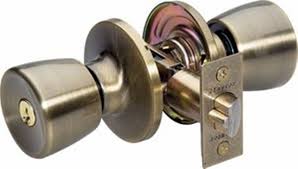
What type of simple machine is this?
a)
wheel and axle
b)
gear
c)
lever
d)
inclined plane
31.
What is an example of a lever?
a)
ramp
b)
car
c)
arm
d)
teeth
32.

Name this simple machine.
a)
Inclined Plane
b)
Lever
c)
Pulley
d)
Wedge
33.

Name this simple machine.
a)
Screw
b)
Lever
c)
Pulley
d)
Wedge
34.

Name this simple machine.
a)
Wheel and Axle
b)
Lever
c)
Pulley
d)
Wedge
35.
The unit used to measure work is the
a)
Watt
b)
Newton
c)
Joule
d)
meter
36.
A 5000N block is lifted 10 m. How much work was done? (W=F*d)
a)
50000 J
b)
5000 J
c)
500 J
d)
50 J
37.
If a pulley lifts a box 3m. How much force is needed to lift a resistance of 90J? (F=W/d)
a)
3N
b)
90N
c)
180N
d)
30N
100 %

