
 Worksheets
Ancient China
Total questions: 67
Worksheet time: 36mins
Name
Class
Date
1.
Who became the first Emperor of China by uniting warring kingdoms?
a)
Wudi
b)
Shi Huangdi
c)
Confucius
d)
Han
2.
Along what river did China's earliest civilizations develop?
a)
Huang He (Yellow)
b)
Indus
c)
Yangtze
d)
Nile
3.
The right of a Chinese Dynasty to rule with the blessings of the Gods is called...?
a)
The Mandate of Heaven
b)
The Dynastic Cycle
c)
The Heavenly Commandments
d)
The Oracle Bones
4.
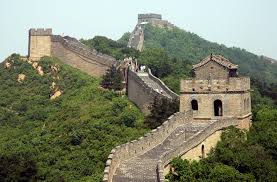
What is the purpose of the structure pictured here?
a)
It is a temple
b)
To protect China's northern border
c)
To protect China's Southern border
d)
To protect China from India
5.
What is the name for the system of rise and fall of Chinese ruling families?
a)
Dynastic Cycle
b)
Mandate of Heaven
c)
Dynastic Change
d)
Mandate of Dynasties
6.
____ is fine, windblown yellow soil
a)
Loess
b)
Clan
c)
Oracle Bone
d)
Yangzi
7.
Confucius believed respect for parents, or _____, was very important to the relationships.
a)
civil service system
b)
mandate of heaven
c)
filial piety
d)
dynastic cycle
8.
What religion was spread to China on the Silk Road?
a)
Christianity
b)
Buddhism
c)
Islam
d)
Hinduism
9.
Which one of these is not an advancement in Science and Technology that came to be during the Han Dynasty?
a)
seismograph
b)
advanced shipbuilding
c)
bronze stirrups
d)
swordmaking
10.
How did the Silk Road affect China?
a)
China became wealthy
b)
China ended farmed
c)
China started a war
d)
China stopped trading
11.
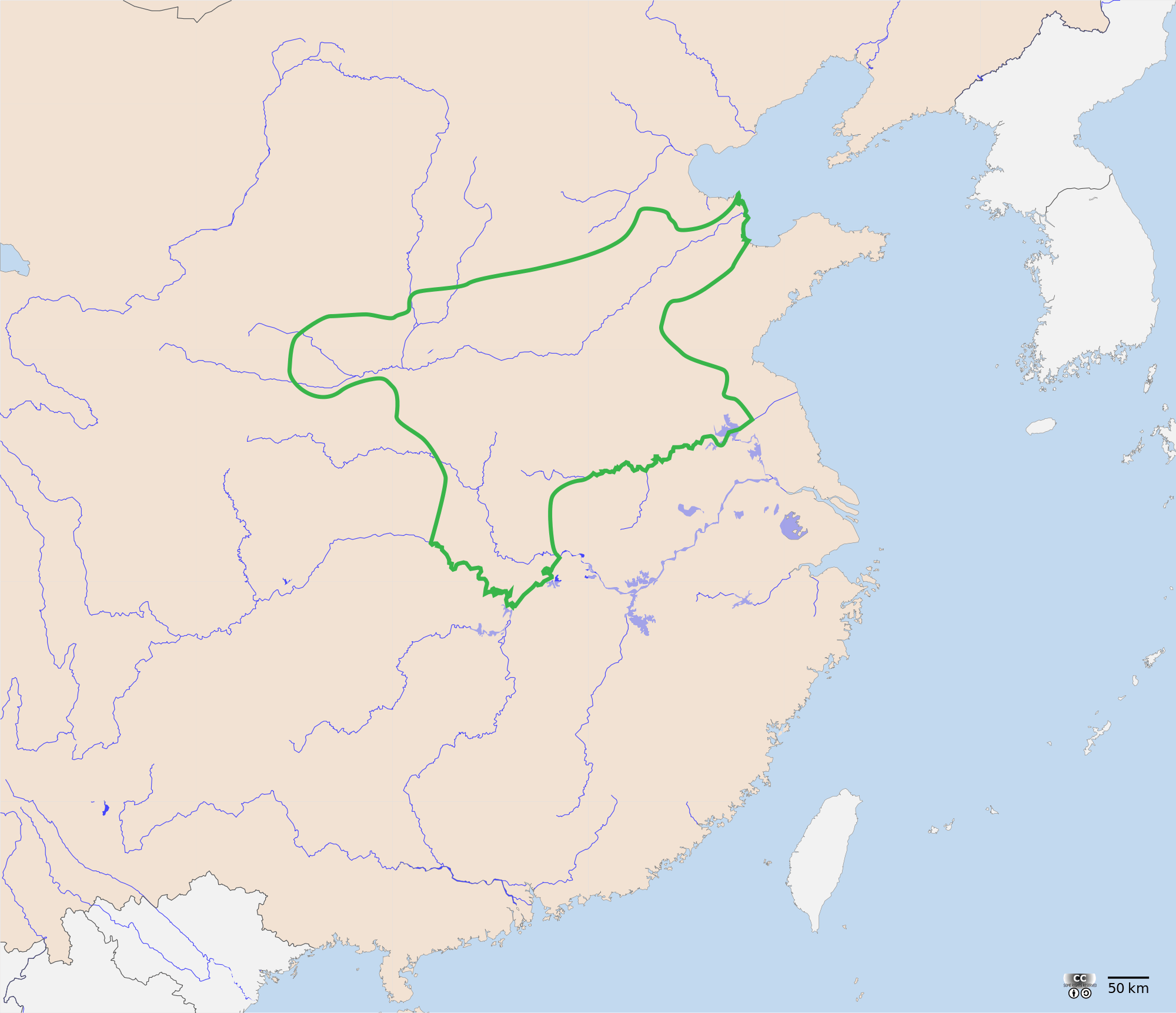
What was the name of China's FIRST dynasty?
a)
Shang
b)
Zhou
c)
Hanfeizi
d)
Huang He
12.
Chinese farmers built this with stone and sand; piled rubble in order to keep out invaders
a)
rudder
b)
Great Wall
c)
Huang He
d)
ideograph
13.
Trade route that stretched from western China to southern Asia
a)
filial piety
b)
Silk Road
c)
Great Wall
d)
Anyang
14.
Shang weapons were especially strong because skilled artisans made these objects from
a)
iron
b)
stone
c)
bones
d)
bronze
15.

A symbol in a writing system based on pictures
a)
ideograph
b)
pictograph
c)
bureaucracy
d)
currency
16.
The belief that the Chinese king’s right to rule came from the gods
a)
Confucianism
b)
Mandate of Heaven
c)
dynasty
d)
Daoism
17.
Line of rulers from the same family
a)
Legalism
b)
long Chinese line
c)
filial piety
d)
dynasty
18.
How did geography affect the development of Chinese culture?
a)
Long coastlines made access to trade possible.
b)
Flat land made travel easy.
c)
Great Wall of China made travel along the top easier for traders.
d)
Tall mountains and deserts isolated China from other nations.
19.

Use the passage to answer question 13.
Which of the following is best supported by the quote from Confucius?
Which of the following is best supported by the quote from Confucius?
a)
If you wish for something hard enough it will just happen.
b)
If you work hard despite the challenges you will be rewarded.
c)
If you love everyone then good things will happen to you.
d)
Loving is easier to do than hating.
20.
Women in Ancient China:
a)
Were treated well
b)
Were educated
c)
Served as member of the government
d)
Were treated as second class citizens
21.

Which river is in China?
a)
Green
b)
Mississippi
c)
Yellow
d)
Himilaya
22.
Pick a Chinese invention.
a)
School
b)
Paper
c)
Flag
d)
Crackers
23.
a river in china also known as the Yellow River; flows from Mongolia to the Pacific Ocean
a)
Dao
b)
Zhou
c)
Shang
d)
Huang He
24.
Why were people so willing to convert to Buddhism in ancient China?
a)
It created peace.
b)
It healed sickness.
c)
It made people rich.
d)
It was forced on people by governments.
25.
Which of the following were traded on the Silk Road?
a)
Spices
b)
Religion
c)
Fabric
d)
All of the above
26.
Early civilizations like Mesopotamia, Egypt, India and China have one thing in common.....
a)
each civilization flourished despite harsh desert conditions
b)
we know little about them due to catastrophic natural disasters
c)
they were founded along rivers and fertile valleys
d)
their coastal locations allowed them to trade with the Roman Empire
27.

What is the central idea of Daoism
a)
Duty to community
b)
Living in harmony with nature
c)
Enforcing laws with harsh punishments
d)
Humans are naturally evil
28.
A mixture of powders used in guns and explosives
a)
Gunpowder
b)
Sanskrit
c)
Explosive
d)
Woodblock Printing
29.
A device used to find direction and invented by the Chinese
a)
Map
b)
Key
c)
Compass
d)
Guide
30.
A soft fabric made from worms and a major invention of the Chinese.
a)
Cotton
b)
Silk
c)
Cloth
d)
Paper
31.
A device that records ground movements caused by seismic waves as they move through Earth.
a)
Seismograph
b)
Compass
c)
Woodblock Printing
d)
None of the Above
32.
(1050BC-400BC) Longest dynasty in Chinese history. Established a new political order with king at the highest level, then lords and warriors and then peasants.
a)
Tang Dynasty
b)
Song Dynasty
c)
Zhou (Chou) Dynasty
d)
Ying Dynasty
33.
A material made of cellulose pulp derived mainly from wood or rags or certain grasses. One of the four great inventions of China.
a)
Papyrus
b)
Platypus
c)
Paper
d)
Silk
34.
Who was at the bottom of the Chinese Social Hierarchy
a)
Farmers
b)
Kings
c)
Nobles
d)
Merchants
35.
Why were merchants at the bottom of the social hierarchy
a)
They did not create anything
b)
They were not liked
c)
The Gods said so
d)
They were not at the bottom
36.
Dynasty often referred to as China's Golden age that reigned during 618 - 907 AD; China expands from Vietnam to Manchuria
a)
Song Dynasty
b)
Tang Dynasty
c)
Zhou (Chou) Dynasty
d)
Ying Dynasty
37.
(960-1279 CE) The Chinese dynasty that placed much more emphasis on civil administration, industry, education, and arts other than military.
a)
Song Dynasty
b)
Tang Dynasty
c)
Zhou (Chou) Dynasty
d)
Ying Dynasty
38.
A group of states or territories controlled by one ruler
a)
Empire
b)
City-State
c)
Dictatorship
d)
All of the above
39.
Two qualities used in Chinese art
a)
Balance and Harmony
b)
Karma and Dharma
c)
Life and Rebirth
d)
Cuneiform and Sanskrit
40.
A system of ancient caravan routes across Central Asia, along which traders carried silk and other trade goods.
a)
Civil Service
b)
Compass
c)
Silk Road
d)
Paper
41.
Which is not one of the four great inventions of China
a)
Woodblock Printing
b)
Compass
c)
Gunpowder
d)
Silk
42.
A type of printing in which text is carved into a block of wood and the block is then coated with ink and pressed on the page
a)
Scribe
b)
Woodblock Printing
c)
Cave Paintings
d)
Copying
43.
What was a natural barrier for China
a)
Gobi Desert
b)
Sahara Desert
c)
Mediterranean Sea
d)
Silk Road
44.
Why was the Yellow River "yellow"
a)
Clay dust from loess
b)
Silk
c)
It was already like this
d)
It wasn't yellow
45.
What did Emperor Qin build that allowed no one to leave, or invade, for thousands of years?
a)
a statue of himself
b)
a fortress
c)
The Great Wall
d)
a model of a dinosaur
46.
What was the natural border of China that was an ocean?
a)
Atlantic Ocean
b)
Pacific Ocean
c)
Arctic Ocean
d)
Indian Ocean
47.
What was the natural border of China that was a mountain range?
a)
Rocky Mountains
b)
Himalayan Mountains
c)
Appalachian Mountains
d)
Sierra-Nevada Mountains
48.
Confucius a very famous ____________, in Ancient China
a)
emperor
b)
philosopher
c)
army leader
d)
god
49.
What were the four main dynasties of Ancient China?
a)
Shang, Zhou, Qin, Han
b)
Hand, Mouth, Foot, Head
c)
Shoe, Chin, Hand, Shang
d)
Tavs, Lodas, Kohlmann, Hoeft
50.
Which is a contribution from the Ancient Chinese?
a)
wheelbarrow
b)
fireworks
c)
gunpowder
d)
All of them
51.
Which is a contribution from Ancient China?
a)
silk
b)
spices
c)
bronze
d)
all of them
52.
Which is a contribution of Ancient China?
a)
Rudders for boats
b)
motors for boats
c)
sails for boats
d)
oars for boats
53.
What is the major religion in China?
a)
Buddhism
b)
Hinduism
c)
Christianity
d)
Judaism
54.
Buddhism is ...
a)
polytheistic
b)
monotheistic
c)
non-theistic
d)
all of them
55.
The founder of Confucianism was
a)
Buddha
b)
Siddartha Gautama
c)
Jesus
d)
Kung Fu zi
56.
According to Confucius, rulers should govern by _______
a)
the law.
b)
military might.
c)
a monopoly on natural resources.
d)
setting a good example.
57.

Confucius' ideas were put into a book called....
a)
The Analects
b)
The Quran
c)
The Bible
d)
The Buddha
58.

What was Confucianism based off of?
a)
The teaching of Kong Fuzi
b)
The Lords
c)
idk
d)
None of the above
59.
What was the Chinese belief that people were bad by nature and needed to be controlled?
a)
Confucianism
b)
Daoism
c)
Legalism
d)
Hinduism
60.
What is the Chinese philosophy that stressed the belief that one should live in harmony with the Dao?
a)
Daoism
b)
Confucianism
c)
Legalism
d)
Buddhism
61.

What's the name of this symbol?
a)
Moksha
b)
Yin-Yang
c)
Nirvana
d)
Eightfold Path
62.

How did Legalism teach how to create an order in their society?
a)
With free food
b)
With parties
c)
With harsh punishments
d)
With meetings
63.
The statement below refers to which of the THREE philosophies:
ethics and morality were key principles.
ethics and morality were key principles.
a)
confucianism
b)
daoism
c)
legalism
64.
Silt, or fertile soil, blown by the winds from deserts
a)
longwood
b)
loess
c)
delta
d)
monsoon
65.
Animal bones or tortoise shells used by priests to scratch questions to the gods
a)
oracle sticks
b)
oracle bones
c)
oracle shells
d)
ancestor bones
66.
A type of farming where terraces are cut into the side of a hill, then crops are grown on those terraces.
a)
Slash and Burn Farming
b)
Maya Classic Age
c)
Obsidian
d)
Terrace Farming
67.
What is the central idea of Daoism
a)
Duty to community
b)
Living in harmony with nature
c)
Enforcing laws with harsh punishments
d)
Humans are naturally evil
100 %

