
 Worksheets
SS 7 Ch. 7.1 & 7.2 Review
Total questions: 25
Worksheet time: 13mins
Name
Class
Date
1.
This is an open grassland with trees.
a)
Rift
b)
Rain Forest
c)
Sahel
d)
Savanna
2.
This is a moist, densely wooded area.
a)
Rift
b)
Sahel
c)
Savannah
d)
Rain Forest
3.
This unit usually included the father, mother, children, and close relatives in one household.
a)
Large Family
b)
Nuclear Family
c)
Extended Family
d)
Lots of Family
4.
Mali's most famous ruler was
a)
Sundiata
b)
Askia the Great
c)
Mansa Musa
d)
Sunni Ali
5.
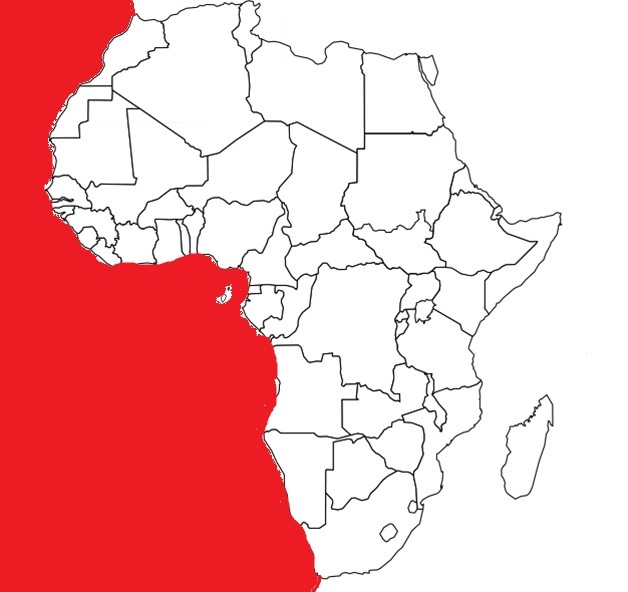
Which body of water is shaded red in the image?
a)
Mediterranean Sea
b)
Atlantic Ocean
c)
Indian Ocean
d)
Red Sea
6.
The Sahara is
a)
the world's largest desert
b)
Africa's longest river
c)
a high mountain range
d)
an empire in early Africa
7.
Social groups that trace their lineage to a common ancestor are called ______________
a)
Villages
b)
Clans
c)
Castes
d)
Empires
8.
Which of the following was a result of Mansa Musa’s travels?
a)
Mali’s mass conversion to Islam.
b)
Mansa Musa’s overthrow by Sundiata.
c)
The conquest of Arabia by Mali forces.
d)
New ties between Mali and other Muslim states.
9.

The gold the West African Kingdoms possessed had obvious value, why would they trade it for salt?
a)
to build religious statues
b)
to use in burial ceremonies
c)
to preserve and flavor food
d)
to have it for scientific experiments
10.

The city in West Africa that served as the center of trade and learning was -
a)
Mansa Musa
b)
Constantinople
c)
Timbuktu
d)
Great Zimbabwe
11.
Some people learned to __________ animals in order to have meat and milk without following wild herds.
a)
domesticate
b)
Neolithic
c)
speak with
12.
The development of ________, or farming, changed human society forever.
a)
domestication
b)
agriculture
c)
Bantu
d)
Mali
13.
Human population grew once people were able to control their own food supply.
a)
True
b)
False
14.
Person who travels from place to place.
a)
harvest
b)
migrate
c)
glacier
d)
nomad
15.
How often did the Nile River flood?
a)
Every now and then
b)
Every 3 months
c)
Every year at some time
d)
Every year at about the same time
16.

who was the youngest Egyptian king
a)
Hatshepsut
b)
King Tut
c)
Ramses III
d)
Khufku
17.

An Egyptian king was called a ___________
a)
scribe
b)
servant
c)
papyrus
d)
pharaoh
18.

What major river runs through Egypt?
a)
Amazon
b)
Zambezi
c)
Nile
d)
Niger
19.
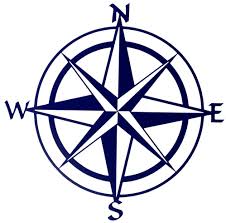
Which way does the Nile flow?
a)
North to South
b)
South to North
c)
East to West
d)
West to East
20.
What was a MAJOR purpose for building the pyramids?
a)
temples for religious worship
b)
storehouses for reserves of grain
c)
homes for the pharaohs' servants
d)
tombs for pharaohs when they died
21.
The Bantu had the greatest impact on what modern area of Africa?
a)
Technology
b)
Trade
c)
Culture
d)
Language
22.

West Africans had large deposits of _______, but lacked salt which they needed desperately.
a)
Gold
b)
Silver
c)
Iron Ore
d)
Diamonds
23.

The gold-salt trade connected ________& _________ Africa.
a)
North & West
b)
North & South
c)
East & West
d)
West & South
24.

Great leader of Mali famous for his hajj (pilgrimage) to the Muslim holy city of Mecca.
a)
Mansa Musa
b)
Sundiata
c)
Songhai
d)
Benin
25.

At its peak, the Mali Empire had territory in all of the following present-day countries EXCEPT
a)
Mali
b)
Guinea
c)
Egypt
d)
Senegal
100 %

