
NEW
Font size
S
M
L
XL
 Worksheets
Cell Life
Total questions: 31
Worksheet time: 23mins
Name
Class
Date
1.
Which of the following is the smallest unit of life that can carry out all life functions?
a)
the mitochondria
b)
the vacuoles
c)
the nucleus
d)
the cell
2.
Which structures are found in every living cell?
a)
cell membrane and cytoplasm
b)
chloroplasts and mitochondria
c)
a cell wall and nucleus
d)
chloroplasts and cell wall
3.
Which cell structure is found in plant and animals cells and controls what can come into or leave a cell?
a)
cell membrane
b)
cytoplasm
c)
nucleus
d)
vacuole
4.
What is the function of the cell nucleus found in both plant and animal cells?
a)
to produce energy
b)
to control cell activity
c)
to remove waste products
d)
to allow molecules to enter the cell
5.
Cell organelles that are responsible for digesting food, worn out organelles and other cellular wastes are called ___________________.
a)
Mitochondria
b)
Vacuoles
c)
Lysosomes
d)
Chlororplasts
6.
What is one basic function of the vacuoles?
a)
circulating oxygen
b)
producing food
c)
controlling cell processes
d)
storing water
7.
All cells need energy to function. Which cell organelle is responsible for producing energy in the cell?
a)
chloroplasts
b)
mitochondria
c)
nucleus
d)
vacuoles
8.
What is the function of a cell wall?
a)
to protect and support the cell
b)
to perform different functions in each cell
c)
to prevent water from passing through it
d)
to prevent oxygen from entering the cell
9.
In what part of the plant cell does the process of photosynthesis take place?
a)
nucleus
b)
mitochondria
c)
chloroplasts
d)
vacuoles
10.
Cells with a nucleus and membrane-bound organelles are called ____________________.
a)
prokaryotes
b)
eukaryotes
c)
bacteria
d)
protists
11.
Who was the first person to see cells under the microscope and give them their name?
a)
Mattias Schleiden
b)
Robert Hooke
c)
Theordor Schwann
d)
Anton van Leeuwenhoek
12.
The basic unit of structure and function in a living things.
a)
chloroplast
b)
nucleus
c)
cell
d)
cell membrane
13.
The diffusion of WATER across a semi-permeable membrane is
a)
osmosis
b)
diffusion
c)
endocytosis
d)
exocytosis
14.
What is diffusion
a)
active transport
b)
passive transport
c)
cell division
d)
cell mutation
15.
The movement of molecules from higher concentration to lower concentration is
a)
diffusion
b)
cell division
active transport
active transport
c)
active transport
d)
tonicity
16.
Active transport requires
a)
energy
b)
the nucleus
c)
chloroplasts
d)
lysosomes
17.
What organelles are only found in PLANT cells
a)
lysosomes & centrioles
b)
cell wall & chloroplasts
c)
nucleus & nucleolus
d)
mitochondria & ribosomes
18.
What organelles is NOT found in a PROkaryote
a)
nucleus
b)
cell membrane
c)
Chromosomes (DNA)
DNA
DNA
d)
ribosomes
19.
What is the membrane around the NUCLEus called?
a)
nuclear membrane
b)
mitochondria
c)
cell membrane
cell emmbrane
cell emmbrane
d)
nucleolus
20.
water moves from
a)
higher conc. H20 => lower conc H20
b)
lower conc. H20 => higher conc. H20
21.
What organelle PRODUCES proteins?
a)
ribosomes
b)
centrioles
c)
lysosomes
d)
nucleus
22.
When many organ systems work together it can form...
a)
organ
b)
cells
c)
organ system
d)
organism
23.

This is a example of........
a)
organ system
b)
cells
c)
organ
d)
tissue
24.

This is a example of ........
a)
cell
b)
organ system
c)
organ
d)
tissue
25.
The lungs and the kidneys are examples of
a)
cells
b)
organs
c)
tissues
d)
organ systmes
26.
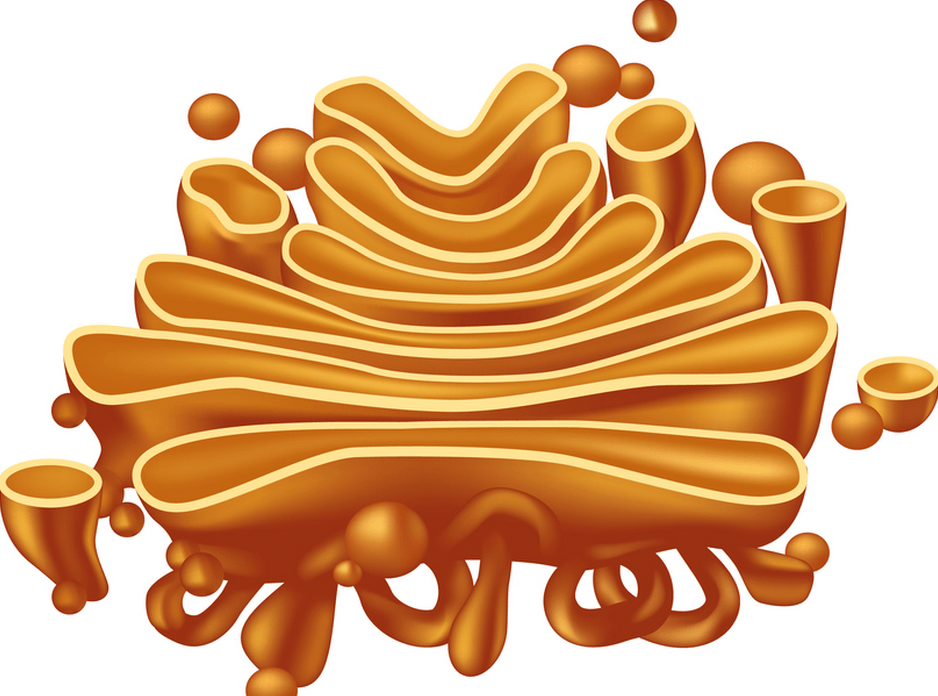
I am a protein packaging and shipping machine! Who am I?
a)
vacuole
b)
ribosome
c)
mitochondrion
d)
golgi apparatus
27.
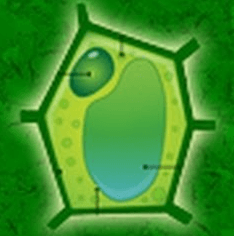
A rigid layer that lies outside the cell's membrane is...
a)
Cytoskeleton
b)
Cilia
c)
Cell Wall
d)
Flagella
28.
What organelle is called the "powerhouse" of a cell?
a)
Endoplasmic Reticulum
b)
Nucleus
c)
Mitochondria
d)
Nucleolus
29.
What is the gel-like substance inside of cells called?
a)
photoplasm
b)
photosynthesis
c)
cytoskeleton
d)
cytoplasm
30.
Main producer of ATP in all eukaryotes
a)
chloroplast
b)
mitochondria
c)
lysosome
d)
smooth er
31.

What is known as the brain of a cell
a)
cell wall
b)
Cell membrane
c)
Nucleus
d)
Nuclues
Reset

