
NEW
Font size
S
M
L
XL
 Worksheets
Plate Tectonics Review
Total questions: 49
Worksheet time: 36mins
Name
Class
Date
1.

The huge pieces of the earth's crust are called ____________________________.
a)
crust
b)
plates
c)
directions
d)
seismos
2.
Which of the following is where one plate slides under another plate?
a)
submarine zone
b)
divergence zone
c)
subduction zone
d)
lower zone
3.
The type of plate boundary where two plates come together is a .....
a)
Convergent Boundary
b)
Divergent Boundary
c)
Transform Boundary
d)
Plate Boundary
4.
Which of the following causes Earth's tectonic plates to move?
a)
Energy from the Sun
b)
Magnetic Pole Reversal
c)
Convection currents in the mantle
d)
Faults in Mountain Ranges
5.
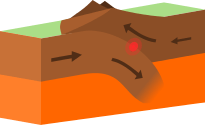
What type of plate boundary is this?
a)
Plate
b)
Divergent
c)
Convergent
d)
Transform
6.

What type of event will occur at this boundary?
a)
Earthquake
b)
Volcano Eruption
c)
Tornado
d)
Mountain Building
7.
A divergent boundary occurs when plates ....
a)
Pull apart
b)
Come together
c)
Slide past each other
d)
subducting
8.
Which of the following is the name of the ancient supercontinent formed 28 Million Years ago.
a)
Pangea
b)
Gondwanda
c)
Laurasia
d)
Neverland
9.
Which of the following is NOT evidence to support the theory of plate tectonics?
a)
Fossils
b)
Mountains
c)
Glaciers
d)
Sand Erosion
10.
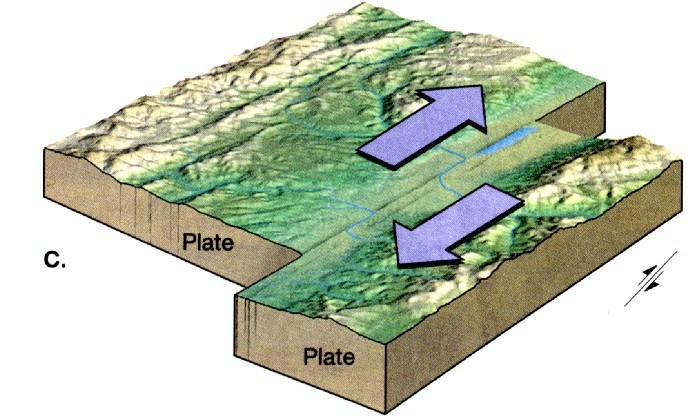
What type of plate boundary is this?
a)
Transform
b)
Convergent
c)
Divergent
d)
Plate
11.
The theory that says Earth's continents once made up an ancient supercontinent, and have been drifting apart ever since, is called the theory of...
a)
Pangea
b)
Plate Tectonics
c)
Natural Selection
d)
Gravity
12.
Oceanic Trenches are formed by _______ plate boundaries
a)
Convergent
b)
Transform
c)
Plate
d)
Divergent
13.
A fault is formed by the movement of a __________ plate boundary
a)
Transform
b)
Convergent
c)
Divergent
14.
Islands can from from magma which is pushed up at a __________ plate boundary
a)
Divergent
b)
Convergent
c)
Transform
15.
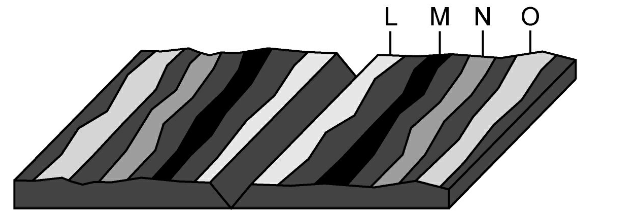
Where would the oldest rock be found?
a)
L
b)
M
c)
N
d)
O
16.
How is it possible for new crust to be formed without increasing the surface area of the Earth?
a)
Crust is destroyed at the same time it is created
b)
New crust is underwater where it sinks
c)
New crust breaks more easily than old crust
17.
Mountains are created when....
a)
Two continental plates collide
b)
Two oceanic plates pull apart
c)
An Oceanic plate subducts under a Continental Plate
d)
Two continental plates pull apart
18.
The Great Rift Valley in Africa and the Mid-Ocean Ridge were all created by this boundary
a)
Divergent
b)
Convergent
c)
Reform
d)
Transform
19.
subduction zones in the ocean can create which features?
a)
islands
b)
volcanoes
c)
earthquakes
d)
all of the above
20.
Earthquakes and volcanoes are most likely found in which locations?
a)
At plate boundaries
b)
in oceans
c)
in the middle of continents
d)
in the middle of plates
21.
When one plate sides under neath another, it _________ and the magma _________.
a)
hardens, sinks
b)
melts, sinks
c)
hardens, rises
d)
melts, rises
22.
Transform boundaries are most likely to produce what phenomenon?
a)
volcanoes
b)
deep sea trenches
c)
underwater mountain ranges
d)
earthquakes
23.
When an oceanic plate and a continental plate collide, which one will subduct?
a)
oceanic
b)
continental
c)
neither
24.
Which of the following is NOT a tectonic boundary?
a)
Convergent
b)
Divergent
c)
Sedergent
d)
Transform
25.

What is this image...
a)
Revolving boundary
b)
San Andreas (Transform)
c)
Convergent
26.
Two tectonic plates collide at a _______ plate boundary.
a)
convergent
b)
divergent
c)
transform
27.
The area where two tectonic plates meet.
a)
mantle
b)
focus
c)
plate boundary
d)
convection
28.
This landform can occur at a divergent plate boundary.
a)
ocean trench
b)
mid-ocean ridge
c)
tall mountains
d)
transform fault
29.
A continental rift valley can be formed from stretching continental crust at...
a)
transform plate boundaries
b)
convergent plate boundaries
c)
divergent plate boundaries
d)
all plate boundaries
30.
Which of the following occurs because of convection currents?
a)
Tectonic plates on the crust move.
b)
The mantle increases in size.
c)
Pressure in the crust increases.
d)
Pressure in the crust decreases.
31.
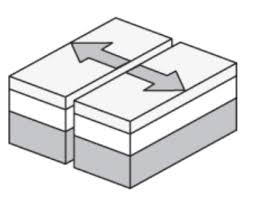
Name the boundary
a)
convergent boundary
b)
divergent boundary
c)
transform boundary
d)
sergent boundary
32.
The mantle of Earth is made partly of magma. When magma rises and sinks, this is called ______________.
a)
a conduction current
b)
a hot spot
c)
a volcanic eruption
d)
a convection current
33.
Where does the heat come from that drives this convection current in the mantle?
a)
The sun
b)
The crust
c)
the mantle
d)
the core
34.
During sea floor spreading, molten material rises up from the mantle...
a)
along the continents
b)
at the mid ocean ridges
c)
deep ocean trenches
d)
at north and south poles
35.

Which kind of plate boundary is this?
a)
divergent boundary
b)
transform boundary
c)
convergent boundary (ocean to continent)
d)
convergent boundary (continent to continent)
36.
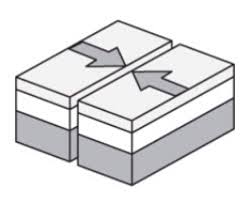
Name the boundary
a)
convergent boundary
b)
divergent boundary
c)
transform boundary
d)
sergent boundary
37.
Which ocean is expanding due to a mid-ocean ridge (divergent boundary)?
a)
Indian
b)
Dead Sea
c)
Atlantic
d)
Artic
38.

This famous transform fault is located in the western United States creates significant earthquake activity for California
a)
New Madrid
b)
Denali Fault
c)
Ramapo Seismic Zone
d)
San Andreas
39.
Which of the following occurs because of convection currents?
a)
Tectonic plates on the crust move.
b)
The mantle increases in size.
c)
Pressure in the crust increases.
d)
Pressure in the crust decreases.
40.
Which type of plate boundary DOES NOT cause volcanoes?
a)
Convergent
b)
Transform
c)
Divergent
41.

Which kind of plate boundary is this?
a)
divergent boundary
b)
transform boundary
c)
convergent boundary (ocean to continent)
d)
convergent boundary (continent to continent)
42.
Ocean-to-ocean and subduction are two types of which boundary?
a)
divergent
b)
transform
c)
convergent
43.

Which kind of plate boundary is this?
a)
divergent boundary
b)
transform boundary
c)
convergent boundary (ocean to continent)
d)
convergent boundary (continent to continent)
44.

Which kind of plate boundary is this?
a)
divergent boundary
b)
transform boundary
c)
convergent boundary (ocean to continent)
d)
convergent boundary (ocean to ocean)
45.
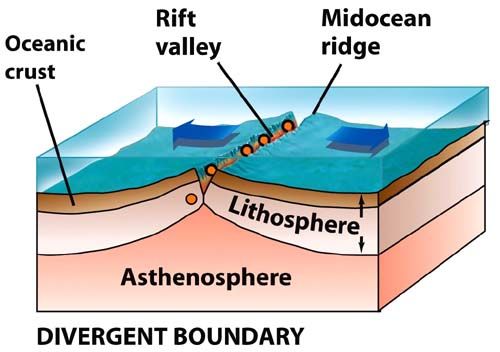
What kind of plate boundary is shown here?
a)
divergent
b)
convergent
c)
transform
d)
strike slip
46.

Matching ________ on different continents are evidence for continental drift.
a)
weather systems
b)
river systems
c)
rock structures
d)
wind systems
47.

The feature labeled C represents some of the deepest spots on the ocean floor. These areas are called ___.
a)
mid-ocean ridge
b)
trenches
c)
deep-sea vent
d)
abyssal plain
48.

The feature labeled D is part of the continuous underwater mountain range that circles Earth. It is called ___.
a)
mid-ocean ridge
b)
trenches
c)
deep-sea vent
d)
abyssal plain
49.

What technology did scientists use in the mid-1900s to map the mid-ocean ridge?
a)
sonar
b)
submarines
c)
satellites
d)
deep-sea diving
Reset

