
 Worksheets
Chapter 4 life science
Total questions: 47
Worksheet time: 34mins
Name
Class
Date
1.
All Offspring of Asexual reproduction are identical
a)
True
b)
False
2.
How many parent(s)are needed for asexual?
a)
4
b)
1
c)
9
d)
100
3.
Which process is considered to be faster?
a)
Asexual
b)
Sexual
4.
True or False: Fission is a way to reproduce asexually.
a)
True
b)
False
5.
A hydra reproduces when an outgrowth, or bud, forms and continues to develop until if falls off of the parent. This is an example of:
a)
Binary Fission
b)
Sporulation
c)
Budding
d)
Vegetative Propagation
6.

a)
budding
b)
sporulation
c)
vegetative propagation
d)
binary fission
7.
In asexual reproduction, all of the offspring are:
a)
Physically Identical
b)
Genetically Identical
c)
Physically and Genetically Identical
d)
Not Identical
8.

a)
budding
b)
binary fission
c)
sporulation
d)
regeneration
9.
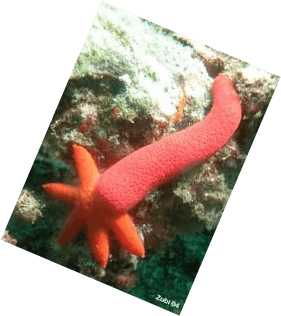
What type of asexual reproduction is taking place?
Fishermen work hard to catch and remove all the starfish that get into their favorite shell fishing beds and the “underwater farms” where they raise clams and oysters. In the past, they put the starfish into their boats, cut them up with knives, and then throw the pieces of starfish overboard. They thought this would kill the starfish. What they did not know was that each piece of starfish will grow into a whole new animal.
Fishermen work hard to catch and remove all the starfish that get into their favorite shell fishing beds and the “underwater farms” where they raise clams and oysters. In the past, they put the starfish into their boats, cut them up with knives, and then throw the pieces of starfish overboard. They thought this would kill the starfish. What they did not know was that each piece of starfish will grow into a whole new animal.
a)
Regeneration
b)
Vegetative propagation
c)
Budding
d)
Fission
10.
How many parent(s)are needed for asexual?
a)
4
b)
1
c)
9
d)
100
11.
When a starfish grows a new body off a broken arm, what kind of reproduction is this?
a)
Sexual
b)
Differentiation
c)
Asexual
d)
Specialization
12.
What are some of the facts about asexual reproduction?
a)
Takes only one mate to reproduce and takes a longer time to reproduce
b)
Takes a shorter amount of time to reproduce and it takes two mates to reproduce
c)
Reproduces diverse offspring and takes a longer time to reproduce
d)
Takes only one mate to reproduce and takes a shorter time to reproduce
13.
This produces 2 identical cells.
a)
mitosis
b)
meiosis
14.
Why do we need meiosis?
a)
To double the number of chromosomes going into sex cells
b)
To halve the number of chromosomes going into sex cells
c)
To triple the number of chromosomes going into sex cells
d)
To not change the number of chromosomes going into sex cells
15.
The result of meiosis is:
a)
two diploid cells
b)
two haploid cells
c)
four diploid cells
d)
four haploid cells
16.
The purpose of meiosis is to form ________ cells.
a)
body
b)
sex
c)
somatic
d)
brain
17.
The cells produced via meiosis are called:
a)
sex cells
b)
somatic cells
c)
body cells
d)
skin cells
18.

Identify the phase.
a)
Metaphase I
b)
Metaphase II
c)
Prophase I
d)
Anaphase II
19.

What phase is represented?
a)
prophase1
b)
prophase 2
c)
telophase 1
d)
telophase 2
20.

What phase is represented?
a)
metaphase 1
b)
metaphase 2
c)
anaphase 1
d)
anaphase 2
21.

What phase is shown in the picture?
a)
anaphase 1
b)
anaphase 2
c)
metaphase 1
d)
telophase 1
22.

A human usually has xx amount of chromosomes.
a)
6
b)
22
c)
4
d)
46
23.
If a somatic (body) cell in a butterfly contains 24 chromosomes, a butterfly egg would contain
a)
3
b)
6
c)
12
d)
24
24.
If the Diploid number of Carrots is 18, the haploid number is
a)
18
b)
9
c)
27
d)
36
25.
The chromosomes that pair up during meiosis, are called __________ chromosomes.
a)
heterozygous
b)
asexual
c)
homologous
d)
genes
26.
How many daughter cells are produced at the end of meiosis?
a)
1
b)
2
c)
3
d)
4
27.

What phase is represented?
a)
metaphase 1
b)
metaphase 2
c)
anaphase 1
d)
anaphase 2
28.

Meiosis makes sperm and egg cells. In humans, sperm and egg cells each have _____ chromosomes. Therefore a fertilized human egg cell (sperm and egg cell combined) would create a cell with _____ chromosomes.
a)
23, 46
b)
46, 23
c)
2, 4
d)
50, 100
29.

What is one of the advantages, why is it better to reproduce sexually versus asexually?
a)
survival of the fittest
b)
overproduction
c)
genetic variation
d)
cloning
30.

This picture shows which process?
a)
mitosis
b)
meiosis
c)
the cell cycle
31.

Identify the phase.
a)
Telophase I
b)
Telophase II
c)
Metaphase I
d)
Metaphase II
32.
When does replication of chromosomes occur in animal cell meiosis?
a)
Before Meiosis I and Meiosis II
b)
Before Meiosis II Only
c)
Before Meiosis I Only
d)
During Prophase I and Prophase II
33.
The fertilized egg is termed a/an _____.
a)
gamete
b)
allele
c)
homolog
d)
zygote
34.

Identify the process.
a)
Mitosis
b)
Meiosis I
c)
Meiosis II
d)
Interphase
35.
Which of these cells would be produced through meiosis?
a)
skin cells
b)
liver cells
c)
brain cells
d)
sperm cells
36.
The chromosomes that pair up during meiosis, are called __________ chromosomes.
a)
homozygous
b)
asexual
c)
homologous
d)
genes
37.
A male shark has 40 chromosomes in each of its sex cells. How many would be present in its body cells?
a)
20
b)
40
c)
80
d)
160
38.
more genetic diversity among offspring.
a)
sexual
b)
asexual
39.
offspring are identical to the parent.
a)
sexual
b)
asexual
40.
Requires only one parent
a)
sexual
b)
asexual
41.
Requires two parents
a)
sexual
b)
asexual
42.

The offspring from asexually reproduced organisms are?
a)
Different than their parents
b)
Identical to parents
c)
Like a combination from both parents
d)
A different species
43.

All of the offspring of an organism have the same genetic material, which is identical to the parent organism. From this, we can conclude that this organism -
a)
makes its own food
b)
is unicellular
c)
live in a marine habitat
d)
reproduces asexually
44.

This is when a new organism grows by cell division on the body of its parent. The bud, or offspring is identical to the parent. The bud, when large enough, can break off of the parent and live on its own. Examples of this include yeast, hydra and potatoes.
a)
Regeneration
b)
Vegetative propagation
c)
Fission
d)
Budding
45.
Which is a type of Asexual Reproduction
a)
Sexual
b)
Binary fission
c)
Cells
d)
organism
46.

Prokaryotes (bacteria) reproduce asexually via -
a)
spore formation
b)
bud creation
c)
vegetative propagation
d)
binary fission
47.
A fisherman wants to alleviate his problem of starfish that are eating the oysters in his oyster farm. He decides to cut the starfish in half and throw it back into the water. What process will the starfish undergo, causing more problems for the fisherman?
a)
Vegetative Propagation
b)
Regeneration
c)
Binary Fission
d)
Budding
100 %

