
NEW
Font size
S
M
L
XL
 Worksheets
Prokaryotic Cells, Eukaryotic Cells & Cell Theory
Total questions: 30
Worksheet time: 23mins
Name
Class
Date
1.
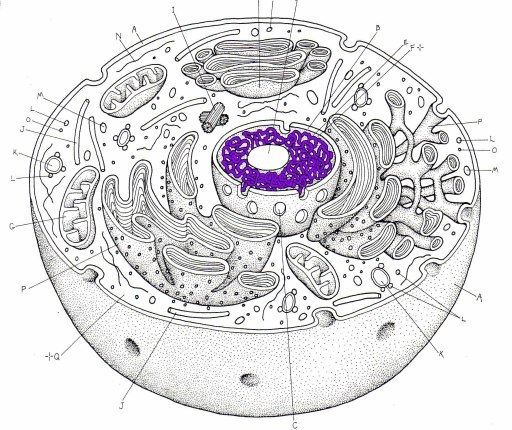
What kind of cell is this?
a)
Eukaryotic
b)
Prokaryotic
2.
Cells can only be seen with the help of a...
a)
hand lens
b)
magnifying glass
c)
3D glasses
d)
microscope
3.
All living things are made of...
a)
atoms
b)
cells
c)
bacteria
d)
plants
4.
What is unicellular?
a)
one cell
b)
many cells
c)
no nuclues
d)
DNA
5.
What is multicellular?
a)
one cell
b)
no cells
c)
many cells
d)
no nucleus
6.
What type of cell has a nucleus?
a)
eukaryotic
b)
prokaryotic
7.
What type of cell does not have a nucleus?
a)
eukaryotic
b)
prokaryotic
8.
Plants and animal cells are examples of ___ cells
a)
prokaryotic cells
b)
eukaryotic cells
9.

What type of cell is pictured?
a)
Prokaryotic
b)
Eukaryotic
c)
Plant
d)
Animal
10.

Type of cell shown?
a)
Bacterial
b)
Prokaryotic
c)
Eukaryotic
d)
Red blood
11.
The main difference between prokaryotic and eukaryotic cells?
a)
Prokaryotic cells have a cell membrane but eukaryotic cells do not.
b)
Eukaryotic cells contain DNA in a nucleus while prokaryotic cells do not.
c)
Eukaryotic cells have flagella but prokaryotic cells do not.
d)
Prokaryotic cells contain membrane-bound ribosomes while eukaryotic cells do not.
12.
Robert Hooke discovered ....
a)
cells
b)
cells in animals
c)
cells in people
d)
nothing of importance
13.
Schwann claimed that all ____ were made of cells
a)
animals
b)
plants
14.

Which of the following scientists was the first to observe bacteria?
a)
Anton van Leuwenhoek
b)
Matthais Schleiden
c)
Robert Hooke
d)
Theodor Schwann
15.

The invention of the microscope made it possible for people to discover and learn about
a)
Plants
b)
Skin
c)
Animals
d)
Cells
16.

What is one way in which all living things on Earth are alike?
a)
All living things have hair.
b)
All living things are made of cells and come from other cells.
c)
The cells of all living things have chloroplast.
d)
All living things can move.
17.

Which of the following is NOT one of the basic points of Cell Theory?
a)
All living things are made of cells.
b)
The cell is the smallest living thing that can perform all the functions of life.
c)
Cells are too small to see without a microscope.
d)
All cells must come from pre-existing cells.
18.

Which scientist did NOT contribute to the cell theory?
a)
Anton Van Leeuwenhoek
b)
Robert Hooke
Robert Hooke
c)
Albert Einstein
d)
Matthias Schleiden
Matthias Schleiden
19.
What is the basic structural and functional unit of all living things?
a)
atom
b)
cell
c)
molecule
d)
human
20.

Number 3
a)
Ocular Lens
b)
Objective Lens
c)
Diaphragm
d)
Base
21.

Number 10
a)
Stage
b)
Stage Clips
c)
Diaphragm
d)
Base
22.

Number 11
a)
Course Adjustment
b)
Fine Adjustment
c)
Small Adjuster
d)
Large Adjuster
23.

Number 4
a)
Stages
b)
Arms
c)
Stage Clips
d)
Ocular Lens
24.
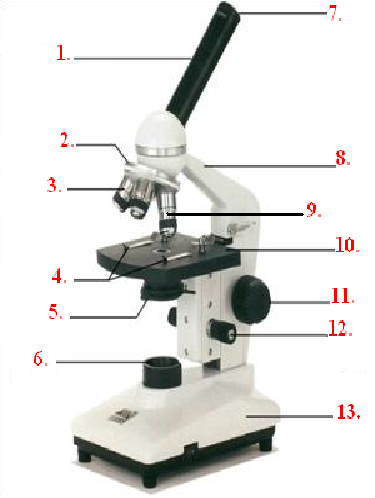
Number 12
a)
Course Adjustment
b)
Fine Adjustment
c)
Small Adjuster
d)
Large Adjuster
25.

Number 5
a)
Knob
b)
Ocular Lens
c)
Diaphragm
d)
Objective Lens
26.

What part is 3?
a)
eye piece
b)
base
c)
arm
d)
coarse adjust
27.

Which part lets you turn up the power of magnification, such increasing from 40x to 100x?
a)
coarse adjustment knob
b)
diaphragm
c)
field-of-view
d)
revolving nosepiece
28.
Which of the following would be a non-living thing?
a)
Bob Saget
b)
Tree
c)
Moose
d)
Water
29.
All living things have ____. Some organisms have only one.
a)
cells
b)
arms
c)
lungs
d)
speaking capabilities
30.
All living things grow and change.
a)
True
b)
False
Reset

