wayground logo

Free Printable Worksheets

NEW

Font size

S
M
L
XL
Worksheets

Fossils

Total questions: 37

Worksheet time: 39mins

Name
Class
Date
1.
People who study fossils are called ____.
a)
meterologists
b)
fossilologists
c)
paleontologists
d)
fossil hunters
2.

Which of the following is NOT an example of a fossil?

a)

a petrified tree trunk

b)

a footprint captured in stone

c)

a seashell found on the beach

d)

an insect stuck in amber

3.
Which of the following is NOT something you could learn from a fossil?
a)
The size of the animal
b)
What the animal ate
c)
The color of the animal
d)
Where the animal lived
4.
In order for a fossil to form, which of the following events must happen FIRST?
a)
Slowly, minerals in the water replace the bone.
b)
Sediment covers the bone.
c)
An animal dies.
d)
The bone is no longer a bone, but a rock copy.
5.

Why don't we know what many ancient plants looked like?

a)

They had too many soft parts that decayed quickly.

b)

They were all eaten by dinosaurs.

c)

There weren't any ancient plants.

d)

They had too many hard parts.

6.
Which statement BEST describes how the fossil bones of a dinosaur are formed?
a)
The dinosaur became trapped in amber.
b)
The dinosaur was covered in sediment.
c)
The dinosaur was frozen in ice.
d)
The dinosaur stepped in wet mud.
7.
What happens when a group of animals become extinct?
a)
All of its members have died.
b)
Only a few of its members are still living.
c)
The animals can no longer lay eggs.
d)
All of its members move to another place.
8.

Where can the oldest fossils be found?

a)

The top layer

b)

The middle layer

c)

They are all the same age

d)

The bottom layer

9.

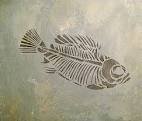
If scientists found this fossil on a mountain, what could they infer?

a)

what fish are like today

b)

that this fish lacked oxygen

c)

what kind of animal ate this fish

d)

that water once covered the area

10.
Which animal part would most likely form a fossil?
a)
Muscle 
b)
Fur
c)
Lung
d)
Bone 
11.
What can the fossil of a leaf tell you?
a)
which animals ate plants
b)
the shape of the leaf
c)
the color of the leaf
d)
how many leaves were on the tree
12.

Which of the following would make scientists think that Georgia was once underwater?

a)

Walking trout live in the Flint River in western Georgia.

b)

Many fossils found in Georgia are of sea animals.

c)

Ammonites are creatures that had hard shells like snails.

d)

The soil in Georgia is still very wet.

13.
Which of these CANNOT be learned from observing a fossil? 
a)
type of organism
b)
an organism’s size
c)
an organism’s color
d)
an organism’s shape
14.
Which of these would NOT be a fossil?
a)

an organism preserved in ice over millions of years

b)

an organism preserved in amber

c)

dinosaur bones that have been replaced by minerals and turned into rock

d)

any dead plant or animal

15.
When a fossil forms, which event happens LAST?
a)
The soft part rots away and the hard parts remain. 
b)
Minerals replace the hard parts and turn them into rock. 
c)
A living thing dies and gets buried under sediment.
d)
Heavy layers of sediment begin to pile on, creating pressure. 
16.

Which of these is MOST LIKELY true about the animal in this picture?

a)

It is an endangered animal.

b)

It is a fossil of a meat eater.

c)

It is a fossil of a plant eater.

d)

The animal is still alive.

17.
What is the BEST description of a fossil?
a)
evidence of what the earth was like
b)
remains of dead animals in the sea
c)
preserved remains of plants and animals that lived long ago
d)
a dead plant or animal
18.
What is the BEST way scientists can learn about the environments of the past?
a)
by writing books
b)
by studying fossils
c)
looking at plants today
d)
from microorganisms 
19.
The picture shows four different rock layers. What is the best evidence that one of these layers of rock was formed under an ocean?
a)
the number of caves in the layer
b)
the thickness of the layer
c)
the type of fossils in the layer
d)
the height above sea level of the layer
20.

What can the fossils of footprints left behind by an animal tell you about what the animal was like?

a)

The animal is still alive today

b)

If the animal could fly

c)

If the animal traveled alone or in groups

d)

The animal is a meat eater

21.
What is NOT true about how fossils are formed?
a)

It can be frozen in ice.

b)

It can be trapped in the resin(sap) of a tree.

c)

It can be quickly buried in sediment after death.

d)

It can be footprints of an organism left on the sidewalk.

22.

The hardened remains or trace of a living thing is called a ________.

a)

fossil

b)

replica

c)

extinct

d)

conditions

23.

Modern (today's) shark teeth are much smaller than fossil shark teeth that have been discovered. What does this mean about sharks' size?

a)

Sharks are smaller now than long ago.

b)

Sharks are larger now than long ago.

c)

The size of sharks hasn't changed from long ago.

24.
Why are there more animal fossils than plant fossils?
a)
Animals eat plants.
b)
Plants are smaller than animals.
c)
Plants have softer body parts than animals. 
d)
There were more ancient animals than ancient plants.
25.
How are an elephant and mammoth alike?
a)

both are extinct

b)

both have trunks and tusks

c)

both have thick, shaggy fur

d)

both live in warm climate

26.
What replaces the wood of a once-living tree to form petrified wood?
a)
amber
b)
a cast
c)
a mold
d)
minerals
27.

If the fossil of the animal that lived millions of years ago looks like an animal that is alive today, what can you infer?

a)

The animal is still living today.

b)

The animal has changed a lot!

c)

The animal doesn't eat what the ancient one did.

d)

They all rotted away.

28.
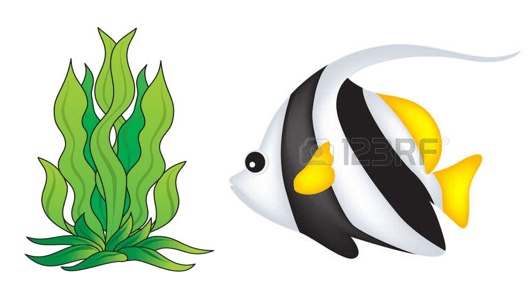
Suppose both of these living things die on the same day.  Which one is more likely to become a fossil? 
a)
The plant because it is bigger.
b)
The fish because it has more hard parts than the plant.
c)
The plant because it is green.
d)
The fish because it has gills.
29.
What are the remains of once living things called?
a)
amber
b)
fossils
c)
species
d)
extinct
30.
Fossils form ....
a)
quickly
b)
over a few years
c)
over a few months
d)
over thousands of years.
31.

Fossils give clues about the past that help us learn about life on earth long ago.

a)

True

b)

False

32.

Fossils of fish were found under land where cows now live. What can you infer?

a)

the fish were dropped there by flying birds

b)

this land was once under the ocean

c)

farmers fed the fish to the cows

d)

fish used to live on land

33.
Which animal part would MOST LIKELY form a fossil?
a)
fur
b)
lung
c)
bone
d)
muscle
34.
What can you learn by studying fossils?
a)
The types of plants and animals that lived long ago.
b)
What the earth used to be like and how it changed. 
c)
How much time passed since the organism was alive.
d)
All of the above.
35.

Old coins can become fossils.

a)

False

b)

True

36.

By studying fossils, you can learn what an animal ate.

a)

False

b)

True

37.
Why don't most dead animals become fossils?
a)
They were not properly preserved for a long time.
b)
They were eaten by other animals.
c)
They decomposed before fossilization could take place.
d)
All of the above.