
 Worksheets
E/S Semester 1 Review
Total questions: 192
Worksheet time: 3hrs 1mins
Name
Class
Date
1.

What is measured with a graduated cylinder?
a)
Passage of time
b)
Distance from one thing to another
c)
Weight of an object
d)
Volume of liquid
2.
What is special about graduated cylinders?
a)
They hold large quantities of liquid safely
b)
They measure small amounts very accurately. We use them when precision is important.
c)
They allow us to examine the liquid, we use them when looking for suspended solids.
d)
They are easily heated. We use graduated cylinders to heat liquids
3.
The _________________ is used to simply hold or approximately measure a liquid.
a)
scale
b)
test tube
c)
beaker
d)
thermometer
4.

What does this measure?
a)
Mass
b)
Volume
c)
Temperature
d)
Length
5.

What is this called?
a)
Beaker
b)
Flask
c)
Test Tube
d)
Graduated Cylinder
6.
Which units are used to measure volume?
a)
Grams
b)
Liters
c)
Meters
d)
Seconds
7.
Which units are used to measure mass?
a)
Grams
b)
Liters
c)
Meter
d)
Second
8.
Which units are used to measure time?
a)
Grams
b)
Liters
c)
Meters
d)
Seconds
9.

What is the volume of the blue liquid?
a)
6 mL
b)
7mL
c)
6.4 mL
d)
6.6 mL
10.

What is the mass of this object?
a)
143 grams
b)
40.3 grams
c)
43 grams
d)
3 grams
11.
5000 millimeters = ____ meters
a)
5
b)
50
c)
500
d)
25
12.
What is the metric base unit for mass
a)
ounce
b)
pounds
c)
grams
d)
kilograms
13.
convert 650 m to km
a)
6.5
b)
0.65
c)
65
d)
0.065
14.

What is the volume of the screw?
a)
10 mL
b)
13 mL
c)
16 mL
d)
3 mL
15.

Find the volume.
a)
55 yd3
b)
121 yd3
c)
22 yd3
d)
330 yd3
16.
How would you write 0.0005 in scientific notation?
a)
50 x 105
b)
5 x 10⁴
c)
5 x 10³
d)
.5 x 103
17.
How do you write
8.317 x 10⁶
in standard form?
8.317 x 10⁶
in standard form?
a)
8, 371, 000
b)
83, 170, 000
c)
837, 100
d)
8, 317, 000
18.
Which of the following is correct scientific notation?
a)
20.35 x 10⁴
b)
.2035 x 104
c)
2035 4
d)
2.035 x10⁴
19.
Express the following in scientific notation:
.000457
.000457
a)
457 x 106
b)
457 x 10-6
c)
4.57 x10⁴
d)
4.57 x 10⁻⁴
20.
Express the following in standard notation:
8.025 x 10⁻⁸
8.025 x 10⁻⁸
a)
.00000008025
b)
.000000008025
c)
802,500,000,000
d)
80,250,000,000
21.
UNDERSTANDING
If the exponent is a negative number...
If the exponent is a negative number...
a)
you will get a large number
b)
you will get a small number
22.
Increasing quantities of CO2 in the atmosphere will likely cause surface air temperatures to be _____.
a)
warmer
b)
cooler
23.

Which of the following is the best conclusion that can be made from this graph?
a)
atmospheric carbon dioxide levels have been decreasing since 1960
b)
Hawaii has a lot of carbon dioxide
c)
humans have been working hard to decrease carbon dioxide levels
d)
atmospheric carbon dioxide levels have increased steadily since 1960
24.
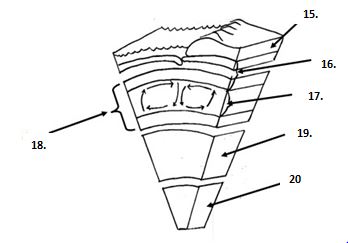
Identify each layer - #19.
a)
mantle
b)
lithosphere
c)
inner core
d)
outer core
25.
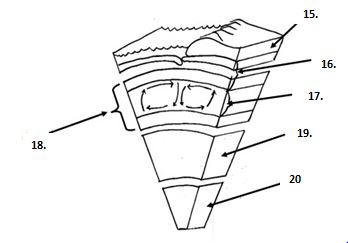
Identify each layer - #20.
a)
mantle
b)
asthenosphere
c)
inner core
d)
outer core
26.

The core is made-up of what two elements?
a)
iron and nickel
b)
iron and oxygen
c)
nickel and silicon
d)
oxygen and silicon
27.
The order of the earth’s compositional layers from most dense to least dense are
a)
Inner Core, Crust, Mantle and Outer Core
b)
Crust, Mantle, Outer Core and Inner Core
c)
Inner Core, Outer Core, Mantle and Crust
d)
Crust, Outer Core, Inner Core and Mantle.
28.

What are the two kinds of crust that the Earth has?
a)
Oceanic and Crustatious Crust
b)
Oceanic and Continental Crust
c)
Optic and Continental Crust
29.
Which of these is a qualitative observation?
a)
The boy is 5 feet tall.
b)
There are six birds in the tree.
c)
The birds are tiny.
d)
There are more blue birds than black birds.
30.
which axis does the responding variable go on?
a)
x axis
b)
y axis
31.
This is how much matter an object takes up.
a)
matter
b)
mass
c)
volume
d)
thermometer
32.
This is how much space an object takes up.
a)
mass
b)
volume
c)
matter
33.
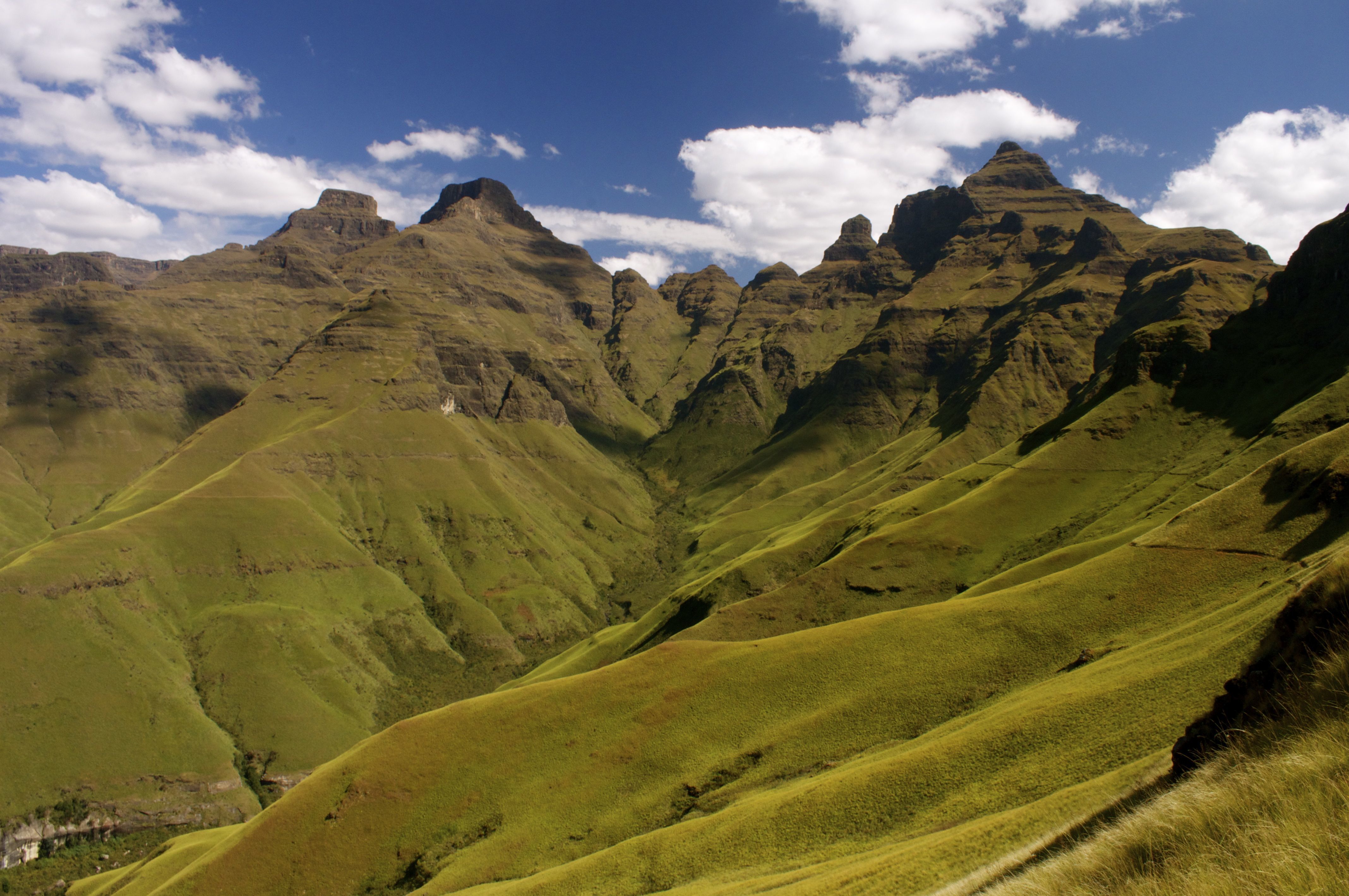
This sphere includes the continents, the ocean floor, all the rocks on the surface, and all of the sand in the deserts.
a)
Hydrosphere
b)
Biosphere
c)
Atmosphere
d)
Geosphere
34.

Composed of all the water on or near the earth
a)
Hydrosphere
b)
Biosphere
c)
Atmosphere
d)
Geosphere
35.
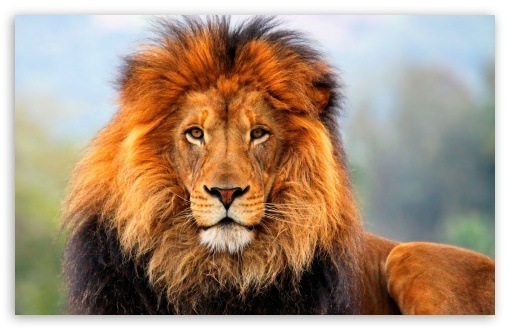
This sphere is composed of all the living things
a)
Hydrosphere
b)
Biosphere
c)
Atmosphere
d)
Geosphere
36.

Body of air surrounding our planet.
a)
Hydrosphere
b)
Biosphere
c)
Atmosphere
d)
Geosphere
37.
When carbon dioxide dissolves from the air into the ocean- the interaction is between...
a)
The atmosphere and geosphere
b)
The atmosphere and hydrosphere
c)
The atmosphere and biosphere
d)
The atmosphere and atmosphere
38.
When dead plants decompose and nitrogen is returned to the soil, the interaction is between which two spheres?
a)
The biosphere and atmosphere
b)
The atmosphere and geosphere
c)
The geosphere and atmosphere
d)
The biosphere and geosphere
39.
Earth's magnetic field results from movements in the
a)
mantle
b)
outer core
c)
inner core
d)
crust
40.
Which of the following occurs because of convection currents?
a)
Tectonic plates on the crust move.
b)
The mantle increases in size.
c)
Pressure in the crust increases.
d)
Pressure in the crust decreases.
41.

The thickest layer of the earth is the
a)
crust
b)
mantle
c)
inner core
d)
outer core
42.

What is the thinnest layer of the earth’s composition?
a)
mantle
b)
inner core
c)
crust
d)
outer core
43.

This rock started as lava that cooled and then was heated and put under pressure over time. What type of rock is this?
a)
Sedimentar
b)
Igneous
c)
Metamorphic
44.
___________ describes how the mineral reflects light.
a)
cleavage
b)
magnetic
c)
luster
45.

This rock formed when bits of other rocks became pressed into a solid. What type of rock is it?
a)
Sedimentary Rock
b)
Metamorphic Rock
c)
Igneous Rock
46.
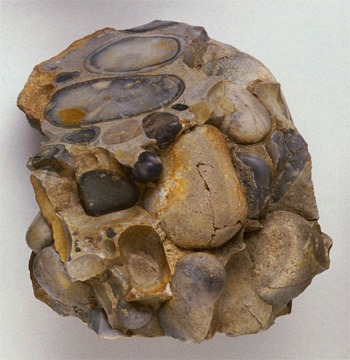
This rock was formed by smaller pieces of rock that settled at the bottom of a lake millions of years ago. What type of rock is this?
a)
Sedimentary
b)
Igneous
c)
Metamorphic
47.

When sediments are pressed together tightly, this is called ____________.
a)
Compaction
b)
Cementation
c)
Weathering
d)
Erosion
48.

The process when rocks break into smaller pieces due to exposure to natural elements is called
a)
erosion
b)
weathering
c)
sediments
49.
The movement of weathered material (sediment) is called?
a)
weathering
b)
erosion
c)
deposition
50.
What is deposition?
a)
Dropping off sediment
b)
Movement of sediment
c)
Breaking down of sediment
51.

The Mohs scale for minerals is shown below. An unknown mineral can be scratched by topaz, but not by feldspar. According to the Mohs scale, which of the following best describes the hardness of the unknown mineral?
a)
6
b)
7
c)
8
d)
9
52.
When a volcano erupts, lava flows out from the top. What type of rock is formed as the lava cools?
a)
igneous
b)
metamorphic
c)
sedimentary
d)
magma
53.
Two or more minerals generally go to make up a(n) ___.
a)
diamond
b)
rock
c)
fluid
d)
element
54.
Minerals that split into pieces with smooth planes are said to have ___.
a)
cleavage
b)
breakability
c)
mass
d)
value
55.
A diamond is harder than almost anything else.
a)
True
b)
False
56.
Melted rock flowing underground.
a)
lava
b)
magma
c)
intrustive rock
d)
extrusive rock
57.
Melted rock flowing on the Earth's surface.
a)
lava
b)
magma
c)
intrusive rock
d)
extrusive rock
58.
Forms when melted rock cools below Earth's surface.
a)
lava
b)
magma
c)
intrusive rock
d)
extrusive rock
59.
Collects in layers to form a type of rock.
a)
sediment
b)
chemical rocks
c)
organic rocks
d)
ore
60.
Form out of once-living matter.
a)
sediments
b)
chemical rocks
c)
organic rocks
d)
gem
61.

What type of rock is granite?
a)
Sedimentary
b)
Metamorphic
c)
Igneous
d)
Clastic
62.
The most abundant group of minerals is the_______________?
a)
carbonates
b)
silicates
c)
ores
d)
oxides
63.
Which of the following does not describe a mineral?
a)
inorganic
b)
solid
c)
crystalline
d)
organic
64.
Metamorphic rocks with alternating light and dark stripes(bands) are called _________________.
a)
crystalline
b)
foliated
c)
non-foliated
d)
intrusive
65.
Gneiss is an example of a/ an _________________ ___________.
a)
extrusive igneous rock
b)
clastic sedimentary rock
clastic sedimentary rock
clastic sedimentary rock
c)
organic sedimentary rock
d)
foliated metamorphic rock
66.
Pumice is a/an_______________ ______________ _____________.
a)
non-foliated metamorphic rock
b)
clastic sedimentary rock
c)
intrusive igneous rock
d)
extrusive igneous rock
67.
Intrusive igneous rocks have large visible crystals because_______________________________.
a)
the crystals are pretty to look at and form so people can view them.
b)
the magma cools quickly and crystals have time to grow.
c)
the magma has lots of iron in it and the atoms bond with other atoms.
d)
the magma cools slowly and the crystals have time to grow.
68.
The density of a rock can be determined by dividing its mass by its________________.
a)
color
b)
weight
c)
volume
d)
specific gravity
69.
Fossils will most likely be found in ______________ _________.
a)
Sedimentary rocks.
b)
Metamorphic rocks.
c)
Igneous rocks.
d)
Pop rocks.
70.

Obsidian is an example of a/an__________________ ______________ _____________.
a)
non-foliated metamorphic rock.
b)
extrusive igneous rock
c)
intrusive igneous rock
d)
chemical sedimentary rock
71.

The picture shows an example of which concept?
a)
Layering
b)
Cleavage
c)
Foliation
d)
Igneous Rock
72.
Why is coal NOT a mineral?
a)
It can be turned into a liquid.
b)
It contains organic matter (dead swamp plants).
c)
It is burned as a fuel to produce electricity.
d)
It is man-made.
73.
What is the most common mineral group found in Earth's crust? (HINT: It is made of oxygen and silicon.)
a)
felsics
b)
mafics
c)
silicates
d)
oxycates
74.
What is the basic material found in rocks?
a)
sediment
b)
other rocks
c)
organic matter
d)
minerals
75.
What are rocks called whose grains are large and easy to see?
a)
chunky-grained
b)
fine-grained
c)
large-grained
d)
coarse-grained
76.
How are rocks classified?
a)
by their origin
b)
by their grain size
c)
by their mineral composition
d)
by their density
77.
What is the difference between extrusive and intrusive igneous rocks?
a)
How fast or slow they cool.
b)
Whether they form from magma or lava.
c)
The size of their crystal grains.
d)
All of these are differences between them.
78.
________ igneous rocks form from lava and are fine-grained.
a)
Intrusive
b)
Extrusive
79.
Igneous rocks can form _____.
a)
only ON Earth's surface.
b)
only BELOW Earth's surface.
c)
ON or BELOW Earth's surface.
80.
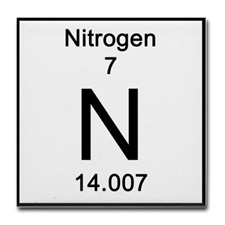
What is the number of protons that the element in this image contain?
a)
14
b)
7
c)
15
d)
18
81.
The first energy level can hold up to how many electrons?
a)
8
b)
4
c)
2
d)
5
82.

What is the atomic mass of "F"
a)
9
b)
18
c)
17
d)
19
83.
The positive particles of an atom are
a)
electrons
b)
positrons
c)
neutrons
d)
protons
84.
the central region of an atom where its neutrons and protons are is its
a)
nucleus
b)
electron cloud
c)
core
d)
center
85.
an atom with atomic number 6 would have how many protons
a)
6
b)
12
c)
3
d)
cannot be determined
86.
Particles in an atom that are neutral and have no charge are
a)
negatrons
b)
electrons
c)
neutrons
d)
protons
87.
Which of the following is a negatively charged subatomic particle?
a)
Electron
b)
Proton
c)
Neutron
d)
Quark
88.
electrons have this type of charge?
a)
negative
b)
positive
c)
neutral
89.
What is the atomic number for an element with three protons?
a)
2
b)
1
c)
3
d)
6
90.
Most of the mass in an atom is concentrated in the...
a)
electrons
b)
nucleus
c)
protons
d)
empty space
91.
What does the nucleus consist of?
a)
Protons + Electrons
b)
Neutrons + Electrons
c)
Atoms
d)
Protons + Neutrons
92.
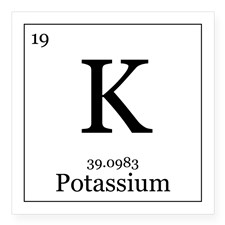
How many neutron are in the atom "K"?
a)
7
b)
2
c)
39
d)
12
93.

What the number of eletrons that this carbon have?
a)
10
b)
12
c)
6
d)
14
94.
A metamorphic rock changes into an igneous rock by what two processes?
a)
Melting and cooling
b)
Extreme heat and pressure
c)
Compaction and cementation
d)
Weathering and erosion
95.
Which of the following are nonrenewable resources?
a)
Plants and animals
b)
Wind and water
c)
Sunlight and water
d)
Coal and petroleum
96.

Each rock type can follow only one pathway of the rock cycle.
a)
True
b)
False
97.

Cooling & crystalization produce
a)
igneous rocks
b)
metamorphic rocks
c)
sedimentary rocks
98.
True or False: Once a rock is sedimentary, it cannot become an igneous rock.
a)
True
b)
False
99.
Magma pushed toward the surface of Earth because________
a)
of the low pressure within Earth's mantle
b)
water cools the surface of Earth
c)
heat makes the magma expand and rise to the surface
d)
melted rock is less dense than solid rock
100.
Igneous and metamorphic rocks go through ____________________________ to become sediment.
a)
weathering and erosion
b)
heat and pressure
c)
melting and cooling
d)
compacting and cementing
101.

These rocks were broken apart from the continuous freeze/thaw of water in the cracks of the rocks. This is an example of:
a)
ice wedging
b)
acid rain
c)
permeability
d)
abrasion
102.
How is mechanical weathering different from chemical weathering?
a)
Chemical weathering happens over much shorter time frame than mechanical weathering.
b)
Chemical weathering changes the chemical composition of rocks; mechanical weathering does not.
c)
Chemical weathering occurs only in tropical climates; mechanical weathering occurs only in cool climates.
d)
Chemical weathering occurs only in the mountains; mechanical weathering occurs only on flat land.
103.
All of the following are causes of physical weathering EXCEPT...
a)
plant growth
b)
wind
c)
acid rain
d)
running water
104.
What happens when a metamorphic rock melts?
a)
It becomes sediment
b)
It becomes an igneous rock
c)
It becomes magma
d)
It becomes a sedimentary rock
105.

Which type of rock is most likely to be found inside a cave?
a)
Igneous rocks
b)
Metamorphic rocks
c)
Sedimentary rocks
106.

What is the volume of Object X?
a)
10.0 cm3
b)
15.0 cm3
c)
20.0 cm3
d)
25.0 cm3
107.
Jack has a rock. The rock has a mass of 14g and a volume of 2cm3. What is the density of the rock?
a)
7 mL
b)
7 g/cm3
c)
28 g/cm3
d)
1/7 g/cm3
108.
True or False: The density of a specific type of material never changes.
a)
True
b)
False
109.

I have two objects with the same volume but different masses. Which object will be more dense?
a)
The object with less weight.
b)
The object with more weight.
c)
The object with more mass.
d)
The object with less mass.
110.
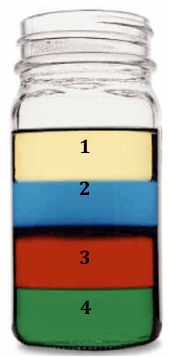
Put the liquids in order from most dense to least dense?
a)
4, 3, 2, 1
b)
1, 2, 3, 4
c)
3, 4, 2, 1,
d)
4, 3, 1, 2
111.

Which box has a higher density?
a)
Box A
b)
Box B
c)
cannot be determined
d)
they are the same
112.
In general what is the most dense form of matter?
a)
solid
b)
liquid
c)
gas
d)
plasmas
113.

Calculate the density of the cube.
a)
.33 g/cm3
b)
.4 g/cm3
c)
.6 g/cm3
d)
.5 g/cm3
114.

Calculate the density of the cube.
a)
2 g/cm3
b)
4 g/cm3
c)
6 g/cm3
d)
8 g/cm3
115.
Describe a solute.
a)
part of solution present in largest amount
b)
gets dissolved
c)
water
d)
surrounds and breaks apart
116.

How does a solution become supersaturated?
a)
dissolve lots of solute in it.
b)
dissolve a little solute in it.
c)
dissolve more solute than you should be able to.
d)
dissolve a super amount of solvent in it.
117.
Solution where more solute can still be dissolved at the given temperature.
a)
Saturated
b)
Unsaturated
c)
Supersaturated
d)
Homogeneous solution
118.

Which solute is the most soluble at 10 ⁰C?
a)
KI
b)
KClO3
c)
NH4Cl
d)
NH3
119.

Which solute is the least soluble at 90 ⁰C?
a)
SO2
b)
KClO3
c)
KI
d)
HCl
120.

Which solute does not increase in solubility as temperature rises?
a)
NH3
b)
NaNO3
c)
KNO3
d)
NaCl
121.

How many grams of SO2 can dissolve at 50 ⁰C?
a)
5 g
b)
10 g
c)
20 g
d)
39 g
122.

What is the maximum temperature where at least 60 g of HCl can dissolve?
a)
45 ⁰C
b)
55 ⁰C
c)
35 ⁰C
d)
65 ⁰C
123.

What is the minimum temperature needed to dissolve at least 10 g of KClO3?
a)
25 ⁰C
b)
10 ⁰C
c)
5 ⁰C
d)
100 ⁰C
124.
Solubility refers to the ____ of solute that can dissolve in a certain volume or mass of solvent, at a certain temperature.
a)
Volume
b)
Proportion
c)
Mass
d)
Particles
125.
Water and Kool-Aid are mixed together. Hot water, coffee and sugar are mixed together. Which substance is the solvent in both?
a)
Water
b)
Coffee
c)
Kool-aid
d)
Sugar
126.
To separate a mixture of salt and water what separation tool/method is used?
a)
Filter
b)
Screen
c)
Magnet
d)
Evaporation
127.
The concentration of a mixture can be increased in which of the following ways?
a)
Heating the mixture
b)
Adding more water “solvent”
c)
Adding more powder “solute”
d)
Stirring the mixture
128.
Which of the following usually makes a substance dissolve faster in a solvent?
a)
agitating the solution
b)
increasing the particle size of the solute
c)
lowering the temperature
d)
decreasing the number of particles
129.
A solution that is considered dilute would be....
a)
Dark in color
b)
Have a strong scent
c)
Have a large amount of solute
d)
Have a small amount of solute
130.
air is a
a)
compound
b)
element
c)
heterogeneous mixture
d)
solution
131.
Another name for a homogeneous mixture is
a)
an element.
b)
a solution.
c)
a compound.
132.
When a Koolaid mix in water is dark in color and very sweet it is a __________ solution.
a)
concentrated
b)
Diluted
133.
What is a compound?
a)
the simplest form of a substance
b)
a combination only of 3 elements
c)
a combination of 2 or more elements
d)
a place where people are held
134.
What is the simplest form that cannot be broken down to anything simpler?
a)
element
b)
solution
c)
compound
135.

This type of mixture contains two or more substances that are visibly distinguishable.
a)
homogeneous
b)
heterogeneous
c)
solution
d)
colloid
136.
Solubility is a ________ property.
a)
neat
b)
chemical
c)
physical
d)
an organic
137.
The universal solvent is ______.
a)
sodium
b)
acid
c)
water
d)
wind
138.
What property of water allows it to be such a versatile solvent that it is often called the "universal solvent?"
a)
Purity
b)
Polarity and cohesion
c)
High heat capacity
d)
Expansion upon freezing
139.
Water striders can walk across the surface of calm water. Their feet push the surface of the water down slightly, but they do not break the surface. Why?
a)
The insects are light enough so they do not break the hydrogen bonds holding the water molecules together
b)
The insects actually use their wings to hover slightly above the water’s surface and they only skim it with their feet.
c)
The insect’s feet are non-polar, so they are repelled by the polar water molecules and are pushed away from the water’s surface.
d)
The insects are small enough to see the individual water molecules, so they are able to step carefully from one molecule to the next
140.

What word describes when water is attracted to other substances?
a)
cohesion
b)
adhesion
c)
capillary action
d)
surface tension
141.
Why can water have no net charge but have slight charges in different parts of the molecule?
a)
The oxygen end is slightly negative and the hydrogen end is slightly positive
b)
The hydrogen end is slightly negative and the oxygen end is slightly positive
c)
The hydrogen and oxygen ends change in polarity
d)
Because it is hydrophobic
142.
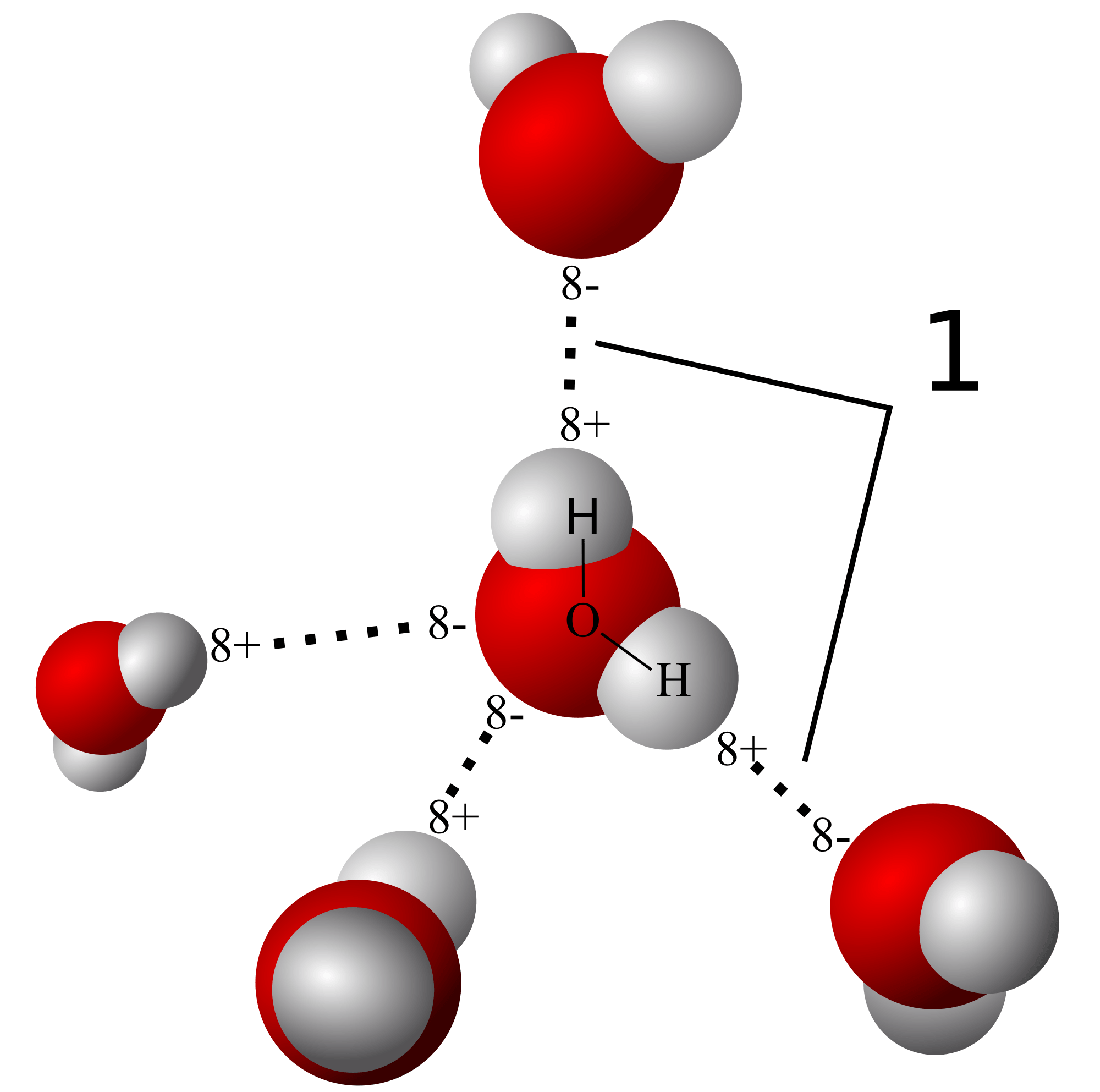
Attractions between water molecules are called
a)
Covalent bonds
b)
Ionic bonds
c)
Polar bonds
d)
Hydrogen bonds
143.

The attraction that causes water and other liquids to form drops on thin films is called ________________. This is also water’s ability to be attraction to other water molecules.
a)
adhesion
b)
capillary action
c)
cohesion
d)
surface tension
144.
Why does ice float?
a)
As water freezes, it expands and its density decreases.
b)
As water freezes, it takes up more hydrogen from the atmosphere, causing it to have a greater buoyancy.
c)
As water freezes, air becomes trapped between the hydrogen bonds of water molecules.
d)
As water freezes, it takes up more oxygen from the atmosphere, causing it to have a greater buoyancy.
145.
Water is polar because...
a)
The unequal sharing of electrons gives the water molecule a slight negative charge near its oxygen atom and a slight positive charge near its hydrogen atoms.
b)
The molecule has two poles, at which the it is colder than other regions of the molecule.
c)
The unequal sharing of electrons gives the water molecule a slight negative charge near its hydrogen atoms and a slight positive charge near its oxygen atom.
d)
The water molecule is neutral.
146.

A solution with a pH of 3.6 would be...
a)
Acid
b)
basic
c)
Neutral
d)
Acid and basic
147.
A solution with a pH of 7.0 would be...
a)
Acid
b)
Base
c)
Neutral
d)
Acid and Base
148.

Pollution causes the pH of rain water fall below 6. What is such type of rain called?
a)
Acid rain
b)
polluted rain
c)
low pH rain
d)
non-point source pollution
149.
What is the main property of water?
a)
Ice
b)
Adhesion
c)
Cohesion
d)
Polarity
150.
A(n) _______ is a substance with a pH greater than 7.
a)
Base
b)
Acid
c)
Buffer
d)
Water
151.
Which solution releases H+ in solution?
a)
Base
b)
Acid
c)
Buffer
d)
Water
152.
This substance releases OH- into solution
a)
Acid
b)
Base
c)
Neutral
153.
Tastes Sour
a)
Acids
b)
Bases
c)
Salts
d)
All
154.
Tastes bitter.
a)
Acids
b)
Bases
c)
Salts
d)
All
155.

This image represents
a)
Neutralization reaction
b)
synthesis
c)
decomposition
d)
single displacement
156.
Feels slippery.
a)
Acids
b)
Bases
c)
All
157.
In a basic solution, red litmus paper will turn...
a)
Blue
b)
No Change
158.
In an acidic solution, blue litmus paper will turn...
a)
red
b)
No change
159.
LiOH is an example of a(n)
a)
Acid
b)
Base
c)
Neutral
160.
HBr is an example of a(n)
a)
Acid
b)
Base
c)
Neutral
161.
How does an antacid affect your stomach acid?
a)
dilutes it
b)
neutralizes it
c)
increases its acidity
d)
lowers its concentration
162.
A neutralization reaction will always produce...
a)
water & salt
b)
water
c)
salt
d)
water & carbon
163.
A(n) __________ is made of two or more elements chemically combined in fixed ratios.
a)
atom
b)
solution
c)
mixture
d)
compound
164.
__________ is the interaction that occurs between acids and bases in which the properties of each are canceled out by the other
a)
indication
b)
dissolution
c)
balancing
d)
neutralization
165.
Ionic Bonding involves...
a)
The transfer of protons
b)
The transfer of nuetrons
c)
The transfer of electrons
d)
None Of the above
166.
What happens when the sodium atom loses an electron?
a)
It become negatively charged
b)
It become positively charged
c)
none
167.
What two types of atoms make a covalent bond?
a)
2 Nonmetals
b)
1 Nonmetal and 1 Metal
c)
2 Metals
d)
2 Noble Gases
168.
Covalent compounds
a)
Share electrons
b)
transfer electrons
c)
contain a sea of electrons
d)
conduct electricity
169.
What is a valence electron?
a)
an electron that is found in the outermost shell of an atom.
b)
an electron found in the innermost shell of an atom.
c)
an electron found in the middle shell.
170.

How many valence electrons in this structure?
a)
6
b)
5
c)
4
d)
7
171.
What type of bond is between a nonmetal & a metal?
a)
Covalent Bonds
b)
Ionic Bonds
c)
Metallic Bonds
172.
The "3" in NH3 is the atomic number of hydrogen.
a)
True
b)
False
173.
Why do the noble gases not react with other elements?
a)
They don't want to
b)
They need many electrons
c)
They have 8 valence electrons
d)
Their protons and electrons are balanced
174.
How many atoms of carbon (C) are in C6H12O6?
a)
3
b)
6
c)
12
d)
24
175.
Which of the following is a compound?
a)
Co
b)
O2
c)
C
d)
CO2
176.
Which of the following is NOT an element?
a)
H2O
b)
H2
c)
O2
d)
Au
177.
How many elements are in H2O?
a)
1
b)
2
c)
3
d)
4
178.
How many atoms are there TOTAL in:
H2SO4
H2SO4
a)
6
b)
5
c)
7
d)
3
179.
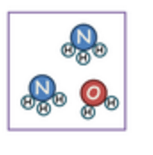
This picture represents:
a)
Element
b)
Compound
c)
Mixture of Elements
d)
Mixture of Compounds
180.
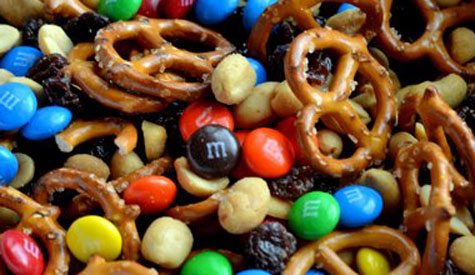
What type of mixture is this?
a)
homogenous mixture
b)
chemical
c)
heterogeneous mixture
d)
solid mix
181.

Which one of these pictures represents a pure substance?
a)
1 and 2
b)
1 and 3
c)
2 and 3
d)
1, 2 and 3
182.

The blue numbers in the image below represent ________
a)
I don't know, and don't want to try
b)
coefficients
c)
subscripts
d)
none of the answers are correct
183.
The substances at the beginning of a chemical equation are called the ____
a)
product
b)
yield
c)
chemical symbol
d)
reactants
184.
In a chemical reaction, everything to the rightof the arrow is called ______________.
a)
Products
b)
Yields
c)
Molecules
d)
Reactants
185.
How many atoms of aluminum are on each side of the following equation: 4Al + 3O2 --> 2Al2 O3
a)
2
b)
6
c)
1
d)
4
186.
How many O's are in Al₂(SO₄)₃
a)
4
b)
12
c)
7
d)
24
187.
Balance this equation...
HgO --> Hg + O2
HgO --> Hg + O2
a)
It is balanced
b)
2HgO --> Hg + O2
c)
2HgO --> 2Hg + O2
d)
I don't know...Oh well!
188.
Which of the following shows the correct way to balance the chemical equation?
Fe + O2 -> Fe2O3
Fe + O2 -> Fe2O3
a)
4Fe + 3O2 -> 2Fe2O3
b)
2 Fe + 3O2 -> Fe2O6
c)
4 Fe + O6 -> 2Fe2O3
d)
None of the options are correctly balanced.
189.
At the end of chemical reactions, what is the total mass of the reactants compared to the total mass of the products?
a)
the product is doubled
b)
the product is half the mass of the reactants
c)
the mass is the same
d)
the mass changes depending on the reaction
190.
The number in front of a compound or element is a
a)
Subscript
b)
Coefficient
c)
Superscript
d)
Charge
191.
A precipitate is a
a)
liquid that forms when two solids are reacted
b)
a solid that forms when two liquids are mixed
c)
a gas that forms when vinegar and baking soda react
d)
a change of color in a solution
192.
An exothermic reaction is a reaction that a reaction where energy is
a)
released to the surroundings as heat, and temperature increases.
b)
is absorbed from the surroundings, and temeprature drops.
c)
where energy is destroyed
d)
where energy is created
100 %