
 Worksheets
Biology
Total questions: 24
Worksheet time: 22mins
Name
Class
Date
1.
What person studies biology
a)
Geologist
b)
Biologist
c)
Zoologist
d)
Scienetist
2.

An organism that must use other organisms for food, such as animals.
a)
Heterotroph
b)
Autotroph
c)
Primary producer
d)
Carnivore
3.

What is a carnivore?
a)
an animal that gets energy by eating other animals
b)
An animal that gets energy by eating only plants
c)
an animal that gets energy by eating both plants and animals
d)
an animal that makes its own energy through photosynthesis
4.

An organism that gets energy from breaking down dead organisms, non-living material or waste
a)
producer
b)
consumer
c)
decomposer
d)
autotroph
5.

An animal that gets energy from eating both plants and animals is a
a)
herbivore
b)
carnivore
c)
omnivore
d)
autotroph
6.
What process best explains how a nerve cell and a muscle cell can both develop from the same fertilized egg?
a)
differentiation
b)
natural selection
c)
selective breeding
d)
genetic engineering
7.
During strenuous exercise, body temperature increases. The body responds to the increase in temperature by sweating, which helps to reduce the body temperature. Which is demonstrated in this situation?
a)
excretion
b)
metabolism
c)
homeostasis
d)
synthesis
8.
What is the function of autotrophs in the carbon cycle?
a)
to use oxygen to produce glucose
b)
to take in excess water
c)
to use carbon dioxide to produce glucose
d)
to feed on herbivores
9.
Two different populations of birds live in the same area and eat the same types of food. Which most likely describes the relationship between these two populations of birds?
a)
competition
b)
mutualism
c)
parasitism
d)
predator-prey
10.
A sea turtle has washed up on a remote section of a beach. This is known as a “stranding.” Stranding occurs when a dead, sick or injured sea turtle washes up on the shoreline. Which statement best explains why “stranding” should be reported immediately to local authorities?
a)
The information can be very useful to biologists and managers who are trying to protect the species.
b)
The information can be very useful to protect sea turtles from predators.
c)
The information can be very useful to local fishermen who try to catch fish that sea turtles eat.
d)
The information can be very useful to tourists who may want to keep sea turtles as pets.
11.
In DNA replication, complementary base pairing occurs between ___.
a)
Cytosine and uracil
b)
Adenine and guanine
c)
Adenine and uracil
d)
Adenine and thymine
12.

Identify this process.
a)
Replication
b)
Transcription
c)
Translation
d)
Proof reading
13.

. In step b, the original strands have separated because ___.
a)
DNA polymerase has stopped functioning
b)
Hydrogen bonds between the bases have broken
c)
Water hydrolyzes the bases into their subunits
d)
Bases naturally repel each other
14.
Natural selection relies on the fact that offspring must compete for...
a)
Predators
b)
Resources
c)
Carbon dioxide
d)
Oxygen
15.

What cell part is NOT found in all cells?
a)
Cell Wall
b)
Cell Membrane
c)
Cytoplasm
d)
Genetic Material
16.
The males of a bird species do a “dance” and “sing a song” each spring. What is the main purpose of these behaviors?
a)
to scare off young birds
b)
to imprint young birds
c)
to clean their feathers
d)
to attract female birds
17.
The yucca plant releases a strong scent at night when the yucca moth is active. The yucca moth, attracted by the scent, gathers pollen from the yucca flower. The yucca moth then deposits her eggs and the pollen on another plant. This ensures that the plant will be cross-pollinated and that the yucca moth larvae have a steady food supply. Which relationship does this BEST illustrate?
a)
commensalism
b)
mutualism
c)
parasitism
d)
predation
18.
During the process of protein synthesis, a section of the DNA molecule is copied into which other molecule?
a)
nucleic DNA
b)
cytoplasmic DNA
c)
messenger RNA
d)
transfer RNA
19.
Which molecule carries amino acids to the ribosomes?
a)
mRNA
b)
tRNA
c)
DNA
d)
ATP
20.

Which of the cells depicted in the line graph are most likely cancerous?
a)
Line A
b)
Line B
c)
Line C
d)
Line D
21.

Plant cells and animal cells...
a)
have nothing in common.
b)
are exactly the same.
c)
are a little bit alike and a little bit different.
d)
are both big.
22.
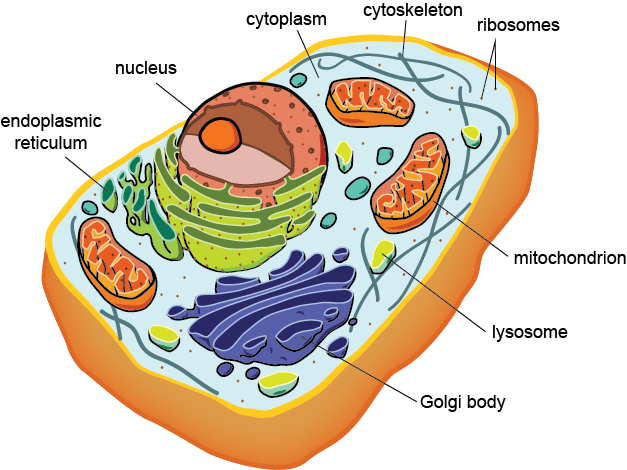
Which of the following statements is not part of the cell theory?
a)
Cells are the basic unit of structure and function in all living things.
b)
All cells are produced from other cells.
c)
Only animal cells are composed of cells.
d)
All living things are composed of cells.
23.

The photo shows litter that washed up on the coast of Hawaii. Which of these human activities is a form of pollution that could harm the habitats of living things?
a)
throwing garbage on the ground
b)
planting more trees on land that is bare
c)
making compost of left-over food for your garden
d)
using the landfill for throwing away garbage
24.

What type of succession is shown going from figure A to figure B?
a)
primary succession
b)
eutrophication
c)
secondary succession
d)
intermediate
100 %

