
 Worksheets
3rd Primary Assessment Review 2
Total questions: 49
Worksheet time: 34mins
Name
Class
Date
1.

characteristic or trait that helps an organism survive in its environment
a)
skills
b)
speciation
c)
natural instinct
d)
adaptation
2.

Charles Darwin noticed that birds of the Galapagos Islands were very similar in size and shape but their beaks were very different. What is the explanation for birds having different beaks?
a)
gathering food
b)
building nest
c)
fighting
d)
scaring predators
3.
The differences among a species, like different bird beaks, are called
a)
genes.
b)
variations.
c)
traits.
d)
theories.
4.
A group of organisms capable of interbreeding or exchanging genes
a)
Mutation
b)
Species
c)
Adaptation
d)
Fitness
5.
The lava released by a volcanic eruption separates two populations of a species of monkey. What does this represent?
a)
biological isolation
b)
geographical isolation
c)
temporal isolation
d)
anatomical isolation
6.
Individuals with favorable traits survive, reproduce, and pass their traits onto their offspring. This is called
a)
Mutation
b)
Adaptation
c)
Evolution
d)
Natural Selection
7.
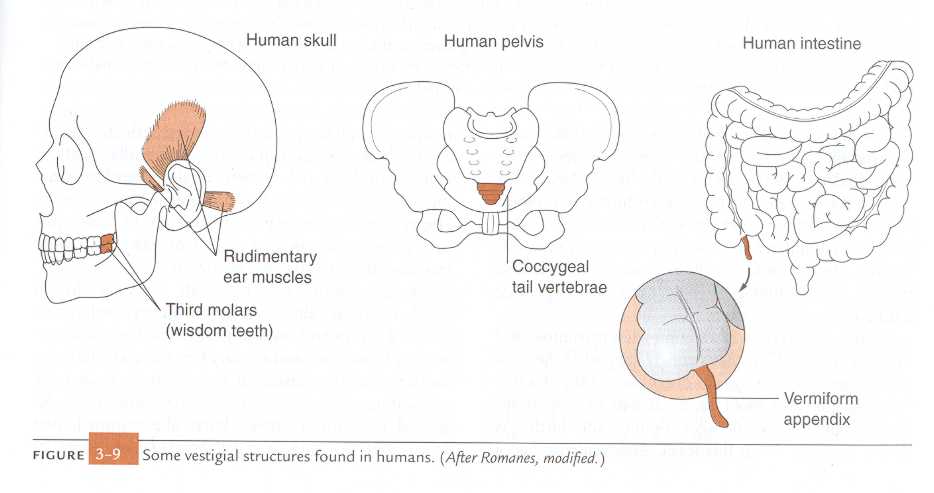
If an organism has a vestigial structure, that structure likely once had a function in a(n)
a)
close relative
b)
early ancestor
c)
unrelated organism
d)
embryological stage
8.
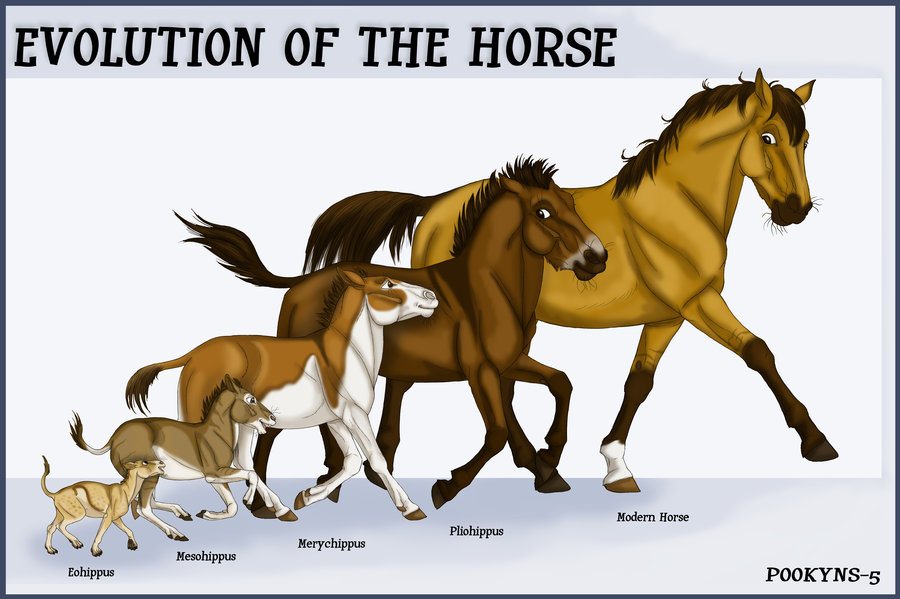
Some organisms that share a common ancestor have features that have different functions, but similar structures. These are known as
a)
vestigial structures
b)
analogous structures
c)
homologous structures
d)
fossil structures
9.
A _________ is evidence of an organism that lived long ago.
a)
strata
b)
fossil
c)
half-life
d)
radioactive isotope
10.
________ is the amount of time for ½ of the original radioactive sample to decay.
a)
radioactive isotope
b)
chemical life
c)
biological life
d)
half-life
11.
__________ uses the order of rock layers to date fossils.
a)
radiometric dating
b)
carbon dating
c)
radioactive dating
d)
relative dating
12.
Method used to date fossils in which the decay of radioactive isotopes is measured.
a)
radiometric dating
b)
paleomagnetism
c)
relative dating
d)
radioactivity
13.
The idea that evolution seems to occur in spurts of time.
a)
stabilizing selection
b)
directional selection
c)
disruptive selection
d)
puntuated equilibrium
14.
TRUE OR FALSE: The deeper the rock is in the Earth, the newer it is.
a)
True
b)
False
15.
An adaptation is
a)
how animals change over time.
b)
a characteristic that helps and organism survive in its environment.
c)
a theory of how organisms change.
d)
the genes in an organism that determine how an organism is going to look.
16.
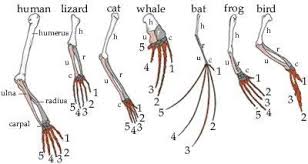
What is this an example of?
a)
vestigial structures
b)
embryology
c)
homologous structures
d)
fossil record
17.

Which layer is the oldest?
a)
1
b)
2
c)
3
d)
4
18.
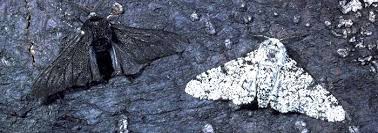
Predict which moth would increase in population
a)
light
b)
dark
19.
Which of the following is NOT an example of natural selection?
a)
People selectively breeding hamsters.
b)
Insect populations developing resistance to certain pesticides.
c)
Bacteria becoming resistant to antibiotics.
d)
Male birds of certain species developing colorful feathers to attract female mates.
20.
Change over time is
a)
evolution
b)
generation
c)
growth
d)
biogenesis
21.
A plant nursery only grew one type of tomato. All of their tomatoes died from the same disease. What was most likely true of the tomato plant population?
a)
a. It had too little biodiversity
b)
b. It had a lot of resistance to disease
c)
c. It had a few plants that were resistant to disease
d)
d. It had too much genetic variation
22.
Which human activity would be most destructive to the biodiversity of the biosphere?
a)
a. The burning of wood and coal in rural areas
b)
b. The release of species of freshwater trout in lakes
c)
c. The removal of plants from the food webs they support
d)
d. The removal of erosion barriers from forest boundaries
23.
If global warming continues, which of the following will most likely NOT happen?
a)
a. Increased intensity of storms
b)
b. Rises in ocean levels
c)
c. Loss of biodiversity
d)
d. Increase in available resources
24.
True or False: Biodiversity tends to decrease nearer the equator.
a)
true
b)
false
25.
How can habitat disruption affect biodiversity?
a)
It can lead to loss of biodiversity.
b)
It will lead to new species taking over all of the habitats.
c)
It will lead to climate change.
d)
It will cause the animals to get sick.
26.
Why is biodiversity so important?
a)
Because all species depend on each other to survive, so if one becomes extinct another species that relies on it could go extinct as well
b)
Because it’s better to have only one variation of each species.
c)
Because it better to only have a few species on Earth.
d)
Honestly, I have no idea what biodiversity is!
27.
What does bio mean?
a)
life
b)
different
c)
organisms
d)
species
28.
What does diversity mean?
a)
life
b)
different
c)
organisms
d)
species
29.
What is a native animal?
a)
An animal that was brought to our country
b)
An animal that has always been in our country
c)
An animal that eats other animals
d)
All of the above
30.

The majority of the invasive species are introduced by humans.
a)
TRUE
b)
FALSE
31.
The invasive species are always intentionally introduced into the ecosystem.
a)
TRUE
b)
FALSE
32.
The invasive species becomes a predator and competes with the native species for resources that is why they are considered a problem.
a)
TRUE
b)
FALSE
33.
What is the biggest threat to living creators in an ecosystem?
a)
habitat loss
b)
overfishing
c)
poaching
d)
invasive species
34.
A species is defined as endangered when it
a)
suffers from damage to its habitat.
b)
suffers from disease or predation.
c)
when there are hazards to the continued life of the species.
d)
all of the above
35.
Which of the following does not destroy habitats?
a)
building homes
b)
pollution
c)
nature reserves
d)
hunting and trading
36.
If an animal is endangered, ...
a)
it is safe
b)
it is already extinct
c)
there are not many left
d)
there are a lot left
37.
Biodiversity
a)
The different numbers of species in an area.
b)
The amount of people that eat cheeseburgers in the environment.
38.
Extinction
a)
The disappearance of all of the members of a species from Earth
b)
A substance that provides nutrients to help crops grow better.
39.
The Endangered Species Act of 1973
a)
Is not enforceable
b)
Is a treaty between many countries
c)
Provides for the conservation of ecosystems upon which threatened and endangered species of fish, wildlife, and plants depend
d)
Only helps species that are already extinct
40.
A threatened species is in danger of becoming...
a)
Endangered
b)
Threatened
c)
vulnerable
d)
Extinct
41.
The gas that is most abundant in the atmosphere is
a)
oxygen
b)
nitrogen
c)
carbon dioxide
d)
argon
42.
What absorbs ultraviolet rays in the atmosphere?
a)
troposphere
b)
stratosphere
c)
ozone layer
d)
greenhouse gases
43.
What chemical is responsible for breaking up the ozone?
a)
CFCs
b)
Carbon Dioxide
c)
Nitrogen
d)
Oxygen
44.
This protects us from harmful UV rays from the sun
a)
Troposphere
b)
Stratosphere
c)
Greenhouse Effect
d)
Ozone Layer
45.
What happens to the temperature if more greenhouse gases are released into the atmosphere?
a)
Temperature goes up
b)
Temperature goes down
46.
What happens if there is too much Carbon Dioxide in the air?
a)
Temperature increases
b)
Temperature decreases
47.
Increase in which gas is primarily responsible for increased global warming?
a)
Carbon dioxide
b)
Water vapor
c)
Methane
d)
Nitric oxides
48.
True or False:
Humans have no need to be concerned about other species going extinct, we only need to worry about our own survival.
Humans have no need to be concerned about other species going extinct, we only need to worry about our own survival.
a)
True
b)
False
49.
Which of the following is NOT a way to help protect biodiversity?
a)
Endangered Species Act
b)
Promote Habitat Protection
c)
Eliminate all hunting and predators that could endanger a species.
d)
Create sanctuaries for endangered species
100 %

