
 Worksheets
Earth Systems
Total questions: 41
Worksheet time: 28mins
Name
Class
Date
1.
"Bio" in biosphere means ____.
a)
air, vapor
b)
rock, earth
c)
water
d)
life
2.
"Atmo" in atmosphere means ____.
a)
air, vapor
b)
rock, earth
c)
water
d)
life
3.
"Hydro" in hydrosphere means ____.
a)
air, vapor
b)
rock, earth
c)
water
d)
life
4.
The ______ includes all of the gases around Earth
a)
hydrosphere
b)
crust
c)
atmosphere
d)
cloud
5.
All living things on earth are part of the....
a)
Biosphere
b)
Geosphere
c)
Hydrosphere
d)
Cryosphere
6.
When rocks are broken into smaller pieces they are called...
a)
Mineral
b)
Still called rock
c)
Sand
d)
Sediment
7.
Melted rock below earth's surface is called...
a)
Lava
b)
Volcano
c)
Magma
d)
Crust
8.
When magma reaches earth surface it is called...
a)
Magma
b)
Lava
c)
Crust
d)
Eruption
9.

This is part of the....
a)
Geosphere
b)
Atmosphere
c)
Hydrosphere
d)
Cryosphere
10.

Mount Everest is:
a)
Atmosphere
b)
Biosphere
c)
Geosphere
d)
Hydrosphere
11.

This picture shows
a)
Atmosphere
b)
Biosphere
c)
Hydrosphere
d)
Geosphere
12.
All living things on earth are part of the....
a)
Biosphere
b)
Geosphere
c)
Hydrosphere
d)
Cryosphere
13.
The Geosphere is...
a)
All liquid water on Earth
b)
A 100km thick layer of gases
c)
frozen water on earth
d)
Earths entire solid body
14.
The thin envelope of gases forming Earth's outermost layer.
a)
Hemisphere
b)
Biosphere
c)
Atmosphere
d)
Hydrosphere
15.
The sphere that includes humans.
a)
geosphere
b)
hydrosphere
c)
atmosphere
d)
biosphere
16.
The sphere that contains all the gases, include the air we breathe.
a)
hydrosphere
b)
biosphere
c)
atmosphere
d)
geosphere
17.
The sphere that includes mountains, soil, and the layers of Earth.
a)
geosphere
b)
biosphere
c)
atmosphere
d)
hydrosphere
18.
When water vapor turns into clouds.
a)
precipitation
b)
evaporation
c)
run off
d)
condensation
19.
_______ of water on Earth is ocean water. (about)
a)
75%
b)
92%
c)
3%
d)
97%
20.
The word "hydro" means ______.
a)
water
b)
earth
c)
land
d)
life
21.
The word "bio" means ______.
a)
Earth
b)
water
c)
air
d)
life
22.
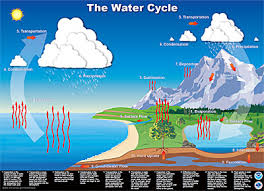
Which stages does liquid water from the ocean turn into water vapor?
a)
condesantion
b)
evaporation
c)
precipitation
d)
run off
23.
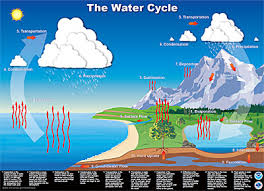
During which stage do clouds form?
a)
condensation
b)
evaporation
c)
precipitation
24.
Which gas in our atmosphere is most abundant?
a)
Argon
b)
Oxygen
c)
Nitrogen
d)
Carbon Dioxide
25.
Temperature decreases as altitude increases in the Thermosphere.
a)
True
b)
False
26.
What percentage of our atmosphere is made up of other gases such as argon, water vapor, and carbon dioxide?
a)
1%
b)
21%
c)
78%
d)
90%
27.
What is the percentage of oxygen in Earth's atmosphere?
a)
1%
b)
21%
c)
78%
d)
90%
28.
What is the percentage of nitrogen in Earth's atmosphere?
a)
1%
b)
21%
c)
78%
d)
90%
29.
In which layer of the atmosphere does weather occur?
a)
Mesosphere
b)
Thermosphere
c)
Stratosphere
d)
Troposphere
30.
What is the outer most main layer of Earth's atmosphere?
a)
Thermosphere
b)
Troposphere
c)
Stratosphere
d)
Mesosphere
31.
Which atmospheric layer is the closest to Earth's surface?
a)
Stratosphere
b)
Troposphere
c)
Ionosphere
d)
Exosphere
32.

Which process in the water cycle forms clouds?
a)
precipitation
b)
evaporation
c)
sublimation
d)
condensation
33.

How much of the atmosphere is composed of nitrogen gas?
a)
87%
b)
38%
c)
78%
d)
21%
34.
What is the part of our atmosphere that protects us from comets because it acts like a shield. It is also very cold. There are actually ice particles in the air.
a)
Atmosphere
b)
Stratosphere
c)
Mesosphere
d)
Thermosphere
35.
The ozone layer is the part of the Stratosphere that protects from ultra violet rays from the _____________.
a)
moon
b)
stars
c)
sun
d)
planets
36.
This layer is where weather occurs
a)
troposphere
b)
thermosphere
c)
exosphere
d)
stratosphere
37.

The Ozone layer protects the Earth from...
a)
Visible Light
b)
Ultraviolet Light
c)
Infrared Rays
d)
Carbon Dioxide
38.

Warm air rises because --
a)
it has a higher dew point than the cool air
b)
it is less buoyant than coolair
c)
it contains less water vapor
d)
it is less dense than cool air
39.
The amount of water vapor in the air is ...
a)
temperature
b)
air pressure
c)
humidity
d)
altitude
40.

Why is MOST of the freshwater on Earth not available for our use?
a)
All freshwater on Earth is easily accessible for use.
b)
It is frozen in the icecaps and glaciers.
c)
It is surface water.
d)
It is underground.
41.

Study the graph below. Where is most of the Earth's water located?
a)
Rivers and Lakes
b)
Glaciers and Icecaps
c)
oceans
d)
groundwater
100 %

