
 Worksheets
D-day quiz/homework
Total questions: 10
Worksheet time: 7mins
Name
Class
Date
1.

What happened in the d-day battle?
a)
Although the term D-Day is used routinely as military lingo for the day an operation or event will take place, for many it is also synonymous with June 6, 1944, the daythe Allied powers crossed the English Channel and landed on the beaches of Normandy, France, beginning the liberation of Western Europe from Nazi .
b)
Juan Won The Battle
c)
no body won
d)
The shake´d hands and walked away
2.
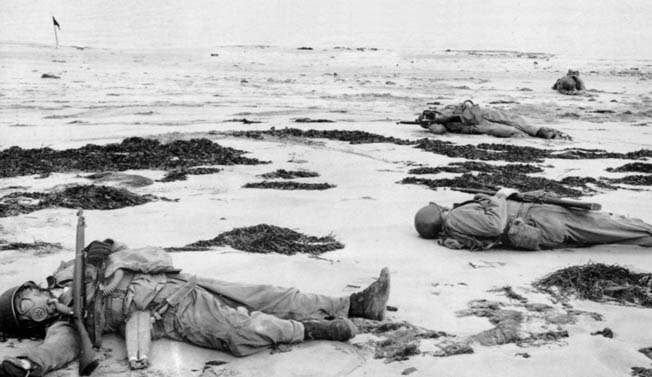
Who won the battle of d-day?
a)
Code named Operation Overlord, the battle began on June 6, 1944, also known as D-Day, when some 156,000 American, British and Canadian forces landed on five beaches along a 50-mile stretch of the heavily fortified coast of France's Normandy region.
b)
The British
c)
the Canadian
d)
the Americans
3.

How long was the battle of d-day?
a)
2 years and 8 months
b)
1 month
c)
1 day
d)
3 years
4.

How many people died at the war?
a)
209,000
b)
16,714
c)
425,000
d)
37,000
5.

What group fight in the battle of d-day?
a)
France
b)
American´s
c)
Canadian
d)
American, British and Canadian forces
6.

How did the American, British and Canadian forces win the battle of d-day?
a)
By the spring of 1944, Germany had occupied France and much of the European continent for almost four years.
b)
A narrow stretch of water, the English Channel, was all that separated the German forces from Great Britain.
c)
With a huge force of over 150,000 soldiers, the Allies attacked and gained a victory that became the turning point for World War II in Europe. This famous battle is sometimes called D-Day or the Invasion of Normandy. Germany had invaded France and was trying to take over all of Europe including Britain.
d)
An Allied raid on the French coast at Dieppe in August 1942 had resulted in heavy ...
7.

What the American, British and Canadian forces after the war of d-day ended?
a)
Many Loyalist Americans had migrated to Upper Canada after the Revolutionary War
b)
There was also significant non-Loyalist ... In 1812–13, British military experience prevailed over inexperienced American commanders.
c)
the Americans were rebuffed by Canadian forces; however, this threat would remain well into the 19th century and partially facilitated Canadian Confederation in 1867
d)
Many Loyalist Americans had migrated to UpperCanada after the Revolutionary War. There was also significant non-Loyalist ... In 1812–13, British military experience prevailed over inexperienced American commanders. Geography dictated that operations take ...
8.

How many people fought in the battle of d-day?
a)
634,053,714
b)
100,601
c)
1,050,890
d)
539,678
9.

How many airplanes where used in the battle of d-day?
a)
25 aircraft
b)
35 aircraft
c)
50 aircraft
d)
30 aircraft
10.

How many vehicles were used in d-day?
a)
100 transport vehicles
b)
2 transport vehicles
c)
78 transport vehicles
d)
28 transport vehicles
100 %

