
 Worksheets
Soil Layers and Soil Evolution
Total questions: 23
Worksheet time: 18mins
Name
Class
Date
1.
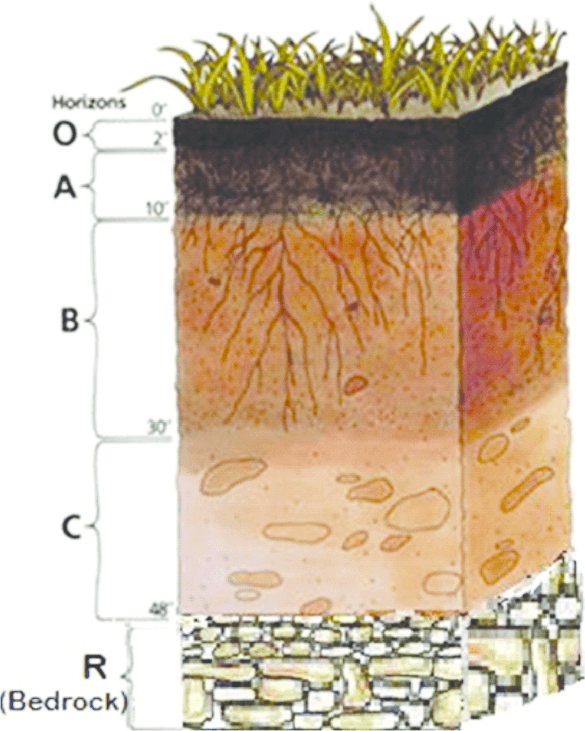
What is the name of Soil Horizon O?
a)
Bedrock
b)
Topsoil
c)
Organic Layer
d)
Subsoil
2.
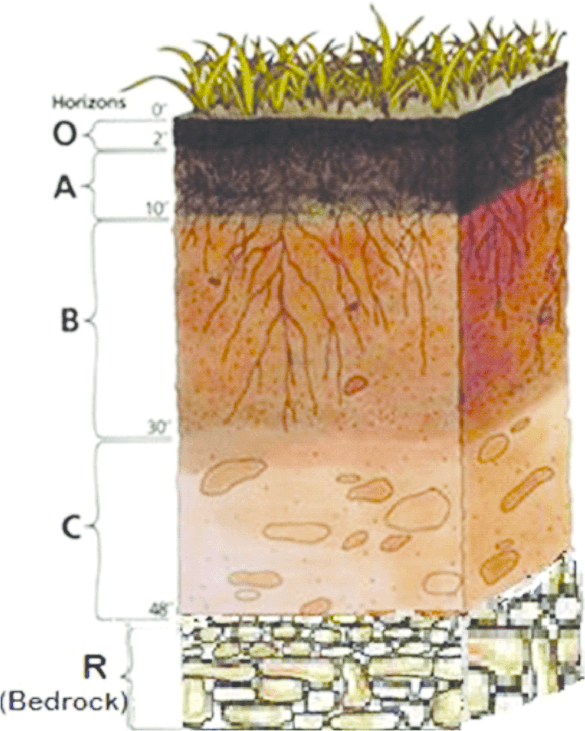
What is the name of Soil Horizon B?
a)
Subsoil
b)
Topsoil
c)
Bedrock
d)
Transition Zone
3.

Soil is formed slowly through the weathering of materials called ___.
a)
Bedrock or parent material
b)
Magma and lava
c)
organic matter
d)
leaves and litter
4.
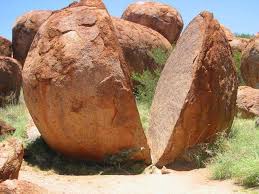
What are the two types of weathering?
a)
Rain and Snow
b)
Precipitation and Temperature
c)
Physical and Chemical
d)
Metal and Nonmetal
5.
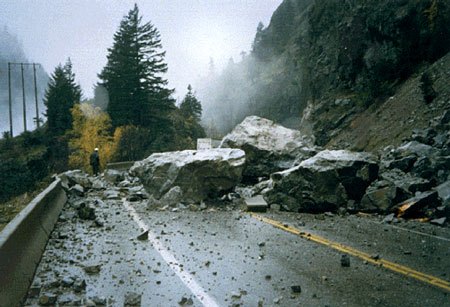
Large rocks fall from mountainsides
a)
Chemical weathering
b)
Mechanical weathering
6.
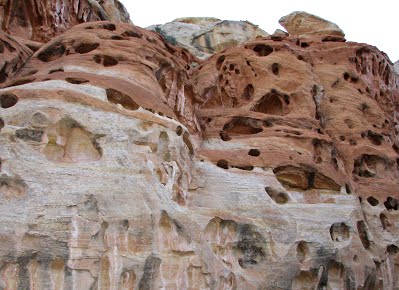
Formed by sulfur and nitrogen compounds will cause rocks to fall apart
a)
hydration
b)
carbonation
c)
oxidation
d)
acids
7.
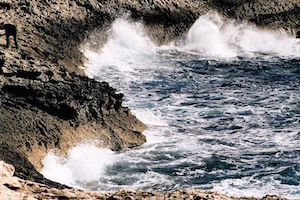
Water (usually from powerful waves) rushes into cracks in rocks; but a tiny bit of air is compressed at the crevice of the crack;
a)
hydration
b)
hydraulic action
c)
extreme flooding
d)
oxidation
8.
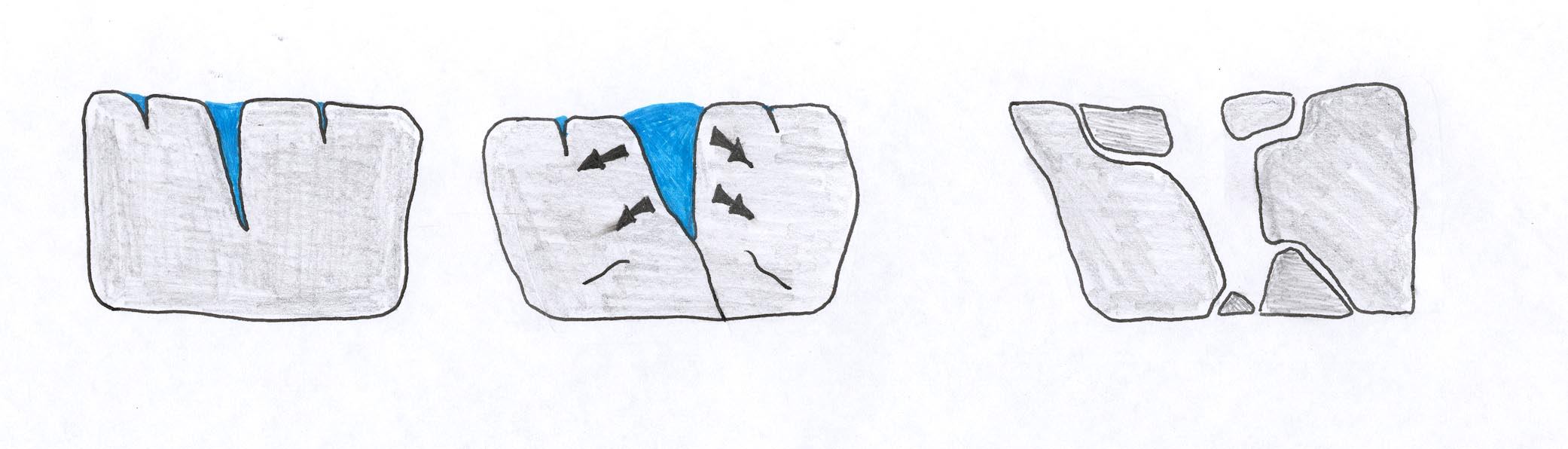
Especially in deserts, rocks heat up in the day and, as the temperature drops greatly at night, the rocks can flake easily (exfoliate).
a)
hydraulic action
b)
gravity
c)
freeze/thaw
d)
hydration
9.
What's in that soil?
If the soil is red or yellow it must have __ in it.
If the soil is red or yellow it must have __ in it.
a)
helium
b)
oxidized iron
c)
carbon
d)
organic matter
10.
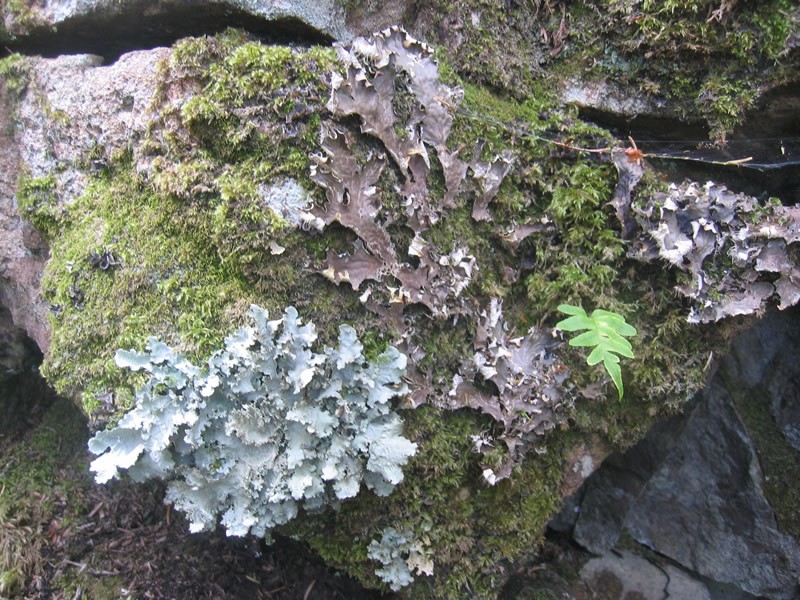
Mosses and lichens attach to rocks and this causes physical as well as chemical breakdown of the rock.
a)
organic activity
b)
decomposition
c)
oxidation
d)
carbonation
11.
Name that layer!
Layer where soil accumulates (holds) nutrients such as nitrogen and phosphorus.
Layer where soil accumulates (holds) nutrients such as nitrogen and phosphorus.
a)
Topsoil
b)
Subsoil
c)
Bedrock
d)
Transition Zone
12.
Name that layer!
This is where minerals, materials, and substances move along with water through the soil, deeper into the ground (leaching).
This is where minerals, materials, and substances move along with water through the soil, deeper into the ground (leaching).
a)
O
b)
E
c)
B
d)
R
13.
Name that layer!
Very dense layer; the color of this layer depends on the color of the bedrock.
Very dense layer; the color of this layer depends on the color of the bedrock.
a)
C
b)
R
c)
O
d)
A
14.
Name that layer!
A mix of leaf litter and humus occupy this soil layer.
A mix of leaf litter and humus occupy this soil layer.
a)
O
b)
A
c)
E
d)
B
15.
The tool we use to identify soil based on percentages of silt, sand and clay.
a)
Soil Texture Triangle
b)
Soil Texture Square
c)
Chromotography
d)
An expensive filtration system
16.
What's in that soil?
If the color of soil is light colored it is most likely part of the __ layer in the soil profile.
If the color of soil is light colored it is most likely part of the __ layer in the soil profile.
a)
A
b)
O
c)
E
d)
C
17.
The layer of soil which the topsoil is found.
a)
Horizon A
b)
Horizon B
c)
Horizon C
d)
Horizon D or R
18.
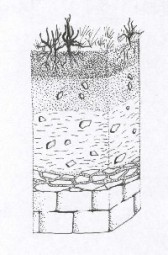
Layers of soil are also known as:
a)
Soil Profiles
b)
Soil Horizons
c)
Soil sheets
d)
Soil cores
19.
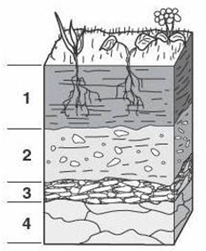
In which layer of the soil profile contains the MOST humus?
a)
Layer 1
b)
Layer 2
c)
Layer 3
d)
Layer 4
20.
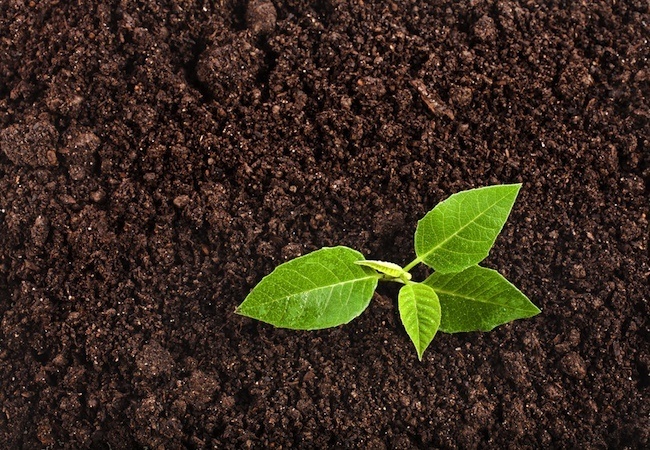
Which of the following is NOT one of the three types of soil?
a)
clay
b)
sand
c)
silt
d)
mud
21.
Which of the following is the largest particle in soil?
a)
sand
b)
silt
c)
humus
d)
clay
22.
You dig a small hole in the soil and the next day it rains. The hole fills with water, but does not empty even after several days of dry weather. What is the soil mostly made of?
a)
clay
b)
sand
c)
humus
d)
silt
23.
In which horizon of soil profile does leaching normally occur?
a)
regolith
b)
subsoil
c)
topsoil
d)
bedrock
100 %

