
 Worksheets
Water Cycle
Total questions: 26
Worksheet time: 27mins
Name
Class
Date
1.

What part of the water cycle does this picture show?
a)
condensation
b)
precipitation
c)
evaporation
2.
Which of these is an example of precipitation?
a)
snow
b)
air
c)
clouds
d)
vapor
3.
What is the water cycle?
a)
the 3 forms of water
b)
the movement of water on, above, or below the surface of the Earth
c)
when water melts
d)
when clouds form
4.
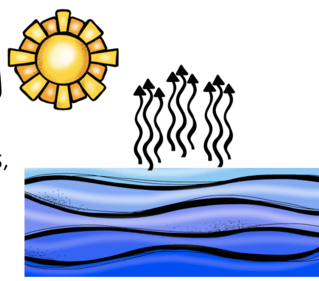
Evaporation happens when the sun ___________ water and turns it into vapor.
a)
cools
b)
heats up
c)
freezes
d)
lights up
5.

Precipitation happens when clouds of water droplets are too ______________.
a)
cold
b)
light
c)
heavy
d)
hot
6.

When water condenses, the water vapor in the air gets ___________ and changes back into liquid.
a)
cold
b)
hot
c)
warm
d)
solid
7.
What is precipitation?
a)
The part of the water cycle when the sun heats up water, turning it from a liquid into water vapor or steam. It rises from the ground into the air.
b)
The part of the water cycle when the water vapor in the air gets cold. The water turns back into a liquid and forms clouds.
c)
The part of the water cycle when clouds get heavy and can no longer hold the liquid water. This causes the water to fall from the sky to the earth as rain, snow, sleet, or hail.
8.
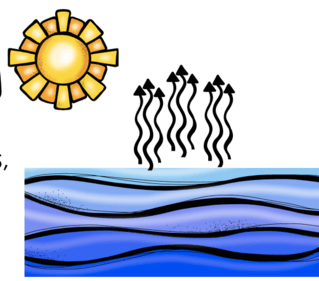
What part of the water cycle does this picture show?
a)
condensation
b)
precipitation
c)
evaporation
9.
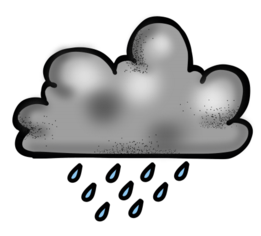
What part of the water cycle does this picture show?
a)
condensation
b)
precipitation
c)
evaporation
10.
What is the energy source for the water cycle?
a)
the sun
b)
the earth
c)
water
d)
the moon
11.
Which of these is not an example of precipitation?
a)
rain
b)
clouds
c)
sleet
d)
snow
12.

Snow, sleet, hail, and rain are all examples of ________________.
a)
evaporation
b)
condensation
c)
accumulation
d)
precipitation
13.

what does the #4 show in the diagram?
a)
condensation
b)
evaporation
c)
precipitation
d)
run off
14.

Which stage does the #3 show in the diagram?
a)
condensation
b)
evaporation
c)
precipitation
d)
run off
15.
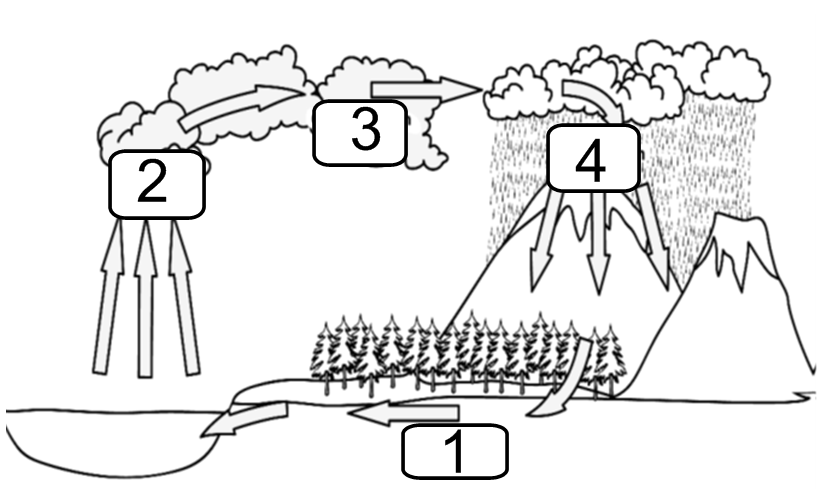
Which stage does the #2 show in the diagram?
a)
condensation
b)
evaporation
c)
precipitation
d)
run off
16.
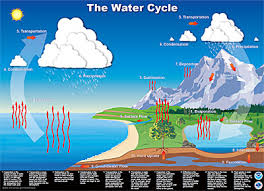
During which stage do clouds form?
a)
condensation
b)
evaporation
c)
precipitation
17.

What does this illustration show?
a)
Sunrise
b)
The Water Cycle
c)
Sunset
d)
the recycling of snow
18.

This is what heats up the water to start the water cycle.
a)
sun
b)
moon
c)
stars
d)
Mars
19.
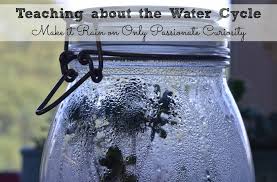
Dew also forms directly onto items, as water droplets. What part of the water cycle is this?
a)
run-off
b)
condensation
c)
evaporation
d)
precipitation
20.

What is A?
a)
Evaporation
b)
Condensation
c)
Precipitation
d)
Runoff
21.

What is B?
a)
Evaporation
b)
Condensation
c)
Precipitation
d)
Runoff
22.

What is C?
a)
Evaporation
b)
Condensation
c)
Precipitation
d)
Runoff
23.

What is D?
a)
Evaporation
b)
Condensation
c)
Precipitation
d)
Runoff
24.

The arrows in the picture below are repenting the process of
a)
The sun cooling the water in the lake
b)
The clouds pulling up water from the lake
c)
The water from the lake changing into a gas
d)
The water falling from the clouds into the lake
25.
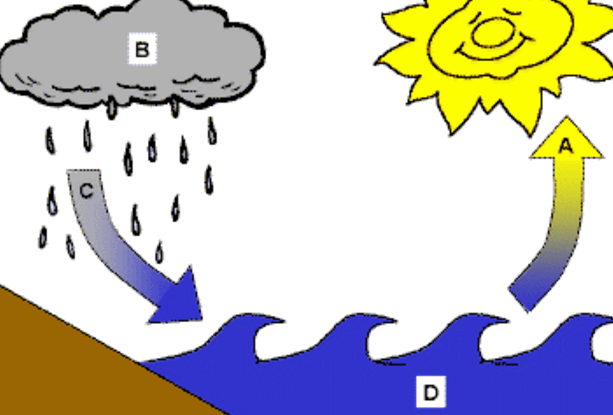
Letter A is representing what part of the water cycle?
a)
Condenstation
b)
Evaporation
c)
Accumulation
d)
Precipitation
26.

Which of the following best describes what happens during precipitation?
a)
Water from the land is returned to the ocean
b)
Ocean water is evaporated into the atmosphere
c)
Water from the atmosphere is returns to Earth's surface
d)
Water vapor in the atmosphere is condensed into clouds.
100 %

