
 Worksheets
Earth Science Final Exam Review
Total questions: 128
Worksheet time: 3hrs 35mins
compaction, weathering, erosion, cementation
weathering, erosion, deposition, compaction


of upwelling?


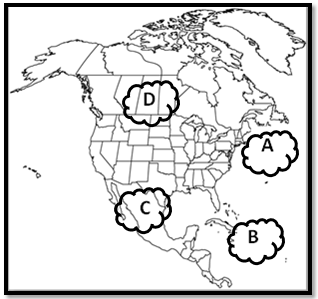

Where on Earth can you experience entire days of darkness?
The equator
The poles
The Tropic of Cancer
The Tropic of Capricorn

Why does the area around the equator stay the same temperature all year?
The equator rotates slower than the poles.
The equator remains the same distance from the sun.
The equator always receives direct sunlight.
The equator has 18 hour days.


Scientists have classified Earth's interior into zones shown based primarily on evidence gained by studying...
deep drill cores
volcanic eruptions
gravity measurements
earthquake seismic waves
Which best describes a major characteristics of both volcanoes and earthquakes?
They are centered at the poles.
They are located along plate boundaries.
They are related to the formation of glaciers.
They are restricted to the Southern Hemisphere.
This type of plate collision involves subduction, deep ocean trenches and volcanic mountains:
continental-continental collisions
divergent boundary
oceanic-oceanic collisions
ridge-push
How are mountains formed?
continental-continental collision
oceanic-oceanic collision
oceanic-continental collision
volcanic-earthquake collision
Divergent boundaries move...
apart from each other
toward each other
North
South
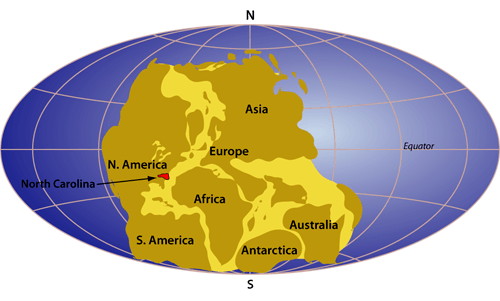


Look at the picture of compression stress. What does it do to the rocks?
push together
pull apart
slide back and forth


of upwelling?

Which BEST describes the water in the channels?


