
NEW
Font size
 Worksheets
Cell Theory
Total questions: 32
Worksheet time: 17mins
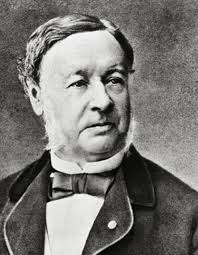
Who concluded: "all Animals are made of cells"?
Rudolf Virchow
Matthais Schleiden
Robert Hooke
Theodor Schwann
Antonie Van Leeuwenhoek

Who concluded: "all cells are made from other cells"?
Rudolf Virchow
Matthais Schleiden
Robert Hooke
Theodor Schwann
Antonie Van Leeuwenhoek

Who was the first to use a microscope?
Anton Van Leeuwenhoek
Matthais Schleiden
Robert Hooke
Theodor Schwann
Rudolph Virchow

Who concluded that "All plants are made of cells".
Matthias Schleiden
Rudolf Virchow
Robert Hooke
Theodor Schwann
Antonie Van Leeuwenhoek
The combined observations of Hooke, Schleiden, Schwann, Virchow & Von Leeuwenhoek helped form:
Cell Theory
Cell Law
Cellular Respiration
Cellular Organelles

Which scientist did NOT contribute to the cell theory?
Anton Van Leeuwenhoek
Robert Hooke
Louis Pasteuer
Matthias Schleiden
Rudolph Virchow

Who observed cork & coined the word "Cell"?
Robert Hooke
Rudolph Virchow
Matthias Schleiden
Theodor Schwann
Antonie Van Leeuwenhoek
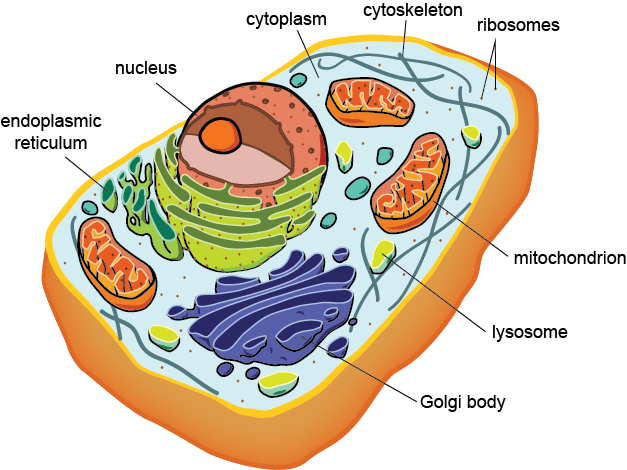
All cells come from other cells


Robert Hooke, Anton Van Leeuwenhoek, Theodor Schwann, Rudolf Virchow, and Matthias Schleiden were all responsible for this:
The Theory of Gravity
Relativity
Cell Theory
Continental Drift
Discovering the Nucleus
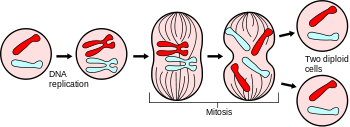

What is one way in which all living things on Earth are alike?
All living things have hair.
All living things are made of cells & come from other cells.
Anything that moves has cells.
All living things cannot move.
All things that move are alive.

The invention of the microscope made it possible for people to discover and learn about:
Plants
Skin
Animals
Cells
Planets

The first part of the Cell Theory states: "What happens in Cell Theory, stays in Cell Theory."
True
False
The best size for a cell is:
Small
Medium
Large
Submicroscopic
All cells are alive?
True
False
How many cells do humans have?
100 Million
100 Billion
200 Billion
100 Trillion
How many cells does the human brain have?
100 Million
100 Billion
200 Billion
100 Trillion
Which cell type is older?
Prokaryotic
Eukaryotic
Which cell type is smaller?
Prokaryotic
Eukaryotic
Which cell type is more complex?
Prokaryotic
Eukaryotic
Which cell type has ring-shaped DNA?
Prokaryotic
Eukaryotic
Which cell type has a nucleus?
Prokaryotic
Eukaryotic
Animals, Protists, Fungi & Plants have which cell type?
Prokaryotic
Eukaryotic
What most limits cell size?
Distance
Water
Oxygen
How small are viruses?
Microscopic
Sub-microscopic
As big as Bacteria
As big as Animal Cells
Because of their size, Viruses are considered:
Alive
Dead
Life Forms
Humongous
Gargantuan

