
 Worksheets
8th grade science review
Total questions: 110
Worksheet time: 2hrs 42mins
Name
Class
Date
1.

which symbiosis is this
a)
parasitism
b)
mutualism
c)
commensalism
d)
nonalism
2.

What does a food web represent?
a)
All connections of energy flow throughout all organisms in a habitat.
b)
The specific ways that mutualism is carried out.
c)
A single pathway or energy flow between organisms.
d)
How carnivores get their food.
3.
The amount of energy that usually transfers from one trophic level to the next...
a)
10%
b)
20%
c)
80%
d)
50%
4.
The living portions of the ecosystem.
a)
Biotic factors
b)
Abiotic factors
5.
Water temperature would be an example of ...
a)
A biotic factor
b)
An abiotic factor
6.
A collection of organisms that make up a community as well as all of the nonliving aspects of the environment.
a)
Population
b)
Community
c)
Habitat
d)
Ecosystem
7.
Organisms that can capture energy from inorganic, nonliving sources.
a)
Producers
b)
Consumers
c)
Detritivores
d)
Carnivores
8.
Which of the following is the smallest unit of life that can carry out all life functions?
a)
the mitochondria
b)
the vacuoles
c)
the nucleus
d)
the cell
9.
Which structures are found in every living cell?
a)
cell membrane and cytoplasm
b)
chloroplasts and mitochondria
c)
a cell wall and nucleus
d)
chloroplasts and cell wall
10.
Chloroplasts in plant cells allow the plant to perform a function that animal cells cannot do. What is the main function of the chloroplasts found in plant cells?
a)
to absorb light energy and manufacture food
b)
to remove waste materials by active transport
c)
to manufacture chemical energy from food
d)
to control the shape of the cell
11.
What is the function of a cell wall?
a)
to protect and support the cell
b)
to perform different functions in each cell
c)
to prevent water from passing through it
d)
to prevent oxygen from entering the cell
12.
In what part of the plant cell does the process of photosynthesis take place?
a)
nucleus
b)
mitochondria
c)
chloroplasts
d)
vacuoles
13.
Who was the first person to see cells under the microscope and give them their name?
a)
Mattias Schleiden
b)
Robert Hooke
c)
Theordor Schwann
d)
Anton van Leeuwenhoek
14.
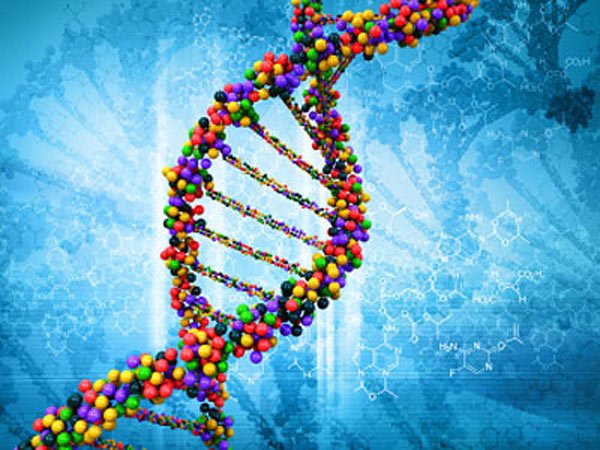
What is the name of the genetic material that is inside the nucleus?
a)
ER
b)
ATP
c)
YOLO
d)
DNA
15.

Directs all cell activities through the DNA located there.
a)
Lysosomes
b)
Nucleus
c)
ribosomes
d)
Mitochondria
16.

This is a example of ........
a)
cell
b)
organ system
c)
organ
d)
tissue
17.
What does erosion do?
a)
Break down rock
b)
changes rock chemically
c)
changes sediment in rock
d)
moves broken pieces of rock, or sediment, from one place to another
18.
Differences in the moon's and sun's pull on different sides of the Earth cause _________.
a)
gravity
b)
lunar phases
c)
tides
d)
dabbing
19.
The bulge of water on the side of the Earth closest to the moon produces ___________.
a)
high tide
b)
low tide
c)
neap tide
d)
spring tide
20.
Tides are caused mainly by the differences in how much gravity from the moon and the sun pulls on different parts of the Earth.
a)
True
b)
False
21.
Changes in the positions of Earth, the moon, and the sun affect the height of high tides during a month.
a)
True
b)
False
22.
A solar eclipse only occurs during which moon phase?
a)
1st Quarter
b)
New Moon
c)
Full Moon
d)
3rd Quarter
23.

In thinking about a solar eclipse, what does the light source in the diagram represent?
a)
the Earth
b)
the Moon
c)
the Sun
24.

In thinking about a solar eclipse, what does the ball in the diagram represent?
a)
the Earth
b)
the Moon
c)
the Sun
25.
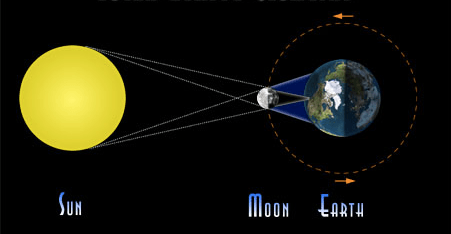
Which type of eclipse is shown in this picture?
a)
Solar Eclipse
b)
Orbit
c)
Lunar Eclipse
d)
Total Eclipse
26.
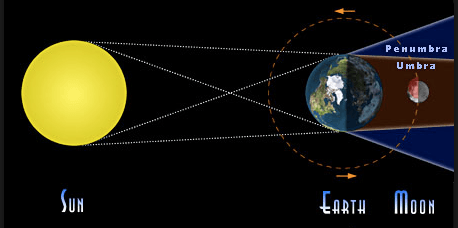
Which type of eclipse is shown in the diagram?
a)
Solar Eclipse
b)
Lunar Eclipse
c)
Total Eclipse
d)
Partial Eclipse
27.

What causes the seasons to change?
a)
The warming and cooling of Earth's core.
b)
The distance from the sun.
c)
Earth's tilt in relation to the sun.
d)
Earth's rotation on its axis.
28.
About how many days does it take to moon to go through a complete cycle?
a)
7 days
b)
365 days
c)
29 days
d)
20 days
29.
Why do we always see the same side of the moon from Earth?
a)
because the phases change
b)
because it rotates and revolves at the same rate
c)
because half of the moon always receives sunlight
d)
The moon changes positions
30.
The phase of the moon that occurs between the sun and Earth
a)
Full moon
b)
Waxing crescent
c)
Waning Crescent
d)
New Moon
31.
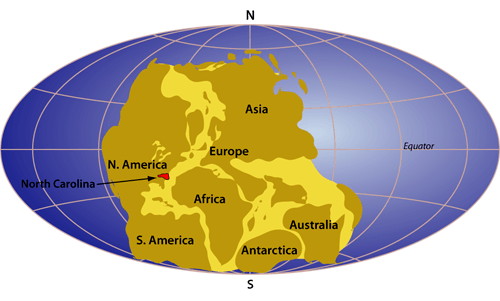
What is this a picture of?
a)
plate tectonics
b)
continental drift
c)
pangea
d)
glacier scaring
32.
Which of the following is the correct equation for PHOTOSYNTHESIS?
a)
CO2 + light + H2O --> O2 + Sugar
b)
CO2 + sugar + H2O --> O2 + light
c)
O2 + light + H2O --> CO2 + Sugar
d)
CO2 + O2 + H2O --> Light+ Sugar
33.
What process occurs when light energy is captured in autotrophs and converted into sugar?
a)
Photosynthesis
b)
Cellular Respiration
34.
What is the ultimate ORIGINAL source of energy for living things
a)
Sugar
b)
Sun
c)
Moon
d)
Carbon Dioxide
35.
Which organisms perform Photosynthesis?
a)
Only Autotrophs
b)
Only Heterotrophs
c)
Autotrophs and Heterotrophs
36.
Which of the following is an example of an AUTOTROPH?
a)
Appletree
b)
Dog
c)
Mushroom
d)
Human
37.
Which of the following is an example of a HETEROTROPH?
a)
Grass
b)
Algae
c)
Lemon Tree
d)
Bear
38.
A possible explanation to a problem that has not yet been tested.
a)
data
b)
theory
c)
hypothesis
d)
fact
39.
This variable in an experiment is the one being deliberately changed by the scientist.
a)
dependent variable
b)
independent variable
c)
data
d)
control group
40.
There are two types of data. Which type of data involves numbers that are obtained by counting or measuring?
a)
quantitative
b)
qualitative
41.
The summary at the end of an experiment that explains the results.
a)
conclusion
b)
procedures
c)
materials
d)
responding variable
42.
In a controlled experiment, how many independent variables can be worked with at a time?
a)
one
b)
none
c)
two or more
d)
how ever many makes sense.
43.
A list of the steps anyone could follow to conduct an experiment.
a)
obervations
b)
question/problem
c)
materials
d)
procedures
44.

What type of graph is this?
a)
Bar Graph
b)
Line Plot
c)
Pictograph
d)
Tally Chart
45.

What is happening in this graph from point B to C?
a)
The object is going down a hill.
b)
The object is returning to its starting location.
c)
The object is slowing down.
d)
The object is staying still.
46.

What is happening in the graph from point O to A?
a)
The object is moving SLOWLY
b)
The object is moving FAST
c)
The object is NOT moving
d)
The object is accelerating
47.
A distance vs. time graph shows an object's
a)
frame of reference
b)
speed
c)
acceleration
d)
favorite food
48.
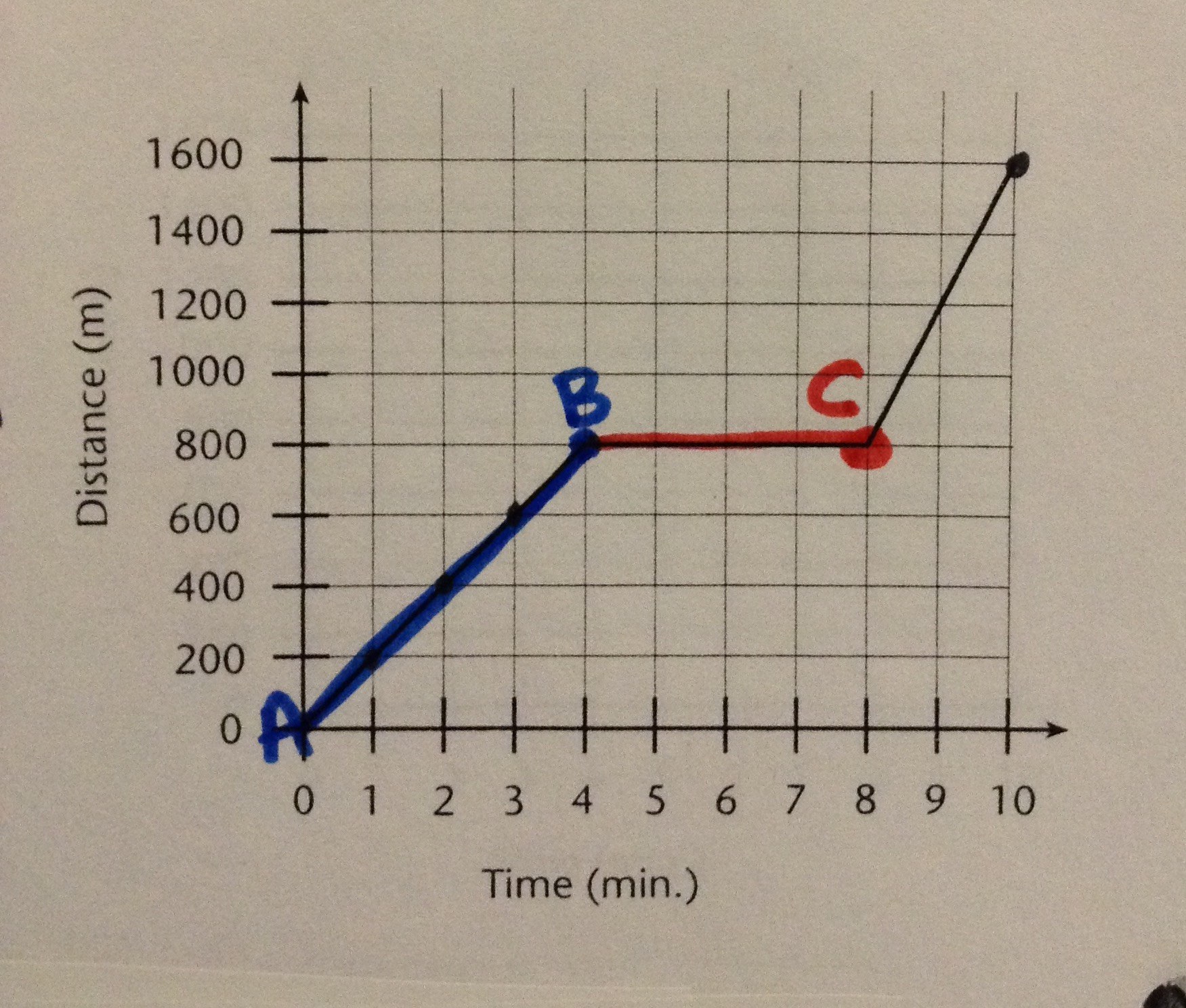
LT4: The graph shows Ashley riding her bike to Maria's house.
What is occurring from point A to point B?
What is occurring from point A to point B?
a)
they are traveling at a constant speed
b)
they are decreasing in speed
c)
they stopped to take a break
49.
LT2: Grayson walks 5 meters in 5 seconds. What is his average speed?
a)
25 m/sec
b)
1 m/sec
c)
5 m/sec
d)
.25 m/sec
50.
LT5: What is velocity?
a)
Time + Distance
b)
Speed in a given direction
c)
A fast dinosaur
d)
The direction a storm is moving
51.

The graph represents
a)
no motion
b)
constant velocity
c)
acceleration
d)
negative acceleration
52.

The graph represents
a)
no motion
b)
Constant velocity
c)
Acceleration
d)
negative acceleration
53.
LT5: The rate at which velocity CHANGES is:
a)
acceleration
b)
speed
c)
direction
d)
physics
54.
This type of force is an attraction between two objects
a)
contact
b)
gravity
c)
friction
55.
This type of force resist motion between two surfaces that are pressed together
a)
contact
b)
gravity
c)
friction
56.
The passing of traits from parent to offspring
a)
Heredity
b)
Genetics
c)
Hybrid
d)
Probability
57.
Who was the father of genetics
a)
Sagan
b)
Issac Newton
c)
Gregor Mendel
d)
C.jenkins
58.
The study of heredity and the variation of inherited characteristics
a)
gene
b)
genetics
c)
meiosis
d)
hybrid
59.
Which is homozygous ?
a)
Zz
b)
SS
60.
A homozygous dominant dog with brown fur is crossed with a heterozygous dog with brown fur. What are the percentages of the possible genotypes?
a)
100% BB
b)
75% BB and 25%Bb
c)
50 % BB and 50% Bb
d)
50% Bb and 50% bb
61.

Genotype refers to the ...
a)
physical expression of the genes
b)
the possible combination of alleles in a gene
c)
whether an allele is dominant or recessive
d)
how an organism will appear
62.

Squidward has light blue skin, and his genotype for this trait is Bb. Would Squidward be considered a purebred or hybrid for light blue skin?
a)
Purebred
b)
Hybrid
63.
Genotype refers to the ...
a)
physical expression of the genes
b)
the possible combination of alleles in a gene
c)
whether an allele is dominant or recessive
d)
how an organism will appear
64.
What is another name for natural selection?
a)
survival of the smartest
b)
survival of the fastest
c)
survival of the biggest
d)
survival of the fittest
65.

Darwin wrote that organisms with traits that are best suited to the environment will ________________
a)
increase in number
b)
become extinct
66.
The struggle for existence against other members of an organisms species is
a)
Competition
b)
Natural Selection
c)
gene flow
d)
genetic drift
67.
Remains of ancient organisms are called
a)
Extinctions
b)
Fossils
c)
Mutations
d)
Variations
68.

Wheels on a skateboard most likely experiences-
a)
Rolling Friction
b)
Sliding Friction
c)
Fluid Friction
d)
Static Friction
69.

Sally experiences-
a)
Rolling Friction
b)
Sliding Friction
c)
Fluid Friction
d)
Static Friction
70.

Swimming fish experience-
a)
Rolling Friction
b)
Sliding Friction
c)
Fluid Friction
d)
Static Friction
71.
Friction is a force that acts in an ___________ direction of movement.
a)
similar
b)
opposite
c)
parallel
d)
west
72.

Oil between machine parts would be an example of which type of friction?
a)
static
b)
sliding
c)
fluid
d)
rolling
73.
Which type of friction occurs when objects are not moving?
a)
static
b)
sliding
c)
fluid
d)
rolling
74.
Which of the following is an example of friction that is helpful?
a)
Brakes used on a bike
b)
Tires from a car on the road
c)
Tread on the bottom of your shoes
d)
All are examples that are helpful
75.
How can friction be reduced?
a)
reduce the force acting between the 2 surfaces
b)
reduce the roughness of the 2 surfaces coming in contact
c)
use wax, grease or oil
d)
all of the above are ways of reducing friction
76.
The rougher the surface, the faster an object will travel over the surface.
a)
True
b)
False
77.
How does friction affect speed?
a)
more friction decreases speed
b)
more friction increases speed
c)
less friction decreases speed
d)
less friction doesn't affect speed
78.
An axe is an example of a
a)
pulley
b)
inclined plane
c)
screw
d)
wedge
79.
A seesaw is an example of a
a)
wedge
b)
lever
c)
inclined plane
d)
pulley
80.

This graph shows how temperature affects the volume of a new polymer gel that may be useful in sorting DNA fragments using gel electrophoresis.What can be inferred from the results of the graph?
a)
Temperature is directly proportional to the volume of a given mass.
b)
Temperature is inversely proportional to the volume of a given mass.
c)
Mass is destroyed as the temperature increases.
d)
The energy is lost as the volume increases.
81.
An experiment is performed on plants to see how different liquids affect plant growth. Each plant in the experiment is given a different liquid; water, apple juice, or milk. Each plant has the same amount of soil, sunlight, and listens to the same music. In this investigation, the independent variable is ...
a)
The type of plant
b)
The amount of sunlight
c)
The type of music
d)
The type of liquid
82.
If you increase the amount of spinach you eat, then you will increase the iron in your blood.
What's the dependent variable?
What's the dependent variable?
a)
increase the amount of iron in your blood
b)
spinach you eat
83.

What part of the illustration shows Evaporation?
a)
1
b)
2
c)
3
d)
4
84.
What kind of weather is usually associated with a high pressure system?
a)
Sunny weather
b)
Precipitation (rain, snow, etc.)
85.
Which weather tool measures air pressure?
a)
thermometer
b)
barometer
c)
anemometer
d)
psychrometer
86.
Located at the leading edge of a temperature drop off. Bring heavy thunderstorms, rain, and hail. Cool, fair weather is likely to follow.
a)
Warm Front
b)
Cold Front
c)
Occluded Front
d)
Stationary Front
87.
What is this a picture of?
a)
plate tectonics
b)
continental drift
c)
pangea
d)
glacier scaring
88.
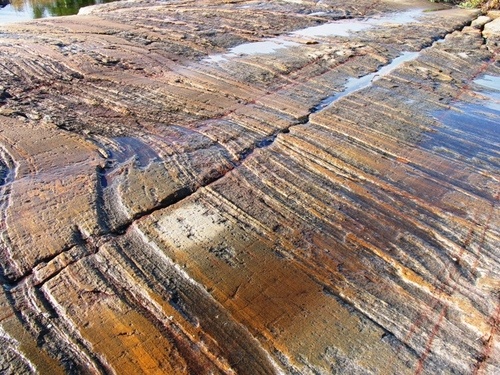
This is a picture of glacier scars found in Africa. What are these evidence for?
a)
Africa has always been near the equator
b)
Africa was once in an area of the Earth that had a very cold climate
c)
The continents have not moved
d)
sea floor spreading
89.
The type of plate boundary where two plates come together is a .....
a)
Convergent Boundary
b)
Divergent Boundary
c)
Transform Boundary
d)
Plate Boundary
90.

What type of plate boundary is this?
a)
Plate
b)
Divergent
c)
Convergent
d)
Transform
91.

What type of event will occur at this boundary?
a)
Earthquake
b)
Volcano Eruption
c)
Tornado
d)
Mountain Building
92.
The theory that says Earth's continents once made up an ancient supercontinent, and have been drifting apart ever since, is called the theory of...
a)
Pangea
b)
Plate Tectonics
c)
Natural Selection
d)
Gravity
93.
Almost Earth’s twin in size and mass, this planet has very thick atmosphere.
a)
Venus
b)
Mars
c)
Mercury
d)
Neptune
94.
Scientists have been able to find no atmosphere around this planet because it has little gravity and is closest to the sun.
a)
Mars
b)
Venus
c)
Mercury
d)
Earth
95.
The surface of this planet appears red due to rusting iron in the rocks.
a)
Mercury
b)
Mars
c)
Pluto
d)
Venus
96.
This gas giant has a large storm in its atmosphere known as The Red Spot
a)
Jupiter
b)
Saturn
c)
Uranus
d)
Neptune
97.

When the visible (lit) portion of the moon is increasing, the moon is:
a)
waning
b)
full
c)
waxing
d)
new
98.

When the Earth is between the moon and sun, it is most likely a:
a)
new moon
b)
full moon
c)
waxing crescent
d)
waxing gibbous
99.
Why do we always see the same side of the moon from Earth?
a)
because the phases change
b)
because it rotates and revolves at the same rate
c)
because half of the moon always receives sunlight
d)
The moon changes positions
100.

True or False
The Sun is the biggest star in the sky.
The Sun is the biggest star in the sky.
a)
True
b)
False
101.

What word best describes our sun?
a)
Average
b)
Supergiant
c)
Dwarf
d)
Red Giant
102.

Why does the sun look small in the sky to us?
a)
It is 93,000,000 miles away
b)
It is smaller than Earth
c)
It is not very bright
d)
It travels around Earth
103.
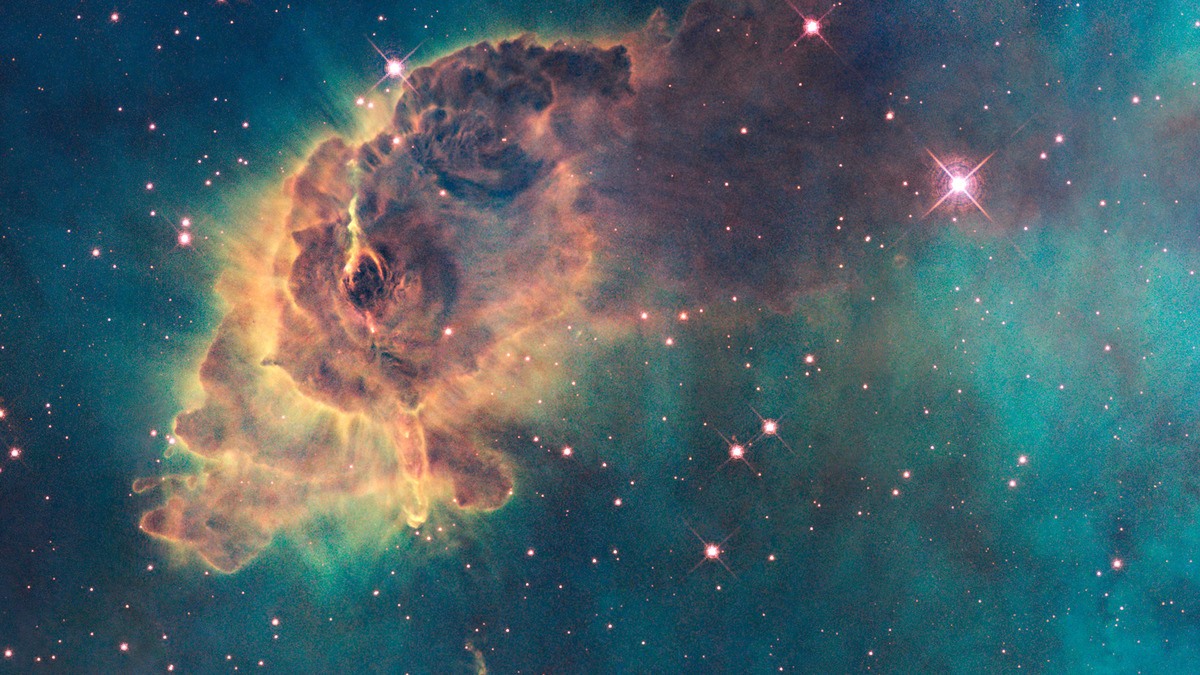
What is the name of the gas/dust clouds that form stars?
a)
Nebulas
b)
Protostars
c)
Supernova
d)
Neutron Star
104.

True or False
Constellations are stars that appear to be in a pattern.
Constellations are stars that appear to be in a pattern.
a)
True
b)
False
105.

To get the sun to appear bigger in our sky, how would the distance between the sun and earth have to change?
a)
Earth would have to move closer to the sun
b)
Earth would have to move farther from the sun
106.

What are stars?
a)
Rocky bodies
b)
Hot exploding balls of gas
c)
5 pointed shapes
d)
Hollywood actors
107.
What is the main element in a stars composition?
a)
Hydrogen
b)
Helium
c)
Lithium
d)
Heavy Elements
108.
What is the closest star to the sun?
a)
Proxima Centauri
b)
Alpha Centauri A
c)
Alpha Centauri B
d)
Betelgeuse
109.
Our star is a
a)
yellow/ large star
b)
yellow/ small star
c)
yellow/ medium star
110.
Because the Earth is 93 million mies from the Sun, the light from this star takes_____ to reach us.
a)
8 hours
b)
1 hour
c)
8 minutes
100 %

