
 Worksheets
Weather and Climate
Total questions: 64
Worksheet time: 1hrs 2mins
Name
Class
Date
1.

This is the symbol for a...
a)
Cold Front
b)
Warm Front
c)
Stationary Front
d)
rlOccluded Front
2.

This is the symbol for a...
a)
Occluded Front
b)
Stationary Front
c)
Warm Front
d)
Cold Front
3.

Identify the type of front that is shown in the image.
a)
Occluded Front
b)
Cold Front
c)
Stationary Front
d)
Warm Front
4.

Identify the type of front that is shown in the image.
a)
Occluded Front
b)
Cold Front
c)
Stationary Front
d)
Warm Front
5.
Located at the leading edge of a temperature drop off. Bring heavy thunderstorms, rain, and hail. Cool, fair weather is likely to follow.
a)
Warm Front
b)
Cold Front
c)
Occluded Front
d)
Stationary Front
6.
Located at the leading edge of a warm air mass. Brings gentle rain or light snow, followed by warmer, milder weather.
a)
Warm Front
b)
Cold Front
c)
Occluded Front
d)
Stationary Front
7.
The boundary between two air masses is known as:
a)
front
b)
storm
c)
climate
d)
flood
8.
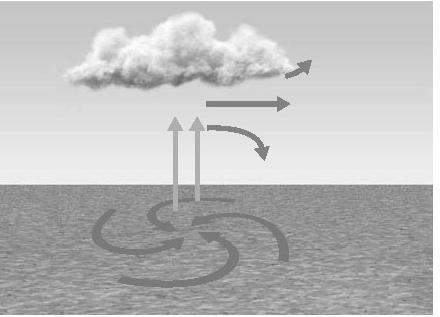
Which type of pressure system is pictured?
a)
high
b)
low
c)
medium
d)
none
9.

What type of weather would you expect with the pressure system pictured?
a)
clear
b)
cloudy
c)
severe storms
d)
hot
10.
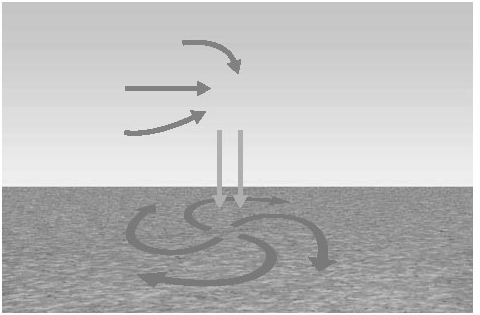
Which type of pressure system is pictured?
a)
high
b)
low
c)
medium
d)
none
11.

What type of weather would you expect from the pressure system pictured?
a)
clear
b)
cloudy
c)
hot
d)
stormy
12.
The temperature at which air is saturated and condensation forms is the:
a)
dew point
b)
rain point
c)
wind point
d)
relative humidity
13.
In _________ pressure systems, air sinks:
a)
high
b)
low
c)
medium
d)
none
14.
In _______ pressure systems, air rises
a)
high
b)
low
c)
medium
d)
none
15.
This type of front can bring strong storms
a)
cold
b)
warm
c)
stationary
d)
occluded
16.
Air pressure is greatest:
a)
closer to Earth
b)
farther from Earth
17.

Which number illustrates Condensation?
a)
1
b)
2
c)
3
d)
4
18.
What kind of weather is usually associated with a high pressure system?
a)
Sunny weather
b)
Precipitation (rain, snow, etc.)
19.
Which type of cloud is most often observed during a thunderstorm?
a)
cirrus
b)
stratus
c)
cumulus
d)
cumulonimbus
20.
Hot air (RISES / FALLS) __________.
a)
RISES
b)
FALLS
21.
Cold air (RISES/ FALLS) _________.
a)
RISES
b)
FALLS
22.
Which condition usually means cloudy, stormy weather?
a)
high pressure
b)
low pressure
23.

What does this symbol on a weather map indicate?
a)
High pressure system
b)
Low pressure system
c)
Cold front
d)
Warm front
24.
Rain, snow, sleet, and hail are all forms of _____.
a)
precipitation
b)
condensation
c)
evaporation
d)
climate
25.

The amount of water vapor present in the air is called ________________.
a)
weather
b)
humidity
c)
air mass
d)
dew point
26.

What type of storm front is this?
a)
warm front
b)
cold front
c)
stationary front
d)
occluded front
27.

What part of the illustration shows Evaporation?
a)
1
b)
2
c)
3
d)
4
28.
what kind of pressure predicts good weather?
a)
high
b)
low
c)
cold
d)
stationary
29.
What role do oceans play in hurricane formation?
a)
they provide cool, dense water
b)
warm water supplies energy to hurricanes
c)
warm ocean water slows hurricane formation
d)
cold ocean water supplies energy to hurricanes
30.
A severe storm that involves strong winds and forms over warm water is:
a)
tornado
b)
thunderstorm
c)
hurricane
d)
blizzard
31.
Warm air near the Earth’s surface rises and then cools and drops, this creates a _________________ in the atmosphere.
a)
run-off
b)
Greenhouse Effect
c)
convection current
d)
water cylce
32.
In what direction do winds always blow?
a)
From areas of high pressure to areas of low pressure
b)
From areas of low pressure to areas of high pressure
33.
Visible light reaches Earth’s surface while infrared light is trapped as heat. Which characteristic of Earth’s atmosphere causes this to happen?
a)
the hole in the ozone
b)
the greenhouse effect
c)
atmospheric pressure
d)
the inversion layer
34.
Compared to other greenhouse gases, carbon dioxide is very effective in trapping heat near the surface of the Earth.
a)
true
b)
false
35.
Which of the following have been linked to climate change?
a)
droughts
b)
flooding
c)
melting of polar ice caps
d)
all of the above
36.
The main human activity that releases greenhouse gases is
a)
using bottled water
b)
burning fossil fuels
c)
texting on cellphones
d)
eating meat
37.
Some greenhouse gases are naturally present in the Earth's atmosphere
a)
True
b)
False
38.
Which of the following is contributing to an increase in carbon dioxide in the atmosphere?
a)
deforestation
b)
photosynthesis
c)
oceans
d)
all of the above
39.
Things you can do to help decrease global warming include:
a)
Eat more ice cream.
b)
Keep your freezer door open.
c)
Keep your air conditioner on high.
d)
Turn off your lights when you’re not using them.
40.
Melting of glaciers and polar ice caps....
a)
will result in cooler temperatures in the Arctic
b)
will result in sea-levels rising
c)
Will have no effect on ecosystems
d)
None of the above
41.
What is the definition of weather?
a)
a period of abnormally dry weather that lasts at least 2 years
b)
the specific condition of the atmosphere at a particular place and time
c)
a complex community of organisms and the community's environment
d)
a release of toxic gas
42.
What is the average weather for a particular time and region called?
a)
drought
b)
weather
c)
emissions
d)
climate
43.
Climate change causes extreme weather conditions such as:
a)
excessive heat
b)
drought
c)
extreme storms
d)
all of these
44.
Some of the Earth's most fragile ecosystems that could be greatly impacted by climate change live in the
a)
tropical rainforest
b)
tundra
c)
oceans
d)
African Sahara desert
45.
Climate change can cause increases in asthma, allergies and heart disease.
a)
True
b)
False
46.
Which of the following is a way to save water?
a)
Water the lawn at high noon
b)
washing half loads of dishes
c)
taking shorter showers
d)
running the water while brushing your teeth
47.
Most water pollution is the result of __________________.
a)
natural processes
b)
animal waste
c)
human activities
d)
acid rain
48.
Wastes produced by agriculture, households, industry, mining, and other human activities can end up in ______________.
a)
groundwater
b)
streams and rivers
c)
oceans
d)
All of these choices
49.
Water shortages can be created by ____________________.
a)
weather related issues like drought
b)
human consumption
c)
human withdrawal
d)
All of these reasons.
50.
Which of these problems can be caused by air pollution?
a)
Respiratory problems
b)
Reduced food sources for humans
c)
Increased disease for humans
d)
Decrease in global temperatures
51.

What is the major cause for air pollution?
a)
factories and cars
b)
cigarretes
c)
deforestation
d)
oil spills
52.
What is Deforestation?
a)
A forest in which there are too many deers.
b)
A forest party where deers hang out
c)
The adding of trees in a forest.
d)
The clearing of trees; transforming of a forest into cleared land.
53.
Why do people cut trees down?
a)
To clear land
b)
To free up space for agricultural reasons
c)
To sell lumber
d)
All of the above
54.
How can forests be increased?
a)
A.)Replanting trees in deforested places
b)
B.)Adding trees to unforested, clear land.
c)
A.) and B.)
d)
Not this
55.
Does deforestation contribute to global warming?
a)
No, trees aren't that important
b)
Sometimes because only the cutting down of Maple trees contributes to global warming
c)
No, deforestation adds methane to the atmosphere, which makes the Earth cooler
d)
Yes; less trees means less CO2 is turned into oxygen.
56.
The amount of water vapor in the atmosphere.
a)
Saturation
b)
Vaporicity
c)
Absolute Humidity
d)
Relative Humidity
57.
The amount of water vapor in the atmosphere compared to how much it could hold.
a)
Saturation
b)
Vaporicity
c)
Absolute Humidity
d)
Relative Humidity
58.
A device that is used to measure atmospheric pressure is a ___________.
a)
barometer
b)
thermometer
c)
kilometer
d)
micrometer
59.
The cool air that blows from the water towards land is called a ...
a)
Hurricane
b)
Land Breeze
c)
Gale
d)
Sea Breeze
60.
A cool wind blowing from land to sea is called a ...
a)
Land Breeze
b)
Sea Breeze
c)
Hurricane
d)
Tornado
61.
Differences in air temperature and air pressure due to uneven heating of the Earth creates?
a)
atmosphere
b)
sunlight
c)
gravity
d)
wind
62.
Earth is unevenly heated due to its?
a)
oceans and moon
b)
tilt and shape
c)
gravity and clouds
d)
climate and weather
63.
Winds that blow from west to east are called?
a)
global winds
b)
Westerlies
c)
Easterlies
d)
Tradewinds
64.
Narrow belts of fast moving winds in the upper troposphere are called _____.
a)
local winds
b)
trade winds
c)
jet streams
d)
tornados
100 %

