
NEW
Font size
S
M
L
XL
 Worksheets
Unit 1 Review
Total questions: 30
Worksheet time: 24mins
Name
Class
Date
1.
How many protons are in Boron (B) ?
a)
3
b)
5
c)
10
d)
11
2.
Which element has the least electrons?
a)
B
b)
He
c)
F
d)
Na
3.

Sodium has an atomic number of 11, how many protons does this atom have?
a)
22
b)
11
c)
12
d)
2
4.
What number on the element key tells you how many protons an element has?
a)
Atomic Mass
b)
Element name
c)
Atomic number
d)
Element Symbol
5.

The following element key shows how many protons?
a)
16
b)
15.999
c)
Oxygen
d)
8
6.

What is the formula to solve for the neutron?
a)
Mass + Atomic Number= Neutrons
b)
Mass x Atomic Number = Neutrons
c)
Mass - Atomic Number = Neutrons
d)
Mass + Number of Protons = Neutron
7.
An atom with 19 protons, and 19 electrons and a mass of 39 has how many neutrons?
a)
19
b)
39
c)
20
d)
58
8.
What is the charge of the neutron?
a)
Negative
b)
Positive
c)
electrical charge
d)
Neutral (no charge)
9.

In a stable atom the amount of electrons is electron is equal to
a)
neutrons
b)
protons
c)
atomic mass
d)
neutrons + protons
10.

What is the charge of the electron
a)
positive
b)
no charge
c)
negative
d)
neutral
11.
Which of the following best describes an electron?
a)
It has no charge and about the same mass as a proton
b)
It has a negative charge and much less mass than a proton
c)
It has a positive charge and much more mass than a neutron
d)
It has a negative charge and about the same mass as a neutron
12.
Which of the following elements has 18 electrons?
a)
Flourine
b)
Helium
c)
Argon
d)
Chlorine
13.
The chemical symbol for Helium is
a)
H
b)
Hg
c)
He
d)
O
14.
The chemical symbol for Oxygen is
a)
Ox
b)
Og
c)
O
d)
On
15.
What is the chemical symbol for the element Gold
a)
G
b)
go
c)
AU
d)
Au
16.
What is the chemical symbol for the element Iron
a)
I
b)
Ir
c)
Fe
d)
fe
17.
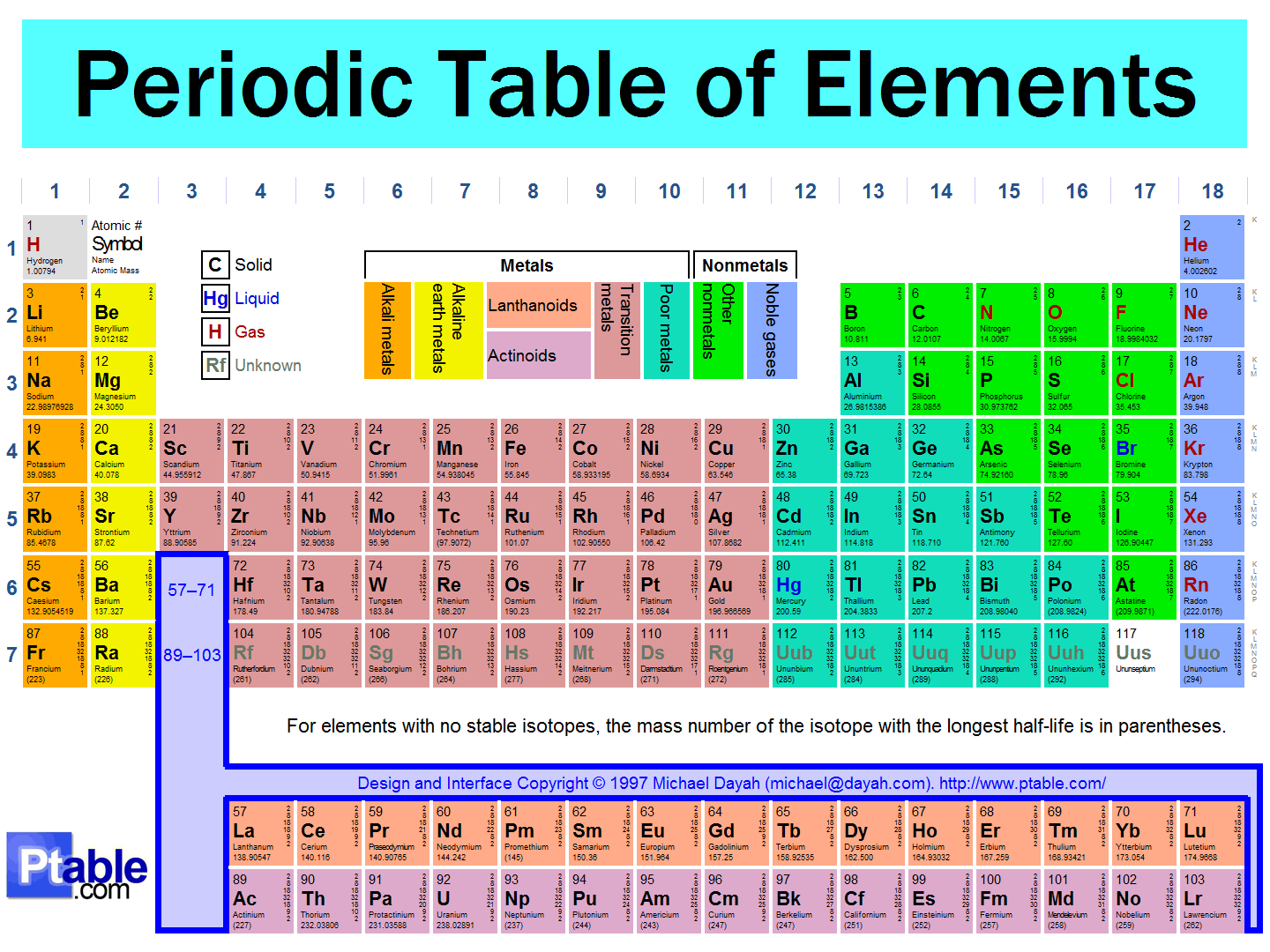
The horizontal row on the periodic table is called a
a)
group
b)
family
c)
period
d)
atomic number
18.
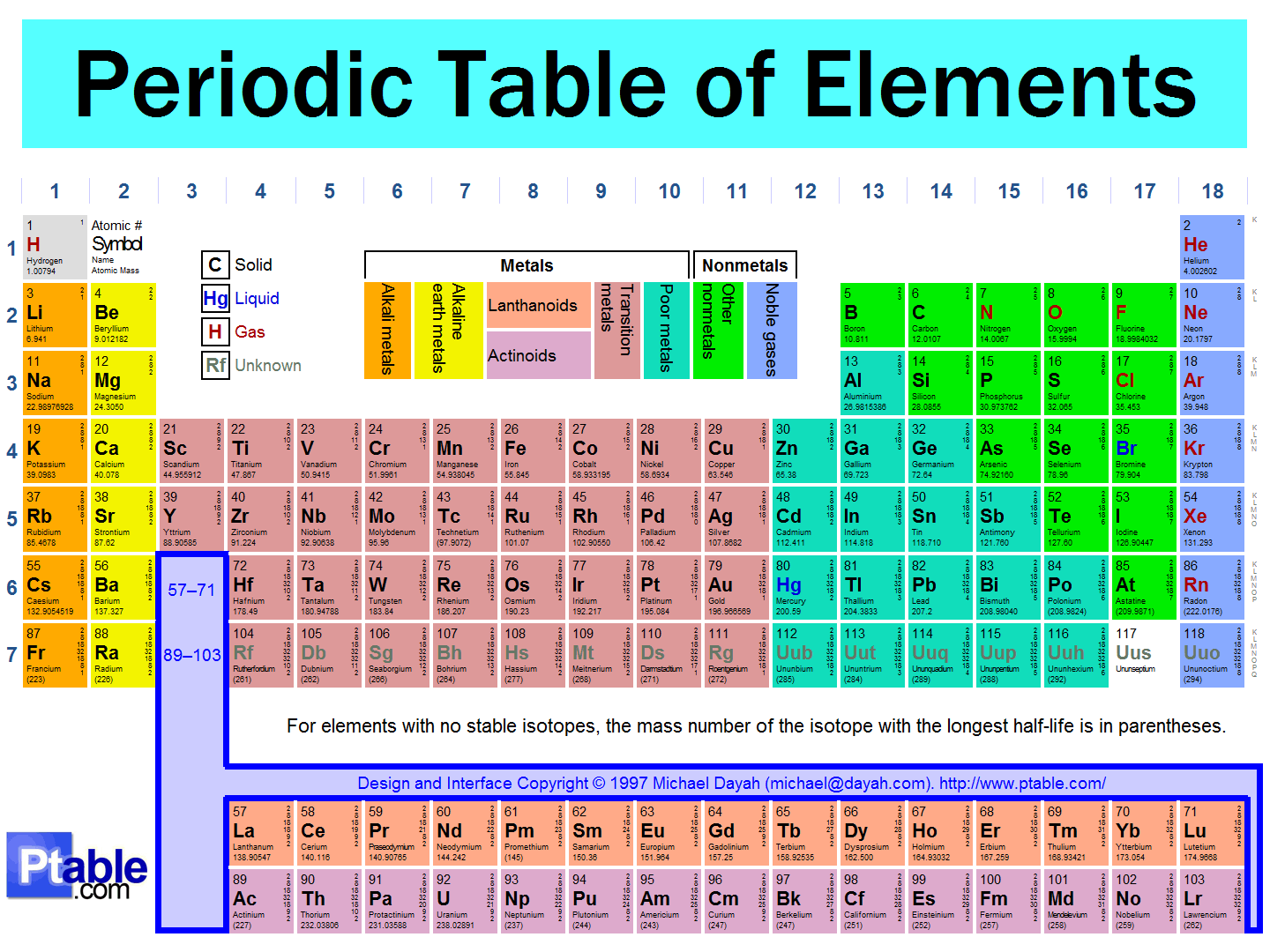
A vertical column is called...
a)
group
b)
tower
c)
period
d)
crew
19.
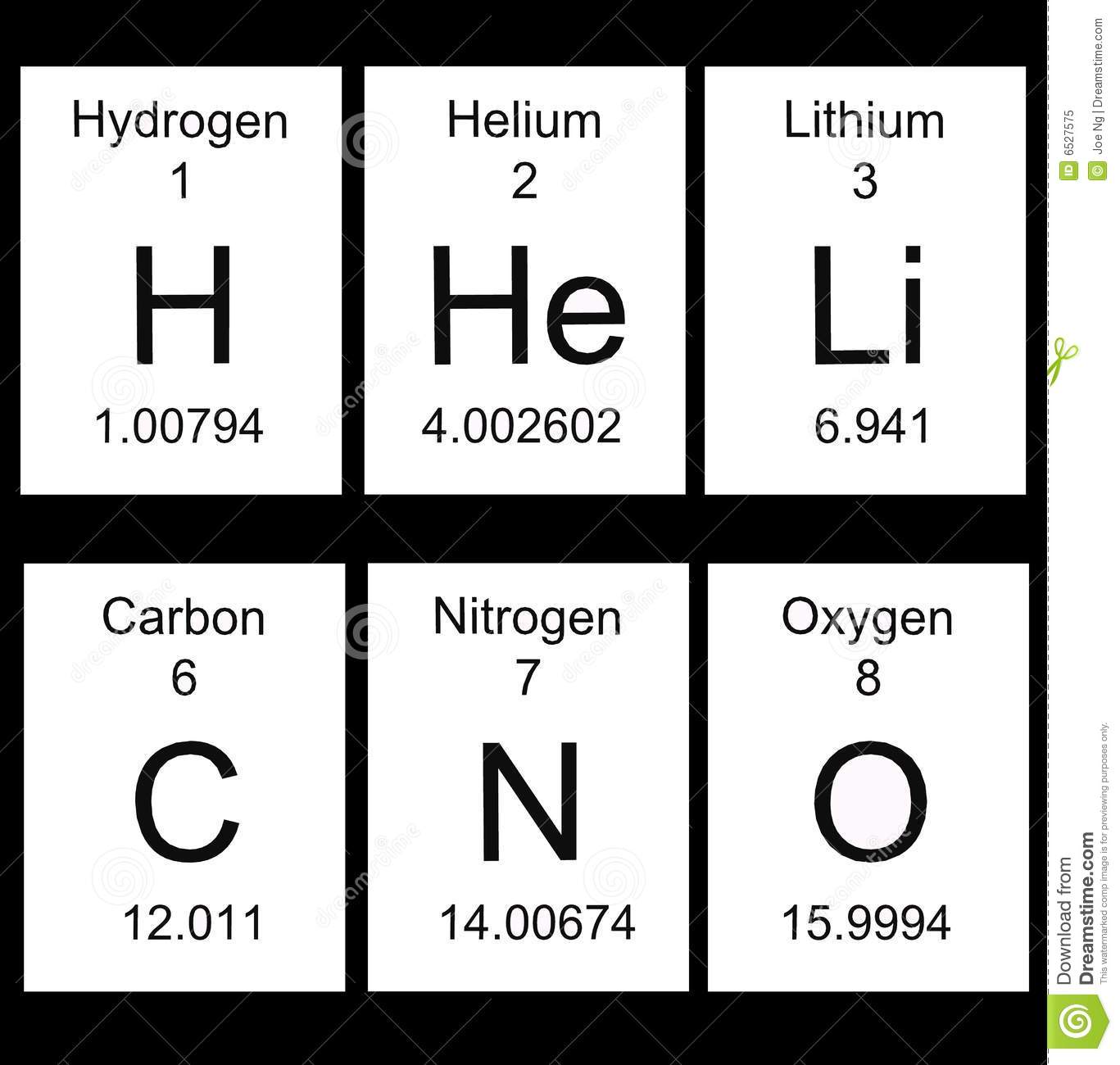
The number at the bottom of each square on the periodic table is the ...
a)
atomic number
b)
atomic mass
c)
chemical symbol
d)
element name
20.

All of the actinides are ___________.
a)
stable
b)
radioactive
c)
shiny
d)
named after scientists
21.

Most of the elements on the periodic table are classified as _____.
a)
Metals
b)
Nonmetals
c)
Metalloids
d)
Periods
22.
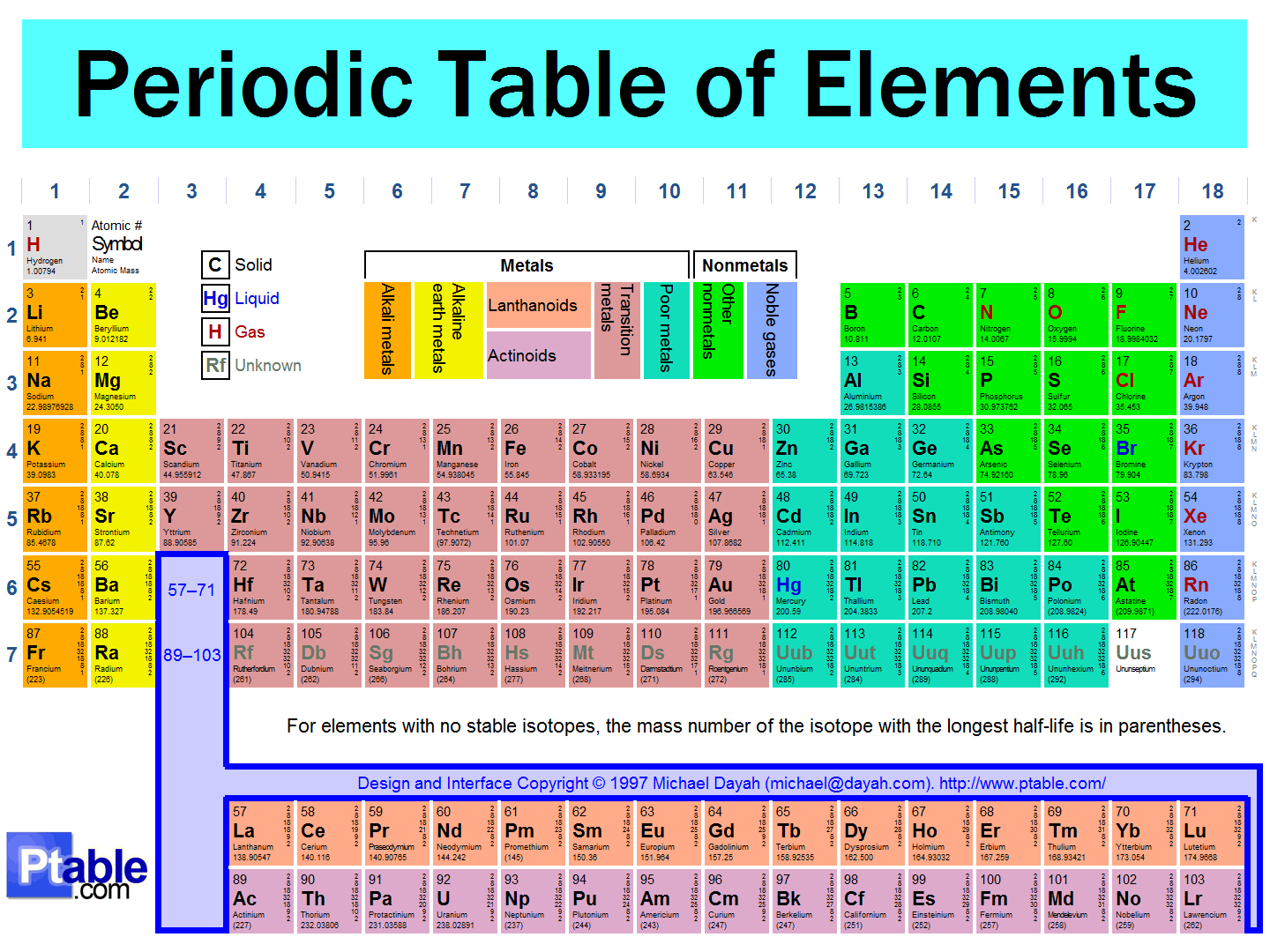
This class of elements are sometimes called "semiconductors."
a)
Metals
b)
Nonmetals
c)
Metalloids
d)
Groups
23.
Elements which are shiny, conduct electricity and heat are called
a)
metal
b)
nonmetal
c)
metalloid
d)
nonexistent
24.
How many electrons do atoms need to be stable?
a)
1
b)
2
c)
6
d)
8
25.
Cations are
a)
positive
b)
negative
c)
on the right side of the periodi table.
d)
nonmetals
26.
Which of the following would produce an anion?
a)
Ca
b)
Al
c)
K
d)
F
27.
Cations are _______ that form ____________ ions and __________ electrons.
a)
nonmetals, positive, lose
b)
nonmetals, negative, gain
c)
metals, positive, gain
d)
metals, positive, lose
28.
Anions are _______ that form ____________ ions and __________ electrons.
a)
nonmetals, positive, lose
b)
nonmetals, negative, gain
c)
metals, positive, gain
d)
metals, positive, lose
29.
Valence electrons are:
a)
Electrons farthest away from the nucleus
b)
Electrons closest to the nucleus
c)
Electrons that just come and go - they don't stay with the atom
30.
When an atom loses a valence electron, it becomes a(n) _____________ ion.
a)
positive
b)
negative
c)
neutral
d)
polyatomic
Reset

