
NEW
Font size
 Worksheets
UCM Quiz 1 (F)
Total questions: 15
Worksheet time: 39mins

If an object is moving in a circular path at a constant speed, how do the directions of its velocity and acceleration compare?
They point in opposite directions.
The answer will vary depending on the conditions
Both point in the same direction
They are perpendicular.
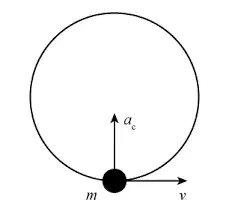

Can objects moving with constant speed accelerate? Explain.
Yes, if an object is moving it must be accelerating
No, if the speed is constant then the acceleration must equal to zero.
Yes, although the speed is constant, the direction of the velocity can be changing.
Yes, if it is moving a force must be acting on it, so it must be accelerating

When an object experiences uniform circular motion, the direction of the net force acting on it is
is directed toward the center of the circular path
is directed away from the center of the circular path.
in the same direction as the motion of the object.
in the opposite direction of the motion of the object
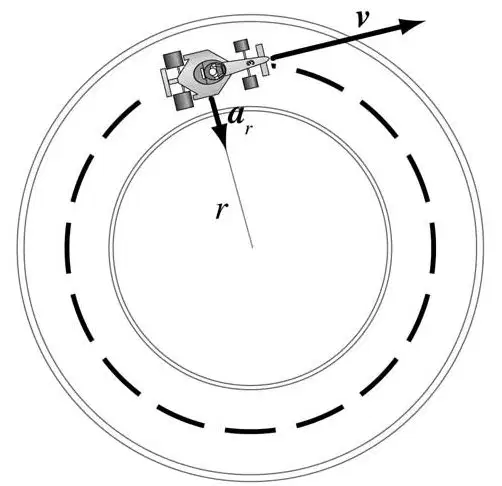

You ride your bike around a curve of radius r at a constant speed v. Then you go around the same curve at four times of the original speed 4v. What is the centripetal force F as you go around the curve for the second time, compared to the first time?
F = mv2/r
4 times as big
one-fourth as big
half as big
16 times as big

A car goes around a curve of radius r at a constant speed v. Then it goes around a curve of radius 2r at speed 2v. What is the centripetal force F on the car as it goes around the second curve, compared to the first?
F = mv2/r
four times as big
half as big
two times as big
the same

What term describes the acceleration of an object moving with constant speed in a circular path?
linear acceleration
centripetal acceleration
constant acceleration
centrifugal acceleration

What two properties remain constant during Uniform Circular Motion?
friction and radius
direction and radius
speed and direction
speed & radius
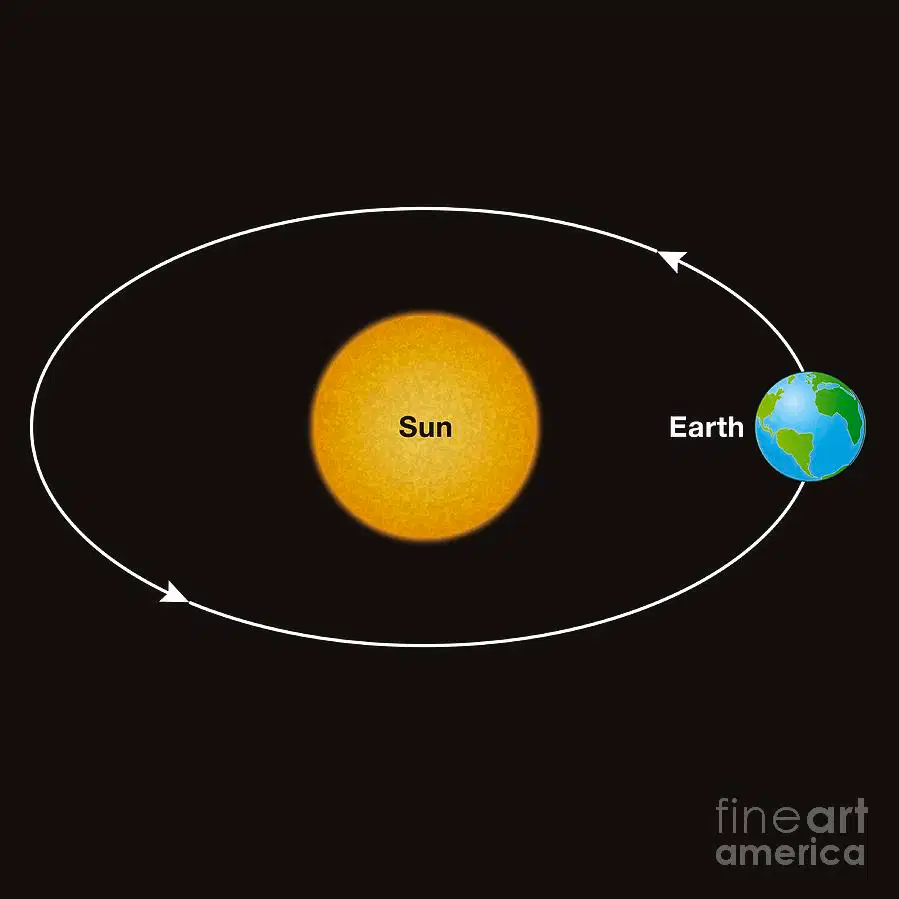
Centripetal forces keep objects going in a circle around a central point. What force creates the centripetal force needed to keep the Earth going around the Sun?
Magnetism
Gravity
Applied Force
Normal Force
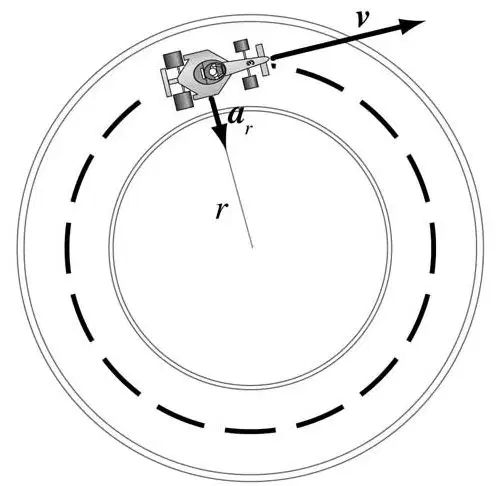
Centripetal forces keep objects going in a circle around a central point. What force creates the centripetal force needed to keep a car going around a curve?
Friction
Gravity
Applied Force
Normal Force

