
 Worksheets
Bohr Models and the Periodic Table Practice
Total questions: 33
Worksheet time: 1hrs 6mins
Name
Class
Date
1.

What element does this Bohr model represent?
a)
lithium
b)
carbon
c)
aluminum
d)
oxygen
2.

What element is this?
a)
Helium
b)
Hydrogen
c)
Argon
d)
Silver
3.

What element is represented in this Bohr Model?
a)
Carbon
b)
Hydrogen
c)
Aluminum
d)
Lithium
4.

Which element does this model represent?
a)
neon
b)
Hydrogen
c)
Fluorine
d)
bromine
5.

Which element does this model represent?
a)
Beryllium
b)
Boron
c)
Barium
d)
Bromine
6.
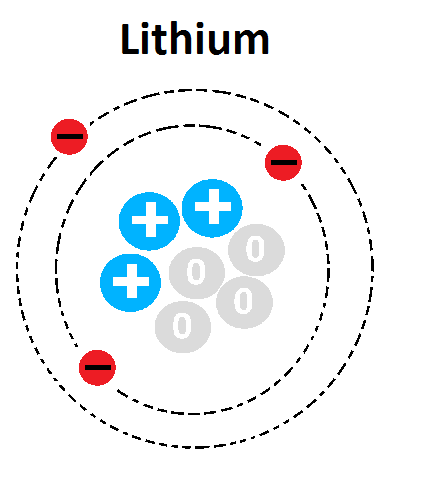
What is the mass number of this atom?
a)
1
b)
3
c)
4
d)
7
7.

What is the atomic number of this atom?
a)
2
b)
4
c)
6
d)
none of the above
8.

To which group does this element belong?
a)
Group 1: Alkali metals
b)
Group 18: Noble Gases
c)
Group 2: Alkaline-Earth Metals
d)
Group 17: Halogens
9.
An atom of an element has 4 energy levels and 3 valence electrons. What is this element?
a)
gallium
b)
indium
c)
germanium
d)
fluorine
10.

How many electrons does potassium K contain? (click to see image)
a)
19
b)
39
c)
20
d)
40
11.

How many protons are in this element?
a)
79
b)
196
c)
117
d)
Cannot be determined
12.
An element will always have the same number of _________.
a)
neutrons
b)
protons
c)
isotopes
d)
atoms
13.

What element is this?
a)
Boron
b)
Carbon
c)
Nitrogen
d)
Lithium
14.
Which of these elements has five valence electrons?
a)
phosphorus
b)
oxygen
c)
beryllium
d)
rubidium
15.

How many electrons are in the outer (valence) shell of Chlorine (Cl)?
a)
1
b)
3
c)
6
d)
7
16.

How many valence electrons does Tin (Sn) have?
a)
3
b)
2
c)
4
17.
How many Valance electrons does Iodine Have?
a)
6
b)
16
c)
7
d)
17
18.

What's a valence electron?
a)
electrons in the second energy level
b)
electrons in the outermost energy level
c)
the atomic number
d)
electrons in the first level
19.

What are electrons?
a)
Negatively charged particles
b)
Neutrally charged particles
c)
Positively charged particles
d)
Uncharged particles
20.
How many protons are in Boron (B) ?
a)
3
b)
5
c)
10
d)
11
21.
How many electrons are in Manganese (Mn) ?
a)
12
b)
25
c)
55
d)
30
22.
How many neutrons are in Phosphorus (P) ?
a)
15
b)
31
c)
16
d)
14
23.
Which element has 31 protons ?
a)
Gallium
b)
Germanium
c)
Gadolinium
d)
Polonium
24.
Which element has 56 electrons ?
a)
Barium
b)
Boron
c)
Beryllium
d)
Bromine
25.
Which element has 5 more protons than Oxygen (O)?
a)
Aluminum
b)
Lithium
c)
Chlorine
d)
Silicon
26.
How are electrons arranged in an atom?
a)
In groups of five
b)
In energy levels
c)
By color
d)
By shape
27.
An element will always have the same number of ________.
a)
neutrons
b)
protons
c)
isotopes
d)
atoms
28.
Rows on the period table are called _____ while columns are called _____.
a)
groups, families
b)
groups, periods
c)
periods, groups
d)
families, groups
29.
The period for Bromine is ___________.
a)
3
b)
2
c)
4
30.

Use your Periodic Table of Elements to help you identify which Bohr Model is pictured.
a)
calcium
b)
sulfur
c)
aluminum
d)
boron
31.

How many valence electrons does this atom have?
a)
12
b)
2
c)
24
d)
0
32.

Use your Periodic Table of Elements to help you identify which element is pictured.
a)
calcium
b)
magnesium
c)
bromine
d)
nickel
33.

In what group and period would you find this element?
a)
group 2, period 18
b)
group 10, period 10
c)
Noble gases group, 1st period
d)
group 8A, period 2
100 %

