
 Worksheets
Biomolecules
Total questions: 26
Worksheet time: 49mins
Name
Class
Date
1.
DNA consists of subunits, or building blocks, known as: (4.1.1)
a)
amino acids
b)
nucleotides
c)
nucleic acids
d)
polymers
2.
Which most directly controls the rate at which food is broken down to release energy? (4.1.3)
a)
enzymes
b)
hormones
c)
nucleic acids
d)
vitamins
3.
Molecules consisting only of carbon, hydrogen, and oxygen atoms make up a large part of a plant cell wall. These molecules are classified as (4.1.1)
a)
Enzymes
b)
Proteins
c)
Cellulose
d)
Lipids
4.
Which group of organic molecules contain starch and glucose? (4.1.1)
a)
lipids
b)
nucleic acids
c)
proteins
d)
carbohydrates
5.
Which organic compound is correctly matched with the subunit that composes it? (4.1.1)
a)
Nucleotide – amino acid
b)
Starch – glucose
c)
Protein – fatty acid
d)
Lipid – sucrose
6.
What are the subunits of DNA and their function? (4.1.1)
a)
nucleotides that store information
b)
monosaccharides that provide quick energy for the cell
c)
lipids that store energy and provide insulation
d)
proteins that provide the building blocks for the structural components of organisms
7.
Which is an organic compound? (4.1.1)
a)
NH3
b)
H2O
c)
NaCl
d)
C12H22O11
8.
Which type of molecule do whales use for energy storage and insulation? (4.1.1)
a)
DNA
b)
glucose
c)
fat
d)
starch
9.
Which of the following is a reason why humans need to include carbohydrates in their diet? (4.1.1)
a)
building blocks of structure and repair
b)
speed up chemical reactions
c)
source of energy
d)
insulation
10.
Proteins ingested by animals are immediate sources of: (4.1.1)
a)
Glucose
b)
Cellulose
c)
Fatty acids
d)
Amino acids
11.
Hemoglobin, insulin, albumin, and maltase, which are composed of chains of amino acids, are examples of: (4.1.1)
a)
Nucleic acids
b)
Carbohydrates
c)
Lipids
d)
Proteins
12.
Which substances are inorganic compounds? (4.1.1)
a)
Water and salts
b)
Proteins and carbohydrates
c)
Fats and oils
d)
Enzymes and hormones
13.
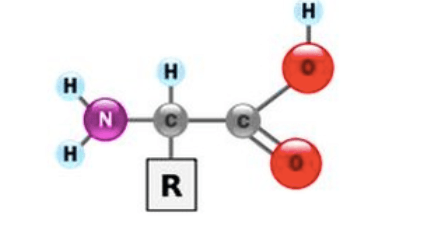
Which biomolecule is this a picture of?
a)
Protein
b)
Nucleic Acid
c)
Lipid
d)
Carbohydrate
14.
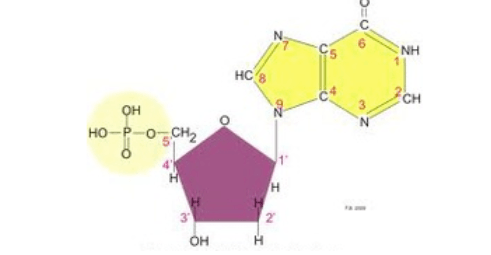
Which biomolecule is this a picture of?
a)
Protein
b)
Nucleic Acid
c)
Lipid
d)
Carbohydrate
15.
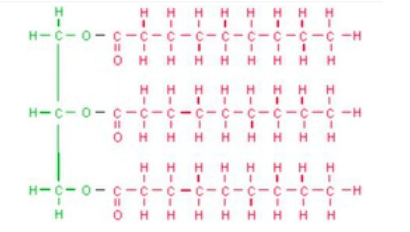
Which biomolecule is this a picture of?
a)
Protein
b)
Nucleic Acid
c)
Lipid
d)
Carbohydrate
16.
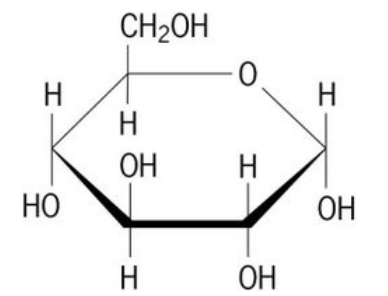
Which biomolecule is this a picture of?
a)
Protein
b)
Nucleic Acid
c)
Lipid
d)
Carbohydrate
17.
Which biomolecule is also known as enzymes?
a)
Carbohydrate
b)
Lipid
c)
Nucleic Acid
d)
Protein
18.
Steroids are a type of ________.
a)
Nucleic Acid
b)
Lipid
c)
Cholesterol
d)
Protein
19.
What do monomers do?
a)
Bonds to make a Polymer
b)
Creates Protiens
c)
Stores energy
d)
Splits to make more cells
20.
The four most common elements that make up all living things are carbon, hydrogen,
a)
nitrogen, and iron.
b)
oxygen, and nitrogen.
c)
calcium, and phosphorus.
d)
oxygen, and iron.
21.
The monomer of a protein is called...
a)
an amino acid
b)
a monosaccharide
c)
a fatty acid
d)
a nucleotide
22.

How was the structure in the image built?
a)
By adding 1 H2O
b)
By adding 2 H2O
c)
By removing 1 H2O
d)
By removing 2 H2O
23.
What does the word organic mean?
a)
has nitrogen
b)
has sulfur
c)
has carbon
d)
has oxygen
24.
Nucleotides are monomer for
a)
Nucleic Acids
b)
Proteins
c)
Carbohydrates
d)
Lipids
25.
What is the purpose of an enzyme?
a)
give permission for the reaction
b)
raise activation energy
c)
speed up reactions
d)
control how many reactions occur
26.
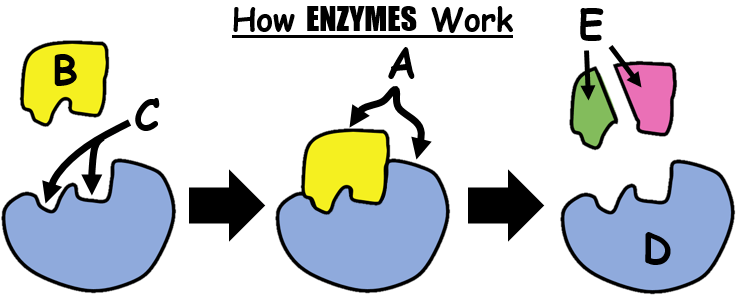
Letter D...
a)
active site
b)
enzyme
c)
substrate
d)
products
100 %

