wayground logo

Free Printable Worksheets

NEW

Font size

S
M
L
XL
Worksheets

Energy and Heat

Total questions: 40

Worksheet time: 47mins
Name
Class
Date
1.

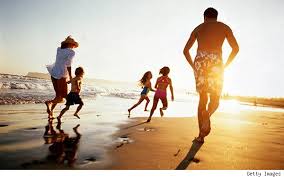
The sun shines down on this family as they play on the beach. What type of heat transfer do they experience?

a)

conduction

b)

convection

c)

radiation

2.
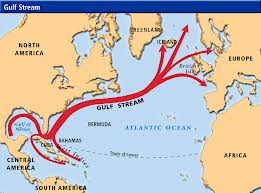
The Gulf Stream is a current that brings warm ocean water from the south to the north.
a)
conduction
b)
convection
c)
radiation
3.

When walking on the warm sand with your bare feet, you experience what type of heat transfer?

a)

conduction

b)

convection

c)

radiation

4.
A group of friends gather around a fire to stay warm.
a)
conduction
b)
convection
c)
radiation
5.
Which direction will the heat flow while this person holds a hot cup of tea?
a)
from the cup to her hand
b)
from her hand to the cup
c)
no heat is transferred
6.
Which direction will the heat flow while this ice cap melts?
a)
there is no heat transfer
b)
from the icecap to the water
c)
from the water to the icecap
7.

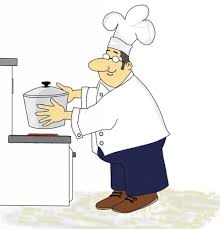
The man goes to take the hot pot off the stove with his bare hands. What type of heat transfer does this represent?

a)

conduction

b)

convection

c)

radiation

8.
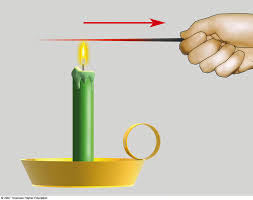
The candle will slowly heat the metal and transfer the heat directly to the mans hand.
a)
conduction
b)
convection
c)
radiation
9.

The warm air from this heater creates a current when the warm air rises and the cold air sinks. What type of current does the colored arrow represent?

a)

conduction current

b)

convection current

c)

radiation current

10.

What kinds of energy are being produced?

a)

Thermal and Light

b)

Chemical and Kinetic

c)

Nuclear and Thermal

d)

Mechanical and Chemical

11.

What kind of energy does this image represent?

a)

Thermal

b)

Chemical

c)

Mechanical

d)

Nuclear

12.
The transfer of thermal energy is called _____?
a)
heat
b)
energy
c)
work
d)
friction
13.
What type of energy is in this picture?
a)
Kinetic
b)
Potential
c)
Chemical
d)
Sound
14.
What will happen to the size of the balloon when it is placed inside the refrigerator? 
a)
Its size decreases.
b)
Its size increases.
15.
Heat transfers from an area of ____temperature to an area of ___ temperature.
a)
high to low
b)
low to high
c)
high to high
16.
Which units of measurement are used for volume?
a)
grams
b)
centimeters
c)
grams/milliliter
d)
milliliter
17.
What is the formula for density?
a)
density = mass x volume
b)
density = mass / volume
c)
density = mass + volume
d)
density = mass - volume
18.
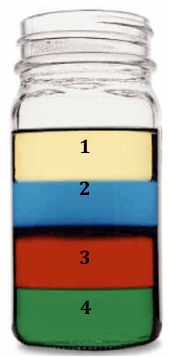
Put the liquids in order from most dense to least dense?
a)
4, 3, 2, 1
b)
1, 2, 3, 4
c)
3, 4, 2, 1, 
d)
4, 3, 1, 2
19.
Which box has a higher density?  
a)
Box A
b)
Box B
c)
cannot be determined
d)
they are the same
20.

Which teapot holds more kinetic thermal energy?

a)

teapot A

b)

teapot B

c)

They have the same

21.

As part of his study of transformation of energy, Roberto set up the system shown in the illustration. What forms of energy did Roberto demonstrate with his system?

a)

electrical, light, thermal and chemical

b)

electrical, sound, thermal and chemical

c)

electrical, light, sound and chemical

d)

electrical, light, sound, thermal and chemical

22.

Which change in state of matter would be from adding thermal energy?

a)

B to A

b)

C to B

c)

C to A

d)

B to C

23.

A pot of water is heated on an electric stove. Which of the following best describes the transformation of energy that occurs to heat the water?

a)

Electrical energy is transformed into thermal energy

b)

Chemical energy is transformed into thermal energy

c)

Thermal energy is transformed into electrical energy

d)

Electromagnetic radiation is transformed into electrical energy.

24.

A copper boat with glass windows is floating in a lake overnight. In the morning, which will take the longest to warm up: the windows, the copper base, or the water?

a)

The windows

b)

The water

c)

The copper base

d)

They will all warm up at the same rate.

25.

Using a formula from above, convert 45°C to degrees Fahrenheit. (You may use a calculator).

a)

107.3 °F

b)

98.6 °F

c)

113 °F

d)

110 °C

26.

Using a formula from above, convert 0°C to degrees Kelvin

a)

273.15 °K

b)

373.15 °K

c)

212 °K

d)

298.15 °K

27.

At what temperature will water boil? Choose the best answer

a)

373.15 °K

b)

100 °C

c)

212 °F

d)

All of these temperatures

28.
The kinetic theory of matter states that all of the particles that make up matter are constantly
a)
growing
b)
shrinking
c)
crying
d)
moving
29.
Particles in a solid move __________, than particles in a liquid
a)
faster
b)
slower
30.
When the temperature of matter decreases the particles ...
a)
speed up and move farther apart
b)
speed up and move closer together
c)
slow down and move farther apart
d)
slow down and move closer together
31.
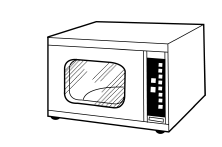
The picture shows a microwave oven. As a microwave oven is operated, electrical energy is transformed into all of the following types of energy EXCEPT —
a)
solar
b)
light
c)
thermal
d)
mechanical
32.
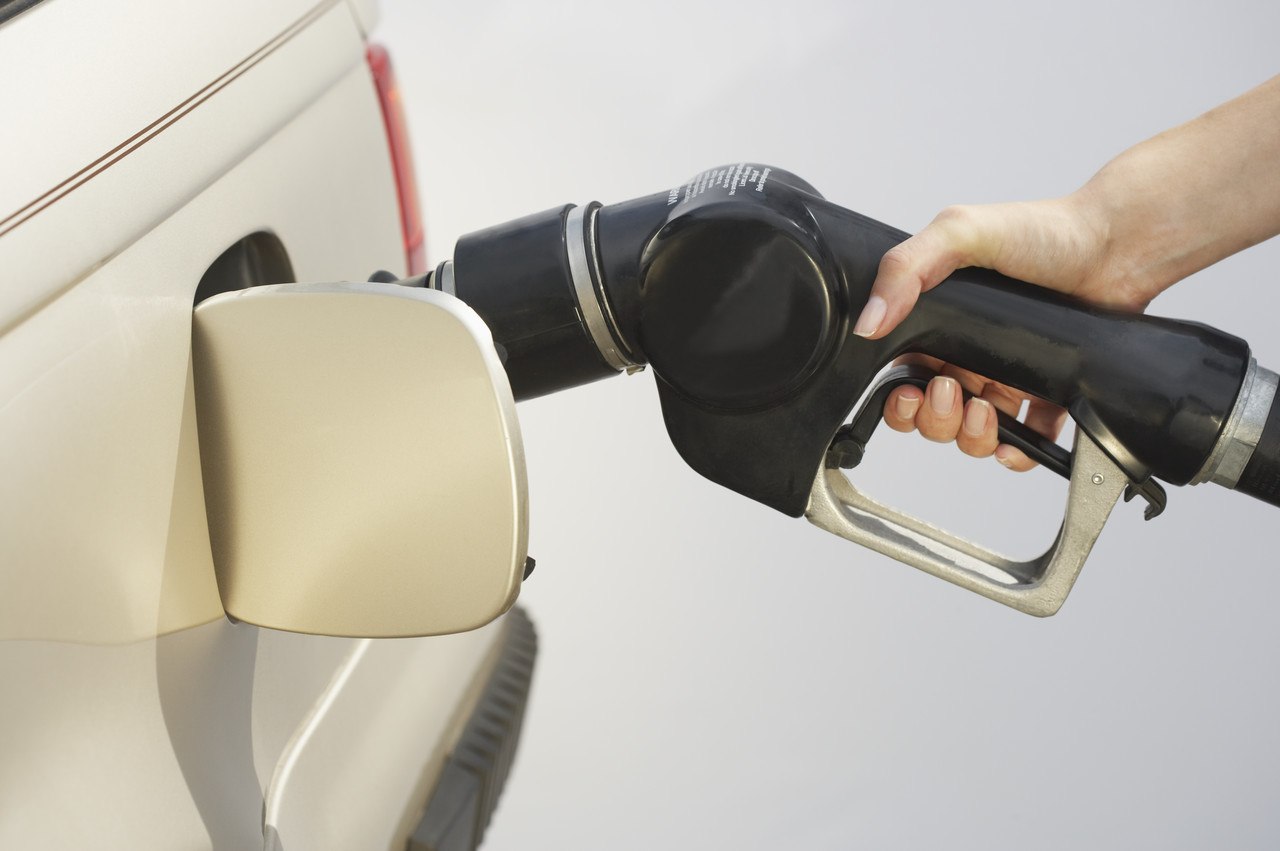
Which energy conversion is taking place when you put gasoline in a car?
a)
thermal -> electrical
b)
mechanical -> electrical
c)
chemical -> mechanical
d)
mechanical -> electromagnetic
33.
Electrical Energy is transferred to _____ Energy.
a)
Thermal
b)
Solar
c)
Electrical
d)
None
34.
Efficiency is a ______ of what you put in versus what you get out of a system.
a)
source
b)
ratio
c)
multiplication
d)
addition
35.
A machine has a work output of 8 joules and requires 10 joules of work input to operate. What is the machine's efficiency?
a)
8 J
b)
10 J
c)
80%
d)
800%
36.
The Law of Conservation of Energy states that
a)
energy cannot be created nor destroyed, only transformed or transferred
b)
energy can be destroyed but not created
c)
energy can be created but not destroyed
37.
The faster an object moves, the ________ kinetic energy it has. 
a)
more
b)
less
c)
none of the above
d)
all of the above 
38.
A battery converts what type of energy to another?
a)
sound to kinetic
b)
light to heat
c)
mechanical to electrical
d)
chemical to electrical
39.
Mechanical Energy is transferred to _____ Energy.
a)
Solar
b)
Mechanical
c)
Electrical
d)
Potential
40.
What would be the effect on the particles if more heat is supplied to the system?
a)
They would slow down
b)
They would stop moving
c)
They would speed up
d)
There would be no effect