Wayground logo

Free Printable Worksheets

Font size

S
M
L
XL
Worksheets

Severe Weather

Total questions: 30

Worksheet time: 32mins

Name
Class
Date
1.

Which storm can bring hail?

a)

thunderstorm

b)

tornado

c)

hurricane

2.
Which of these would you NOT expect from a thunderstorm?
a)
lightning
b)
strong wind
c)
storm surge
d)
heavy rain
3.
What happens if a hurricane moves over land or cold ocean water?
a)
it will get stronger
b)
it will get weaker
c)
it will upgrade its category
d)
it will morph into a typhoon
4.
During a _________ you should lay low in a ditch if you can't seek shelter inside.
a)
tornado
b)
hurricane
c)
thunderstorm
5.
What should you do if a hurricane is heading your way?
a)
pack up and prepare to leave if you live on the coast
b)
go to a room with windows
c)
lay low in a ditch if you are stuck outside
6.
Most of the damage done by a hurricane is the result of _____
a)
water
b)
wind
c)
tornadoes
d)
lightning
7.
These can be produced by thunderstorms
a)
stationary fronts
b)
tornadoes
c)
volcanoes
d)
tsunamis
8.
What do hurricanes feed on?
a)
warm tropical water
b)
hot water
c)
cold artic water
d)
rain
9.
Where is Tornado Alley located?
a)
Near the equator of the Earth
b)
Near the North Pole
c)
South Central Los Angeles
d)
Middle states of United States
10.
What is the scale used to measure hurricanes?
a)
MPH scale
b)
Fujita Scale
c)
Weight Scale
d)
Saffir/Simpson Scale
11.
What is a hurricane?
a)
A severe storm with lightning, thunder, heavy rain and strong winds
b)
A small, funnel-shaped cloud that comes down from a storm cloud with high speed winds
c)
A storms that forms over cold water and blows in a triangle pattern
d)
A large storm that forms over warm ocean waters with strong winds
12.
During _____________ stay inside if possible, stay out of the water, and do not stand under trees.
a)
rain Storm
b)
hurricane
c)
tornado
d)
thunderstorm
13.
Which of the following is not produced by thunderstorms?
a)
Snow
b)
Lightning
c)
Rain
d)
Strong winds
14.
What is the largest type of storm on Earth?
a)
Thunderstorms
b)
Hurricanes
c)
Tornadoes
d)
Blizzards
15.

Tornadoes are measured using the ____________ scale.

a)

Saffir-Simpson

b)

Enhanced Fujita

c)

Intensity

d)

Wind Speed

16.

Hurricanes usually form over ________ water.

a)

Cold

b)

Warm

17.

What kind of weather would cumulonimbus clouds likely bring?

a)

clear and sunny

b)

light rain

c)

hurricane

d)

thunderstorm

18.

The storm with the fastest winds.

a)

Hurricane

b)

Tornado

c)

Thunderstorm

19.

The storm that covers the largest area.

a)

Hurricane

b)

Tornado

c)

Thunderstorm

20.

The storm that touches the ground.

a)

Hurricane

b)

Thunderstorm

c)

Tornado

21.

Which letter in the diagram is the eye?

a)

Y

b)

Z

c)

X

22.

What is the weather like in an eye of a hurricane?

a)

fast winds

b)

calm

23.

How can people stay safe during a Hurricane?

a)

Evacuate

b)

Get to higher ground in a sturdy building

c)

Board up any windows to decrease flooding

d)

Keep food and water in case of being stranded for multiple days.

24.

A hurricane in the South Pacific is called a typhoon.

a)

True

b)

False

25.
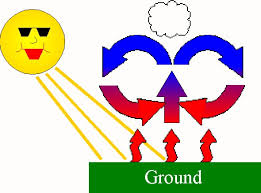
Warm air is __________ dense than cold air and rises creating convection currents.
a)
more
b)
less
26.
Warm air rises and the cool air sinks demonstrates this type of heat transfer. 
a)
conduction
b)
convection
c)
radiation
d)
Insolation 
27.
Why does cold water or land cause a hurricane to weaken?
a)
because the high pressure of the hurricane can't handle the cold water from a low pressure system
b)
because the land always cools faster than the ocean
c)
because the land breeze shreds the hurricane
d)
because they cut off the energy supply to the hurricane
28.
Why do hurricanes have to have low pressure?
a)
because low pressure causes air to rise
b)
because low pressure causes air to sink
c)
because low pressure makes sea breezes used by the hurricane
d)
because high pressure causes air to rise
29.
How does the Coriolis Effect influence hurricanes and cyclones
a)
determines how powerful they will be
b)
determines where they will go
c)
determines where they form
d)
determines the direction of the wind rotation
30.
In the Northern Hemisphere, hurricane winds blow
a)
harder than in the Southern Hemisphere
b)
counterclockwise
c)
clockwise
d)
less than in the Southern Hemisphere