
 Worksheets
Earth Structure, Plate Tectonics and Soil creation
Total questions: 41
Worksheet time: 1hrs 20mins
Name
Class
Date
1.
The type of plate boundary where two plates come together is a .....
a)
Convergent Boundary
b)
Divergent Boundary
c)
Transform Boundary
d)
Plate Boundary
2.
Which of the following causes Earth's tectonic plates to move?
a)
Energy from the Sun
b)
Magnetic Pole Reversal
c)
Convection currents in the mantle
d)
Faults in Mountain Ranges
3.

What type of event will occur at this boundary?
a)
Earthquake
b)
Volcano Eruption
c)
Tornado
d)
Mountain Building
4.
A divergent boundary occurs when plates ....
a)
Pull apart
b)
Come together
c)
Slide past each other
d)
subducting
5.
Which of the following is the name of the ancient supercontinent formed 28 Million Years ago.
a)
Pangea
b)
Gondwanda
c)
Laurasia
d)
Neverland
6.
The theory that says Earth's continents once made up an ancient supercontinent, and have been drifting apart ever since, is called the theory of...
a)
Pangea
b)
Plate Tectonics
c)
Natural Selection
d)
Gravity
7.
Islands can from from magma which is pushed up at a __________ plate boundary
a)
Divergent
b)
Convergent
c)
Transform
8.
How is it possible for new crust to be formed without increasing the surface area of the Earth?
a)
Crust is destroyed at the same time it is created
b)
New crust is underwater where it sinks
c)
New crust breaks more easily than old crust
9.
Mountains are created when....
a)
Two continental plates collide
b)
Two oceanic plates pull apart
c)
An Oceanic plate subducts under a Continental Plate
d)
Two continental plates pull apart
10.

Which layer is made up of iron and nickel?
a)
Crust
b)
Mantle
c)
Inner Core
d)
Lithosphere
11.
Which layer of the mantle is the least ridged (bendy like play-dough)?
a)
Asthenosphere
b)
Mesosphere
c)
Lithosphere
d)
Inner core
12.
What type of heat transfer in found in Earth"s asthenosphere?
a)
Conduction
b)
Convection
c)
Radiation
d)
I don't know
13.
Which sublayer is made up of the crust and upper mantle?
a)
Inner Core
b)
Outer Core
c)
Lithosphere
d)
Asthenosphere
14.

At which type of plate boundary does seafloor spreading occur?
a)
Tranform
b)
Convergent
c)
Divergent
d)
Subductive Zone
15.
Which layer is made up of iron and nickel?
a)
Crust
b)
Mantle
c)
Inner Core
d)
Lithosphere
16.

What are the two types of crust?
a)
top crust and bottom crust
b)
oceanic crust and continental crust
c)
pizza crust and toast crust
d)
lithocrust and asthenocrust
17.

Which physical layer is the thinnest?
a)
crust
b)
mantle
c)
core
18.

Which compositional layer is made of iron and some nickel?
a)
crust
b)
mantle
c)
core
19.

Which mechanical layer is made of solid iron and some nickel?
a)
Asthenosphere
b)
Outer core
c)
Lithosphere
d)
Inner core
20.
Which sublayer is made up of the crust and upper mantle?
a)
Inner Core
b)
Outer Core
c)
Lithosphere
d)
Asthenosphere
21.
What is the difference between the inner and outer core?
a)
The outer core is liquid, the inner core is solid.
b)
The inner core is liquid and the outer core is solid.
c)
The outer core is made of nickel and the inner core is made of iron.
d)
The outer core is hotter than the inner core.
22.

This layer of Earth is the thickest part.
a)
crust
b)
outer core
c)
mantle
d)
inner core
23.

The layer of the Earth that is made of the least dense materials is the
a)
mantle
b)
crust
c)
core
24.

Which layer of Earth would you expect to have the greatest pressure?
a)
core
b)
crust
c)
the atnosphere
d)
mantle
25.

Which layer of the earth have the greatest temperature?
a)
core
b)
crust
c)
mantle
d)
the atmosphere
26.

Because the inner core spins faster than the rest of the Earth, ...
a)
the earth has a magnetic field.
b)
tectonic plates move on top of the Earth.
c)
there are no living things in the inner core.
d)
there are waves on the ocean.
27.

Which of the following is NOT one of the three layers of soil?
a)
topsoil
b)
undersoil
c)
subsoil
d)
bedrock
28.
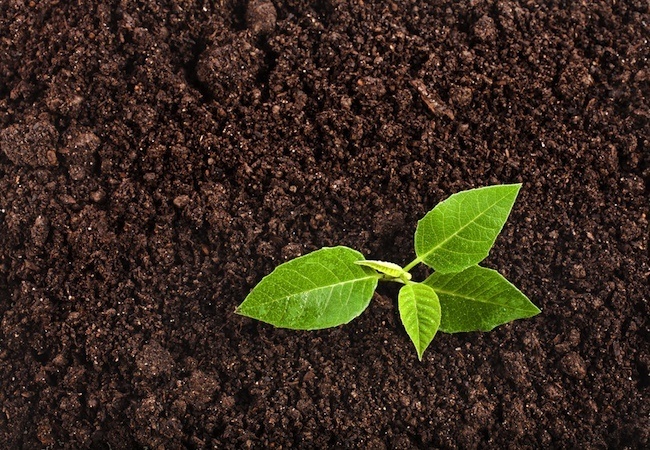
Which of the following is NOT one of the three types of soil?
a)
clay
b)
sand
c)
silt
d)
mud
29.

_______ is the type of soil used most often with plants. It is a mixture of clay, sand, and silt.
a)
loam
b)
humus
c)
mud
d)
dirt
30.

Humus is.....
a)
the dead parts of plants and animals in soil.
b)
A food we eat with pretzels.
c)
The tiny particles inside of soil
d)
The roots that come off of a plant and live in soil.
31.
Ellen grabs a topsoil sample in her hand. She rolls it into a ball. The soil feels gritty and the ball falls apart. What part of the topsoil most likely made the topsoil feel gritty?
a)
clay
b)
sand
c)
silt
d)
humus
32.
When there are not enough plants to hold topsoil in place, water and _______ carry the topsoil away, leaving the subsoil exposed
a)
sunlight
b)
birds
c)
magnetic fields
d)
wind
33.
When plants, animals, and other organisms die, they break down and become part of the soil. What is this part of the soil called?
a)
sand
b)
silt
c)
clay
d)
humus
34.
Which of the following is the largest particle in soil?
a)
sand
b)
silt
c)
humus
d)
clay
35.
Many plants cannot grow in clay soil. Why is this true?
a)
Clay soil does not have many nutrients.
b)
Roots cannot easily push through clay soil.
c)
Water doesn't drain well through clay.
d)
All of these choices.
36.
You dig a small hole in the soil and the next day it rains. The hole fills with water, but does not empty even after several days of dry weather. What is the soil mostly made of?
a)
clay
b)
sand
c)
humus
d)
silt
37.

What is a soil problem all farmers face?
a)
soil hardening
b)
soil erosion
c)
soil spoiling
d)
soil pollution
38.
Decayed organic material turns into dark colored material called __.
a)
litter
b)
clay
c)
humus
d)
soil
39.
What are some things that you can add to a compost pile?
a)
leaves, apple core, and tin foil
b)
grass clippings, banana peel, and newspaper
c)
egg shells, plastic spoon, and ziploc bags
d)
metal fork, rubber spatula, and shoelaces
40.
Where does most of the water go when it rains?
a)
in the ocean
b)
in the rivers
c)
in the gutters
d)
it absorbs into the soil
41.
What can you add to a compost pile to help the organic material decompose?
a)
Food Scraps
b)
Water
c)
Sticks
d)
Earthworms
100 %

