
NEW
Font size
S
M
L
XL
 Worksheets
Evolution and Interactions 2nd Block
Total questions: 25
Worksheet time: 19mins
Name
Class
Date
1.
Who is the father of evolution?
a)
Darwin
b)
Mendel
c)
Newton
d)
Einstein
2.
What is another name for natural selection?
a)
survival of the smartest
b)
survival of the fastest
c)
survival of the biggest
d)
survival of the fittest
3.
What is a change in an organism that allows for it to survive in its environment?
a)
homologous
b)
vestigial
c)
variation
d)
adaptation
4.
When all of the organisms of a species have died it is called
a)
evolution
b)
extinction
c)
adaptation
d)
natural selection
5.
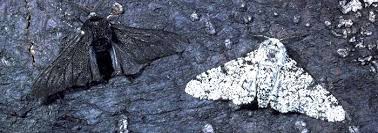
Predict which moth would increase in population
a)
light
b)
dark
6.

Darwin wrote that organisms with traits that are best suited to the environment will ________________
a)
increase in number
b)
become extinct
7.
Which term refers to the process by which individuals that are better suited to the environment survive and reproduce therefore passing down their genes to their offspring?
a)
Evolution
b)
Variation
c)
Adaptation
d)
Natural Selection
8.
A remnant or trace of an organism from the past is called a _______.
a)
Ancestor
b)
Skeleton
c)
Fossil
d)
Imprints
9.
Inherited trait that helps an organism survive is a(n) __________.
a)
Fossil
b)
Adaptation
c)
Ancestor
d)
Natural selection
10.

The diagram shows fossils in different rock layers. Which of these statements about the age of these fossils is most likely correct?
a)
Fossil A and C are the same age
b)
Fossil B is older than fossil C
c)
Fossils A is older than fossil B
d)
Fossil D is older than fossil C
11.

Who was the naturalist that traveled the world to study plants and animals?
a)
Albert Einstein
b)
Charles Darwin
c)
Charles Barkley
d)
Isaac Newton
12.

The gradual change in species over time is...
a)
Evolution
b)
Nucleotide
c)
Adaptation
d)
Natural Selection
13.

To adjust to a changing environment
a)
Mutation
b)
Adapt
14.
What characteristic did Darwin observe about the finches (Birds) on the Galapagos Islands?
a)
Their feathers
b)
Genotypes
c)
Their beaks
d)
Their body sizes
15.
The white feathers of a snowy owl allow it to blend in with its environment during the winter months (snow). This is an example of ________________
a)
Species
b)
Environmental Change
c)
Adaptation
d)
Variation
16.
What is the advantage of having different shaped beaks?
a)
To look different from other species.
b)
To be able to eat the food readily available in the environment.
c)
To protect itself against predators.
d)
To protect itself against prey.
17.
The struggle for existence against other members of an organisms species is
a)
Competition
b)
Natural Selection
c)
gene flow
d)
genetic drift
18.
Which parts of an organism are more likely to fossilize?
a)
the soft parts - skin, muscle
b)
the hard parts - bones, shells, stems
c)
all parts can become fossilized easily because the organism becomes buried by sediments
19.
A _______ is a hollow area in sediment in the shape of an organism or part of an organism.
a)
mold
b)
cast
c)
petrified fossil
d)
trace fossil
20.
A _______ is a solid copy of the shape of an organism.
a)
mold
b)
cast
c)
petrified fossil
d)
trace fossil
21.
A symbiotic relationship in which both organisms benefit is called
a)
mutualism
b)
commensalism
c)
parasitism
22.
A symbiotic relationship in which one organism benefits while the other is harmed is called
a)
mutualism
b)
commensalism
c)
parasitism
23.
A symbiotic relationship in which one organism benefits and the other remains unaffected is called
a)
mutualism
b)
commensalism
c)
parasitism
24.
This type of interaction occurs when 2 organisms live closely together for survival.
a)
Symbiosis
b)
Competition
c)
Predation
d)
Cymbalosis
25.
_______ occurs when 1 organisms kills and eats another for food.
a)
Symbiosis
b)
Competition
c)
Predation
d)
Collaboration
Reset

