
 Worksheets
The Solar System
Total questions: 111
Worksheet time: 1hrs 7mins
Name
Class
Date
1.

What does NASA stand for?
a)
Naval Astronaut Space Analysis
b)
National Aerospace Science Administration
c)
National Aeronautics Space Administration
d)
National Administration of Space Advancement
2.

The first human to step foot on the moon was
a)
Robert Goddard.
b)
Neil Armstrong.
c)
Buzz Aldrin.
d)
Yuri Gagarin.
3.

Who was the first human to orbit Earth?
a)
Yuri Gagarin
b)
Neil Armstrong
c)
Alan Shepard
d)
John Glenn
4.

These are the missions created for moon exploration.
a)
Mercury
b)
Apollo
c)
Sputnik 1
d)
NASA
5.

This is the Apollo mission and year of the first moon landing.
a)
Apollo 10, 1968
b)
Apollo 13, 1969
c)
Apollo 14, 1970
d)
Apollo 11, 1969
6.
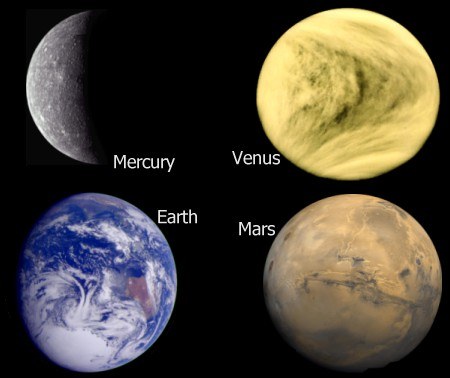
Earth and the other planets closest to the Sun are made mostly of _______
a)
gas
b)
metal
c)
water
d)
rock
7.

The moon is a natural ______ of Earth.
a)
comet
b)
axis
c)
satellite
d)
space probe
8.

The __________ has planets, moons, comets, and asteroids.
a)
solar system
b)
earth
c)
rotation
d)
United States
9.
One of the main differences between the outer and inner planets is __________.
a)
The inner planets all have water
b)
the inner planets are much bigger than the outer planets
c)
the outer planets are gas planets
d)
the outer planets have rings, and the inner planets don't
10.
Where is the asteroid belt found?
a)
between earth and mars
b)
Between Uranus and Neptune
c)
Between Mercury and Venus
d)
Between Mars and Jupiter
11.
Which is the largest object in our solar system?
a)
Sun
b)
Jupiter
c)
Earth
d)
Pluto
12.
Which planet is closest to the sun?
a)
Uranus
b)
Mercury
c)
Neptune
d)
Earth
13.
Which is the second closest planet to the sun?
a)
Earth
b)
Saturn
c)
Venus
d)
Mercury
14.
Which planet is third from the sun?
a)
Mars
b)
Pluto
c)
Venus
d)
Earth
15.
Which is the fourth planet from the sun?
a)
Mars
b)
Saturn
c)
Earth
d)
Jupiter
16.
Which planet is fifth from the sun?
a)
Saturn
b)
Jupiter
c)
Mars
d)
Earth
17.
Which is the sixth planet from the sun?
a)
Earth
b)
Uranus
c)
Saturn
d)
Neptune
18.
Which planet is seventh from the sun?
a)
Saturn
b)
Earth
c)
Venus
d)
Uranus
19.
Which planet is farthest from the sun?
a)
Neptune
b)
Pluto
c)
Earth
d)
Uranus
20.
A ball of ice and dust with a tail of gas and dust pointing away from the sun.
a)
Asteroid
b)
Comet
c)
Moon
d)
Meteor
21.
A small object that appears as a streak of light as it enters earth's atmosphere.
a)
Asteroid
b)
Comet
c)
Moon
d)
Meteor
22.
A small rocky object orbiting the sun.
a)
Asteroid
b)
Comet
c)
Moon
d)
Meteor
23.
A natural satellite of a planet.
a)
Asteroid
b)
Comet
c)
Moon
d)
Meteor
24.
The planet with the most spectacular rings of any planet is
a)
Jupiter
b)
Saturn
c)
Uranus
d)
Neptune
25.
Which planet is the smallest terrestrial planet?
a)
Mercury
b)
Venus
c)
Earth
d)
Mars
26.
The four terrestrial planets all have
a)
Hot temperatures
b)
Rocky surfaces
c)
Deep atmospheres
d)
Large size
27.
The Great Red Spot is a storm in Jupiter's atmosphere.
a)
True
b)
False
28.
What is the correct order of the planets from the sun?
a)
Mercury, Venus, Earth, Mars, Jupiter, Saturn, Uranus, Neptune.
b)
Mercury, Earth, Venus, Mars, Jupiter, Saturn, Uranus, Neptune.
c)
Mercury, Venus, Earth, Mars, Saturn, Jupiter, Uranus, Neptune.
d)
Mars, Venus, Earth, Mercury, Jupiter, Saturn, Uranus, Neptune.
29.
Whats the biggest planet
a)
jupiter
b)
earth
c)
mars
d)
neptune
30.
What is the coldest planet?
a)
Pluto
b)
Neptune
c)
mercury
d)
earth
31.
What words below describe the Outer planets?
a)
Large and made mostly of gas
b)
Rocky, large, only have 1 moon.
c)
Made of gas, small and rocky
32.
The earth is located between which 2 planets?
a)
Jupiter & Saturn
b)
Mercury & Venus
c)
Venus & Mars
d)
Saturn and Uranus
33.
Which planets are the gas giants?
a)
Mercury, Earth, Mars, Venus
b)
Jupiter, Mercury, Neptune, Saturn
c)
Saturn, Neptune, Jupiter, Uranus
d)
Neptune, Uranus, Saturn, Pluto
34.
The "red planet" is
a)
Venus
b)
Uranus
c)
Mars
d)
Saturn
35.
Asteroids "hang out" in our solar system in a place called:
a)
The Kupier Belt
b)
The Oort Cloud
c)
The Planetary Rings
d)
The Asteroid Belt
36.
Huge chunks of rock and metal (some measuring miles wide) and are believed to be left-over pieces of planets and moons are called:
a)
Comets
b)
Meteors
c)
Asteroids
d)
Meteroids
37.
where are asteroids found?
a)
between earth and venus
b)
between Jupiter and Saturn
c)
between Saturn and Uranus
d)
between Mars and Jupiter
38.

a pattern of stars that form an imaginary picture or design in the sky
a)
Orbit
b)
Rotate
c)
constellation
d)
Milky Way
39.
A ball of ice and dust with a tail of gas and dust pointing away from the sun.
a)
Asteroid
b)
Comet
c)
Moon
d)
Meteor
40.
What word means having to do with the sun?
a)
Cloud
b)
Solar
c)
Venus
d)
Milky Way
41.
The path that plants and moons follow in a solar system is called...
a)
rout
b)
orbit
c)
pathway
d)
system
42.
Which outer planets have rings?
a)
Just Saturn
b)
Saturn and Jupiter
c)
Jupiter, Neptune, and Saturn
d)
all 4 of them
43.
Which planet has the smallest pull of gravity?
a)
Saturn
b)
Jupiter
c)
Neptune
d)
Mercury
44.
Besides changing the distance between objects how else can we change the force of gravity?
a)
Change their atmosphere
b)
Change their rotation
c)
Change their mass
d)
Change their volume
45.
A small object that appears as a streak of light as it enters earth's atmosphere.
a)
Asteroid
b)
Comet
c)
Moon
d)
Meteor
46.
People used to think that Earth was the center if the solar system, They thought everything orbited around it. They called this the _________ model.
a)
Geocentric
b)
Earth First
c)
Egocentric
d)
Solarology
47.
Which planet is the hottest planet?
a)
Mercury
b)
Mars
c)
Venus
d)
Saturn
48.
Why does the moon appear to shine?
a)
It is like a star and gives off light
b)
it refracts light from space
c)
It reflects light from the sun
d)
It absorbs light from the sun
49.
How does changing the mass of objects affect the force of gravity?
a)
Increasing mass will decrease gravity
b)
Decreasing mass will increase gravity
c)
Mass will not affect gravity
d)
Increasing mass increases gravity
50.
How does changing the distance between objects affect the force of gravity?
a)
Decreasing distance increases gravity
b)
increasing distance increases gravity
c)
Distance does not affect gravity
51.
The planet with the shortest year is
a)
Earth
b)
Neptune
c)
Pluto
d)
Mercury
52.
What holds the moon, the planets, and all other objects in orbit around the sun?
a)
ocean tides
b)
magnetism
c)
gravity
d)
the sun's heat and light
53.
which model of the solar system has the sun in the center with all of the planets orbiting it?
a)
heliocentric
b)
geocentric
54.
Which type of technology would you use to see far away objects?
a)
computer
b)
rover
c)
satellite
d)
telescope
55.
which of the following is the cause of Mercury having a shorter year than Jupiter
a)
Mercury orbits closer to the sun
b)
Mercurys orbit is more circular than Jupiter
c)
Mercury rotates at a slower speed than Jupiter
d)
Mercury has a more elliptical orbit than Jupiter
56.
Which type of planet rotates faster?
a)
terrestrial
b)
gas giant
57.
The farther from the sun the _____________ the revolution (year)
a)
shorter
b)
longer
58.
What do you call a piece of an asteroid that is floating in space?
a)
Planetoid
b)
Meteor
c)
Meteroid
d)
Meteorite
59.
Which part listed below is not a part of a comet?
a)
Plasma
b)
Nucleus
c)
Tail
d)
Coma
60.
Which planet is not a part of the inner planets?
a)
Mars
b)
Earth
c)
Venus
d)
Uranus
61.
Everything in our Solar System is rotates around the sun because of the sun's
a)
Gravity
b)
Corona
c)
Chromoshphere
d)
Core
62.
Which planet has a Great Red Spot on it?
a)
Neptune
b)
Jupiter
c)
Uranus
d)
Venus
63.
A small rock from space that has hit the Earth's surface
a)
Meteoroid
b)
Asteroid
c)
Comet
d)
Meteroite
64.
A small rock from space that has entered Earth's atmosphere ("a shooting star")
a)
Asteroid
b)
Comet
c)
Meteor
d)
Meteorite
65.
An icy ball of dust and gas
a)
Comet
b)
Asteroid
c)
Meteor
d)
Planetesimal
66.
What is the geocentric model of the universe?
a)
Earth is the center of the solar system
b)
The sun is the center of the solar system
67.
What is the heliocentric model of the universe?
a)
Earth is the center of the solar system
b)
The sun is the center of the solar system
68.
Where did most of the matter in the early solar system go?
a)
The sun
b)
The inner planets
c)
The outer planets
d)
The Oort cloud
69.
Which is not a rocky inner planet?
a)
Mercury
b)
Earth
c)
Jupiter
d)
Mars
70.
Which is not a gassy outer planet?
a)
Mercury
b)
Jupiter
c)
Saturn
d)
Uranus
71.
Describe the shape of earth’s orbit
a)
Elliptical
b)
Round
c)
Rectangular
d)
The sun revolves around the Earth
72.

A model of the solar system in which Earth and the other planets revolve around the SUN.
a)
Heliocentric
b)
Geocentric
73.
The Word "Helio" Refers To?
a)
Earth
b)
Mars
c)
Sun
d)
Juputer
74.

An object that orbits or revolves around another object in space is called a/an
a)
Space Probe
b)
Spectroscope
c)
Satellite
d)
Lander
75.
The energy from the sun is created by a process called:
a)
nuclear fission
b)
nuclear fusion
c)
nuclear reaction
d)
nuclear core
76.
Energy is created in the core when two _____________ atoms join together to form a ______________ atom.
a)
helium, hydrogen
b)
carbon, hydrogen
c)
nitrogen, helium
d)
hydrogen, helium
77.
The middle layer of the sun's interior that contains very tightly packed gas is called the _____________.
a)
photosphere
b)
chromosphere
c)
radiation zone
d)
convection zone
78.
In which area of the sun does gas rise as it heats up, then fall back down as it cools?
a)
the core
b)
the radiation zone
c)
the convection zone
d)
the corona
79.
When we look at the sun, what layer are we viewing?
a)
photosphere
b)
chromosphere
c)
corona
d)
convection zone
80.
What layer of the sun's atmosphere gives the sun its "white halo" during a solar eclipse?
a)
chromosphere
b)
photosphere
c)
corona
d)
atmosphere
81.
The particles of the corona extends into space for millions of kilometers and spreads into streams of electrically charged particles called:
a)
coronal discharge
b)
solar flares
c)
coronal ejection
d)
solar winds
82.
Areas of gas on the sun's surface that are cooler than gases around them are called:
a)
corona
b)
prominences
c)
sunspots
d)
solarspots
83.
Huge loops of reddish gas that connect sunspots are called:
a)
prominences
b)
solar flares
c)
coronal loops
d)
solar wind
84.
When prominences erupt into space releasing gas and energy we call this:
a)
solar winds
b)
coronal outburst
c)
solar flares
d)
auroras
85.

What layer can be seen here?
a)
chromosphere
b)
corona
c)
photosphere
d)
core
86.

Which number represents a solar flare?
a)
7
b)
8
c)
9
d)
10
87.

Which sun feature is shown by number 10?
a)
solar flare
b)
solar prominence
c)
sun spot
d)
solar wind
88.

These colored bands of light in the sky are called ___.
a)
auroras
b)
solar flares
c)
solar prominences
d)
sun spots
89.

Which sun feature is shown here?
a)
solar flare
b)
aurora
c)
solar prominence
d)
sun spot
90.
This layer surrounds the core and transfers energy in the form of electromagnetic energy.
a)
chromosphere
b)
radiative zone
c)
convective zone
d)
photosphere
91.
The sun is made up mostly of _____.
a)
helium
b)
hydrogen
c)
nitrogen
d)
oxygen
92.

Which sun features are shown here?
a)
solar flares
b)
solar prominences
c)
sun spots
d)
aurora
93.
This layer contains currents of rising and sinking gas that carry energy to the surface.
a)
radiative zone
b)
corona
c)
chromosphere
d)
convective zone
94.
What process is responsible for the transfer of energy in the sun's interior?
a)
Conduction
b)
Convection
c)
Radiation
d)
Nuclear Fusion
95.
In a nuclear fusion reaction, what element is produced?
a)
Oxygen
b)
Hydrogen
c)
Helium
d)
Nitrogen
96.
During what process is the sun's energy formed?
a)
Photosynthesis
b)
Chemosynthesis
c)
Nuclear Fusion
d)
Chemical Burning
97.
The sun is a _______.
a)
star
b)
planet
c)
satellite
98.
What is at the center of the Solar System?
a)
Earth
b)
Moon
c)
Sun
d)
Jupiter
99.
How many planets orbit the Sun?
a)
1
b)
4
c)
8
d)
10
100.
The sun makes up about _________ percent of the solar system's total mass.
a)
98
b)
95
c)
99.8
d)
98.9
101.

This is the final layer of the sun's atmosphere. It appears as a halo around the moon during a solar eclipse.
a)
Crown
b)
Corona
c)
Photosphere
102.

a)
#7 Prominences
b)
#7 Corona
c)
#7 Sunspots
d)
#7 Photosphere
103.

a)
#9 Prominences
b)
#9 Corona
c)
#9 Sunspots
d)
#9 Photosphere
104.
The middle of the Sun is called the
a)
Corona
b)
Solar Flare
c)
Core
d)
Convection Zone
105.
What features can you see on the sun
a)
sunspots, prominences, and solar flares
b)
The core
c)
The moon
d)
Earth
106.

What is this
a)
Prominice
b)
sun spot
c)
core
d)
Earth
107.
Where does nuclear fusion occur?
a)
Space
b)
Radiation Zone
c)
Photosphere
d)
The Core
108.
What layer are you looking at when you take a picture of the sun?
a)
Core
b)
Photosphere
c)
Solar Wind
d)
Corona
109.
Layer that makes the light for the sun-
a)
corona
b)
photosphere
c)
core
d)
fusion
110.
Can only be seen during a solar eclipse; outer layer; looks like a white halo
a)
corona
b)
photosphere
c)
core
d)
fusion
111.

Why are sunspots darker than the surrounding areas?
a)
Hotter gas has a darker color
b)
Cooler gas has a darker color
c)
They have more energy
d)
They have less energy
100 %

