wayground logo

Free Printable Worksheets

NEW

Font size

S
M
L
XL
Worksheets

Viruses intro pt 1

Total questions: 17

Worksheet time: 27mins

Name
Class
Date
1.
Bacteriophages are and example of a 
a)
complex virus
b)
helical virus
c)
enveloped virus
d)
polyhedral virus
2.
The spectrum of host cell or cells that a particular virus can infect
a)
Phages
b)
Host range
c)
viral range
d)
parasitic range
3.
Requiring living other host cells inorder to function or multiply by using the machinery of the host cell to live.
a)
Faculative anaerobic host
b)
bacterial rickettsias
c)
obligatory intracellular parasite
d)
Host range
4.
Viruses require  . . .
a)
Both DNA and RNA to create viral proteins
b)
a complex cell wall to help them get into the host cell
c)
organelles for glucose synthesis
d)
Enzymes from host cells for protein synthesis and ATP generation
5.
Identify a requirement that viruses need to be able to invade a host cell.
a)
A virus must able to chemically interact with receptor sites on the cell wall or cell membrane of the host cell
b)
A virus must be able to duplicate the metabolism of the host cell
c)
A virus must contain a cell wall identical to that of its host cell
d)
A virus must use a covalent bond to interact with its host cell wall or cell membrane
6.
Complete, fully developed infectious viral particle which has a nucleic acid and protein coat. 
a)
lysozyme
b)
prion
c)
viroid
d)
viron
7.
In viral nucleic acids
a)
DNA is the primary genetic material
b)
RNA is the primary genetic material and DNA must be made.
c)
DNA or RNA can be the primary genetic material but it will never have both.
d)
mRNA is the primary genetic material and carries the viral message to the host.
8.
What determines the structure of the capsid?
a)
The viral genes.
b)
The viral enzymes.
c)
The viral proteins.
d)
The viral carbohydrate markers.
9.
The viral capsid made of capsomeres is composed of . . .
a)
a carbohydrate coat
b)
a protein coat 
c)
a nucleic acid coat
d)
a lipid coat
10.
Has a cylindrical capsid. Ebola and rabies are examples
a)
Polyhedral virus
b)
Complex virus
c)
Enveloped virus
d)
Helical virus
11.
These viral structures are external to the envelope are used for attachment to the host cell. 
a)
pilli
b)
glycocalyx
c)
spikes
d)
capsomeres
12.
The outer coating of a virus that may come from the host cell consisting of lipids, proteins and carbohydrates
a)
capsid
b)
envelope
c)
tail sheath
d)
capsomere
13.

Cells that can be maintained through many numbers of generations –

immortal cells

a)

continuous cell lines

b)

cell culture

c)

plaques

d)

viral culture

14.

Naked RNA with  no protein coat – sometimes found in plants

a)

Virion

b)

immature virus

c)

viroid

d)

host

15.

How is influenza an example of a zoonotic disease?

a)

a disease that can pass from species to species

b)

a disease that stays in one species

c)

a disease that is a

dead end disease

16.

a virus that causes cancer

a)

oconogenic virus

b)

viroid

c)

bacterophage

d)

prophage virus

17.

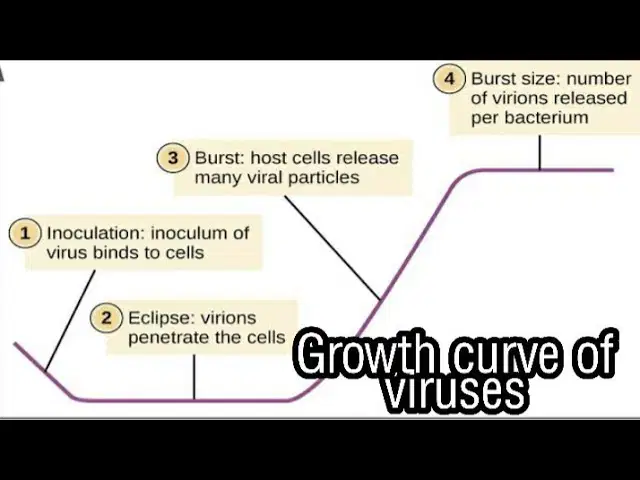
What happens to the virus during the eclipse phase?

a)

The load of virus in the blood stream is increasing

b)

the load of virus in the blood stream decreases because the virus is replicating in cells

c)

White Blood cells are killing viruses

d)

The virus has lysed the cell and the load of virus is increasing in the blood stream