wayground logo

Free Printable Worksheets

NEW

Font size

S
M
L
XL
Worksheets

Ohlsen eye

Total questions: 25

Worksheet time: 13mins

Name
Class
Date
1.
Watery liquid anterior to lens; fills anterior cavity
a)
aqueous humor
b)
cornea
c)
fovea
d)
vitreous humor
2.
Most anterior part of the sclera... "window to the world"
a)
auricle
b)
ciliary body
c)
cornea
d)
lens
3.
Changes shape to allow for accommodation
a)
cornea
b)
iris
c)
lens
d)
sclera
4.
middle layer of the eye; contains vascular tissue and melanin to absorb excess light
a)
choroid coat
b)
cornea
c)
retina
d)
sclera
5.
contains muscle that changes the shape of lens; makes aqueous humor
a)
choroid
b)
ciliary body
c)
iris
d)
sclera
6.
controls amount of light into eye; pigmented "diaphragm"
a)
cornea
b)
iris
c)
retina
d)
sclera
7.
jellylike fluid filling posterior cavity; final refractive media
a)
aqueous humor
b)
cornea
c)
lens
d)
vitreous humor
8.
posterior, superficial layer; the "whites" of the eye
a)
choroid coat
b)
cornea
c)
retina
d)
sclera
9.
layer containing rods and cones
a)
ciliary body
b)
iris
c)
retina
d)
sclera
10.
relays nerve impulses from retina to optic chiasma
a)
optic disc
b)
optic nerve
c)
optic tract
d)
optic radiations
11.
area of retina that contains no photoreceptors; "blind spot"
a)
optic disc
b)
optic nerve
c)
optic tract
d)
optic radiations
12.
area of retina containing only cones; sharpest vision
a)
auricle
b)
fovea
c)
optic disc
d)
vestibule
13.
cloudy lens due to hardening with age
a)
cataract
b)
conjunctivitis
c)
glaucoma
d)
retinopathy
14.
pressure build up as a result of too much aqueous humor
a)
cataract
b)
glaucoma
c)
macular degeneration
d)
retinopathy
15.
move the eyeballs; humans have 6 per eye, cows have 4 per eye
a)
auricles
b)
extrinsic muscles
c)
intrinsic muscles
d)
irises
16.

Part of the eye reshaped by LASIK

a)

cornea

b)

iris

c)

lens

d)

retina

17.

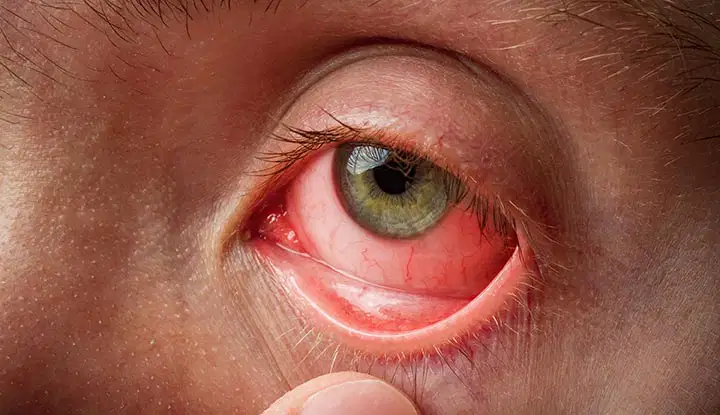
"pink eye" is an infection (inflammation) of the ______

a)

conjuntiva

b)

cornea

c)

iris

d)

lacrimal apparatus

18.

muscle that allows eyelid to close ("winking" muscle)

a)

levator palpebrae superioris

b)

medial rectus

c)

orbicularis oculi

d)

superior oblique

19.

accessory organ that produces "tears" to clean eyes

a)

conjunctiva

b)

eyelid

c)

lacrimal gland

d)

retina

20.

fewer working rods=

a)

cataracts

b)

day blindness

c)

glaucoma

d)

night blindness

21.

lack of working cones=

a)
  • Axenfeld-Reiger Syndrome

b)

Day blindness

c)

Night blindness

d)

Myopia

22.

lack of certain colors of cones=

a)

color blindness

b)

day blindness

c)

night blindness

d)

retinopathy

23.

a common, age-related eye condition that damages the central part of the retina responsible for sharp, central vision

a)

cataracts

b)

glaucoma

c)

macular degeneration

d)

retinopathy

24.
  • Genetic disorder that involves abnormalities in photoreceptors or retinal tissue that leads to progressive vision loss

a)

cataracts

b)

glaucoma

c)

macular degeneration

d)

retinitis pigmentosa

25.

hole in the iris that allows light to enter the eye

a)

ciliary body

b)

lens

c)

pupil

d)

sclera