
NEW
Font size
 Worksheets
Chapter 5 Study Guide
Total questions: 33
Worksheet time: 2hrs 39mins
Which amendment granted women the right to vote?
13th
15th
19th
26th
In which region of the United States did women receive the most support for equal suffrage before passage of the 19th amendment?
North
South
East
West
Which statement about woman's suffrage legislation before the ratification of the 19th Amendment is most accurate?
There was little opposition to women's suffrage in the east
Women showed little desire to vote
Many western states granted women the right to vote before the amendment
Women were not able to effectively organize themselves
Whites Only Water Fountain .... this sign represents what laws in the South
Racial Rules
Lincoln Laws
Black Codes
Jim Crow
What Supreme Court case ruled "separate but equal" was legal?
Redskins vs Giants
Aylor vs Byrd
Brown vs Board of Education
Plessy vs Ferguson
When did women get the right to vote?
1776
1865
1920
2003
Who was the president of the National America Woman Suffrage Association during the passage of the 19th amendment?
Alice Paul
Susan B. Anthony
Ida B. Wells
Carrie Chapman Catt

Which best describes MECHANIZATION?
Machines made MORE jobs for people.
Farms and other industries used machines that did work faster than before.
When someone was paid to fix machines.
When machines rose up and took over the humans. Luckily John Conner came back in time to save humanity.
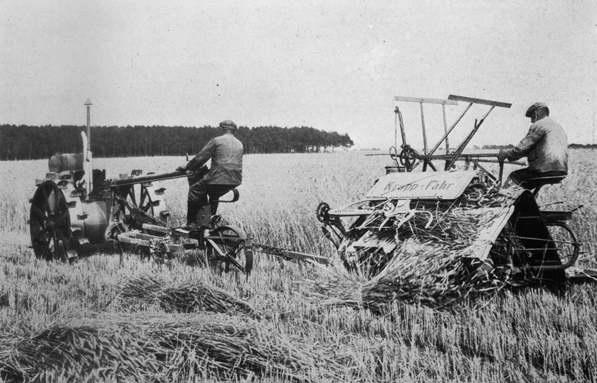
What was the effect of MECHANIZATION on workers?
It led to more jobs because people needed to fix the machines.
It allowed workers to make more money because they could do more work.
It was awesome. He bought ice cream for everyone.
More people lost their jobs, especially on farms.
These new farm machines are examples of...
Overpopulation
Pogroms
Factories
Mechanization
Which best describes MECHANIZATION?
Machines made MORE jobs for people.
Farms and other industries used machines that did work faster than before.
When someone was paid to fix machines.
When machines rose up and took over the humans. Luckily John Conner came back in time to save humanity.
Who invented the Mechanical Reaper
Cyrus McCormick
The Wright Brothers
Isaac Singer
Thomas Edison
During Child Labor, the child workers...
Were given an education
Were given safe jobs
Didn't have an education

Why did people move to cities during the Industrial Revolution?
People were looking for work in factories.
People were looking for farms.
People wanted to buy a house.
People wanted to sell their crops.
Whose court case inspired the Supreme Court to say that separate is okay if it's equal?
Rosa Parks
Linda Brown
Homer Plessy
Thurgood Marshall
Who created the NAACP?
Booker T. Washington
Martin Luther King Jr
Malcolm X
WEB DuBois
________________________ is when people moved from rural areas to cities. Many people lost their jobs on farms.
Mechanization
Urbanization
Industrialization
Realization
Jane Addams and Ellen Starr wanted to turn the old Hull place into a _______ house.
suburban
settlement
customs
The increase in the use of machines
Urbanization
Mechanization
Industrialization
Assembly Line
Founder of Hull House
Ida B. Wells
Booker T. Washington
Elizabeth Cady Stanton
Jane Addams
Poor treatment of someone due to specific factor such as race, gender, or ethnicity
Ghetto
Tenement
Poverty
Discrimination
Poorly built, overcrowded housing where many immigrants lived
Tenements
Ghetto
Hull House
Settlement House
Neighborhood centers that arose in the late 1800s to offer education, recreation, and social activities to immigrants and poor people
Tenements
Ghetto
Settlement Houses
Settlement house founded by Jane Addams and Ellen Gates Starr in Chicago in 1889
Star House
Poor House
Hull House
Full House
The 19th Amendment was passed in what year?
1921
1923
1920
1916
What were women called if they were fighting for the right to vote?
Suffragists
Feminist
Women voters
Suffrage

According to Booker T. Washington, which of the following options was the best way for African Americans to gain equality?
working longer hours at more difficult jobs
holding protest marches and strikes
learning skills and trades (vocational education)
attending political meetings and participating in elections

The Supreme Court case Plessy v. Ferguson (1896) affected African Americans by--
guaranteed voting rights to African American women
legalizing racial segregation
expanded civil rights to include American Indians
guaranteed equal wages for equal work

Who believed in full political, civil, and social rights for African Americans?
Jim Crow
Henry Ford
W.E.B. DuBois
Booker T. Washington

Who was one of the founders of the National Association for the Advancement of Colored People (NAACP)?
Jim Crow
Henry Ford
W.E.B. DuBois
Booker T. Washington
Which statement best describes the beliefs of Booker T. Washington?
Equal education will lead to the desegregation of schools.
Higher education, such as the establishment of Tuskegee Institute, would lead to equality for African Americans.
passing an amendment to allow African American men the right to vote would lead to equality.
Laws should be passed to create separate buy equal facilities in public places.
What did Booker T. Washington believe was the way for African Americans to gain equality?
Economic Accomplishment
Technical schools/ Education
Hard Work
All of the above
Who helped farmers solve problems with planting?
Thomas Edison
Mary Anderson
George Washington Carver
Alexander Graham Bell

