Wayground logo

Free Printable Worksheets

Font size

S
M
L
XL
Worksheets

Matter

Total questions: 74

Worksheet time: 59mins
Name
Class
Date
1.
Shape is a ____ that helps identify an object.
a)
physical property
b)
chemical property
c)
mass
d)
matter
2.
Something that takes up space and has mass.
a)
volume
b)
matter
c)
mass
d)
density
3.
Iron + oxygen = rust is an example of a ___________.
a)
physical property/change
b)
chemical property/change
c)
mass
d)
volume
4.
How can compounds be changed into simpler substances?
a)
by physical separation
b)
by chemical changes
c)
they cannot be changed
d)
by physical reactions
5.
A pure substance that cannot be broken down into other substances by chemical or physical means. 
a)
compound          
b)
atom
c)
mixture 
d)
element
6.
A mixture that is uniform and well mixed is _____.
a)
homogeneous
b)
hetergeneous
c)
pure substance
d)
compoud
7.
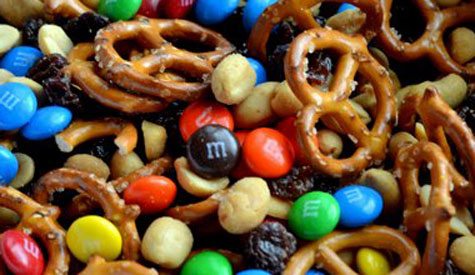
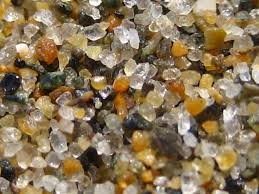
The picture shown here is what type of mixture?
a)
homogeneous
b)
hetergeneous
c)
pure substance
d)
element
8.
This is made up of one or more of kind of the SAME kind of atom
a)
Element
b)
Mixture
c)
Compound
d)
Matter
9.
Water is an element
a)
true
b)
false
10.
 A homogeneous mixture has the same composition of particles throughout.
a)
True
b)
False
11.
Copper is a mixture.
a)
True
b)
False
12.

Can a mixture be separated by physical means? 

a)
No
b)
Yes
c)
Only sometimes
13.
Carbon dioxide
a)
Pure Substance & Element
b)
Pure Substance & Compound
c)
Mixture & Homogenous
d)
Mixture & Heterogenous
14.
Carbon
a)
Pure Substance & Element
b)
Pure Substance & Compound
c)
Mixture & Homogenous
d)
Mixture & Heterogenous
15.
Pepsi is a . . .
a)
Heterogeneous mixture
b)
homogeneous mixture
c)
Element
d)
Compound
16.
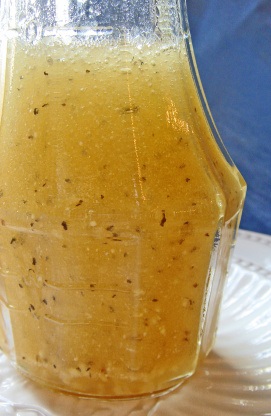
Italian Salad Dressing is a . . .
a)
heterogeneous mixture
b)
homogeneous mixture
c)
Pure Substance
d)
Compound
17.

When different substances are mixed together physically, they...

a)
retain their individual properties
b)
take on new properties
c)
become one substance with all the same properties
d)
become a compound
18.
a)
Element
b)
Compound
c)
Mixture 
d)
Energy
19.
a)
Element
b)
Compound
c)
Mixture 
d)
Energy
20.
a)
Element
b)
Compound
c)
Mixture 
d)
Energy
21.
Elements and compounds are always ___.
a)
pure
b)
mixed
22.
What type of mixture is this?
a)
heterogeneous 
b)
homogeneous
23.
What type of mixture is this?
a)
heterogeneous 
b)
homogeneous
24.
distilled water
a)
mixture
b)
pure substance
25.
Chocolate chip cookie
a)
Pure Substance & Element
b)
Pure Substance & Compound
c)
Mixture & Homogenous
d)
Mixture & Heterogenous
26.
A mixture that does not look the same throughout:
a)
heterogeneous mixture
b)
homogeneous mixture
c)
the periodic table
d)
water
27.
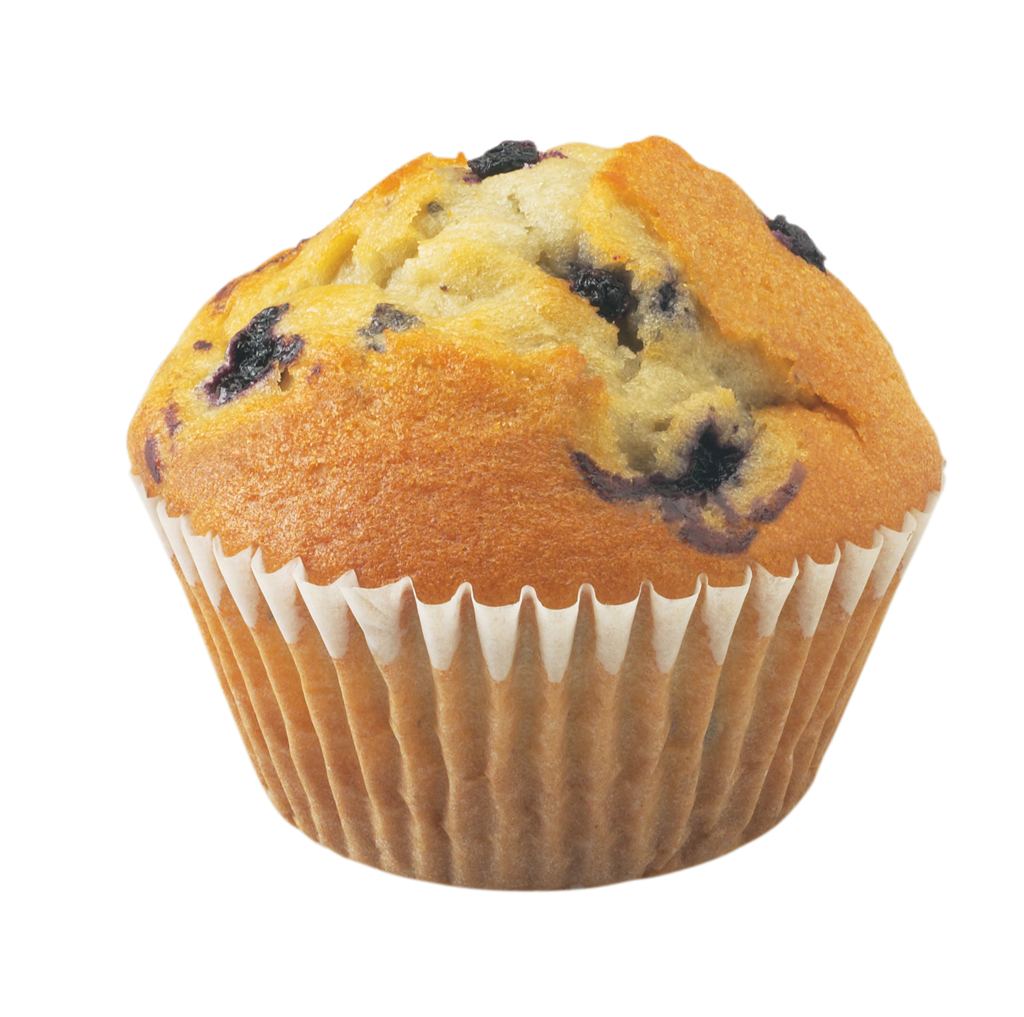
 blue berry muffin
a)
heterogeneous mixture
b)
homogeneous mixture
28.
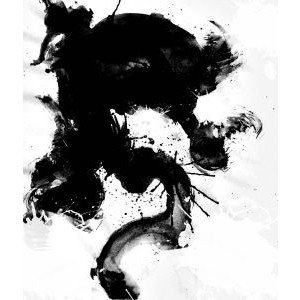
black ink
a)
heterogeneous mixture
b)
homogeneous mixture
29.
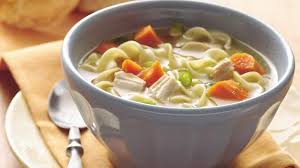
Chicken noodle soup
a)
heterogeneous mixture
b)
homogeneous mixture
30.
Stainless steel
a)
Heterogeneous
b)
Homogeneous
31.
Air
a)
Heterogeneous
b)
Homogeneous
32.
granola bar
a)
homogeneous
b)
heterogeneous
33.
honey
a)
homogeneous
b)
heterogeneous
34.
A pure substance CAN'T BE separated physically. 
a)
True
b)
False
35.
Blood
a)
Heterogenous
b)
Homogenous
36.
Iron Rust (Fe2O3)
a)
Mixture
b)
Pure Substance
37.
Combination of two or more pure substances that are not chemically combined
a)
compound          
b)
atom
c)
mixture 
d)
element
38.
made up of one kind of matter and has a definite set of properties
a)
compound          
b)
atom
c)
mixture 
d)
pure substance
39.
Breaking a window or crumpling a piece of paper are examples of a....
a)
Physical Change
b)
Chemical Change
40.

Which of the following is not an example of matter?

a)

light

b)

carbon dioxide

c)

salt

d)

air

41.

Which of the following is not matter?

a)

ice

b)

water

c)

sugar

d)

heat

42.
Sugar water is a 
a)
solution
b)
suspension
c)
colloid
43.
Three examples of physical changes are
a)
sawing of wood, crushing of a can,and toasting a marshmallow.
b)
freezing of water, evaporation of gasoline, and rusting of a nail.
c)
burning of gasoline, rotting of an egg, and exploding of fireworks.
d)
boiling of water, bursting of a balloon, and melting of a candle.
44.

Milk is an example of a _______?

a)

colloid

b)

suspension

c)

solution

d)

compound

45.
Jack has a rock. The rock has a mass of 14g and a volume of 2cm3. What is the density of the rock?
a)
7 mL
b)
7 g/cm3
c)
28 g/cm3
d)
1/7 g/cm3
46.
Which units of measurement are used for volume?
a)
grams
b)
centimeters
c)
grams/milliliter
d)
milliliter
47.
I have two objects with the same volume but different masses.  Which object will be more dense?
a)
The object with less weight.
b)
The object with more weight.
c)
The object with more mass.
d)
The object with less mass.
48.
Density is...
a)
the amount of mass in an object
b)
the amount of space an object takes up
c)

how closely packed the molecules are

d)
the weight of an object
49.
Frank has an eraser. It has a mass of 4g, and a volume of 2cm3. What is its density?
a)
8 g/cm3
b)
2 g/cm3
c)
1/2 g/cm3
d)
24 g/cm3
50.
What is the mass of a 350 cm3 sample of pure silicon with a density of 2.336 g/cm3?
a)
820 g
b)
0.0067 g
c)
150 g
51.
The density of a piece of brass is 8.4 g/cm3. If the mass of the brass is 510 g, find the volume of the brass.
a)
4300 cm3
b)
0.016 cm3
c)
61 cm3
52.

225 ml =_________________ cc

a)

225,000

b)

.225

c)

22.5

d)

225

53.

Unit of density is

a)

g/cc

b)

cc/g

c)

g

d)

ml

54.
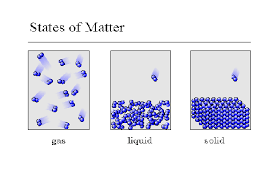
In a solid, the particles
a)
vibrate in place
b)
slide past one another
c)
overcome the strong attraction
55.
Molecules are closest together in a 
a)
Solid
b)
Liquid
c)
Gas
56.
A substance's heating curve is shown in the graph.  What is its boiling point?
a)
100 C
b)
60 C
c)
80 C
d)
20 C
57.
At higher temperatures
a)
particles in an object have less energy
b)
particles in an object move faster
c)
a gas contracts
58.

Molecules are always moving no matter what phase they are in: solid, liquid, gas.

a)

True

b)

False

59.
What happens to particles when they are heated?
a)
They speed up and spread out
b)
They slow down and compress
c)
They stop moving
d)
They move closer together and speed up
60.

A gas

a)

has a definite shape but no definite volume

b)

has a definite volume but no definite shape

c)

has no definite volume or shape

61.

The amount of energy needed to change a material from a liquid to a gas is the heat of _______________

a)

evaporation

b)

fusion

c)

vaporization

d)

condensation

62.

The amount of energy needed to change a material from the solid state to the liquid state is the heat of

a)

condensation

b)

vaporization

c)

fusion

d)

evaporation

63.

What is it called when a gas changes directly into a solid.

a)

deposition

b)

vaporization

c)

evaporation

d)

sublimation

64.

What is it called when a solid turns directly from a solid state to a gas state?

a)

sublimation

b)

deposition

c)

melting

d)

vaporization

65.

The law of Conservation of matter states

a)

matter never stay constant

b)

mass is always added during a chemical change

c)

mass is always lost during a chemical change

d)

mass is not lost or created during a chemical change

66.

What is the volume of an object that you put into a graduated cylinder that causes the volume to go from 22 ml to 55 ml?

a)

33 ml

b)

77 ml

c)

55 ml

d)

can determine it without more info

67.

Which substance is MOST soluble at 0 ºC?

a)

KI

b)

NaNO3

c)

NaCl

d)

Ce2(SO4)3

68.

How many grams of K2Cr2O7, are soluble in 100 g of water at 95 ºC?

a)

83 grams

b)

75 grams

c)

40 grams

d)

12 grams

69.
Which solute is the least soluble at 90 ⁰C?
a)
SO2
b)
KClO3
c)
KI
d)
HCl
70.
When 20 grams of potassium chlorate, KClO3, is dissolved in 100 grams of water at 80 ºC, the solution can be correctly described as:
a)
supersaturated
b)
saturated
c)
unsaturated
71.
When 50 grams of KCl is dissolved in 100 grams of water at 50 ºC, the solution can be correctly described as:
a)
supersaturated
b)
unsaturated
c)
saturated
72.

How many grams of CaCl2, are soluble in 100 g of water at approximately 17 ºC?

a)

58 grams

b)

70 grams

c)

0 grams

d)

12 grams

73.

In a solution, the part of the mixture in which other substance are dissolved

a)

Strainer

b)

Solvent

c)

Solute

d)

Magnetism

74.

The substance which dissolved in the solvent

a)

Dissolve

b)

Solubility

c)

Solvent

d)

Solute