
 Worksheets
AP Geo Giant Review Game: Let's GOOOOOO
Total questions: 100
Worksheet time: 59mins
Name
Class
Date
1.
The number of people under age 15 and over age 64 compared to the number of people active in the labor force.
a)
demography
b)
zero population growth
c)
overpopulation
d)
dependency ratio
2.
The average number of years an individual can be expected to live, given current social, economic, and medical conditions.
a)
death rate
b)
population pyramid
c)
life expectancy
d)
literacy rate
3.
The percentage growth of a population in a year, computed as the birth rate minus the death rate.
a)
natural increase rate
b)
doubling time
c)
immigration
d)
total fertility rate
4.
The total number of deaths in a year among children under one year of age for every 1,000 live births in a society.
a)
census
b)
infant mortality rate
c)
population density
d)
birth rate
5.

The map shown here is what type of scale.
a)
Small Scale
b)
Large Scale
c)
Medium Scale
d)
Urban Scale
6.

The map shown here is what type of scale?
a)
Small Scale
b)
Large Scale
c)
Regional Scale
d)
Urban Scale
7.

What type of map projection is this?
a)
Peter's Projection
b)
Robinson Projection
c)
Azimuthal Projection
d)
Mercator Projection
8.

What type of map projection is this?
a)
Molliweide Projection
b)
Peter's Projection
c)
Planar Projection
d)
Goode's Homosoline Projection
9.

What demographic characteristic does this population pyramid show?
a)
Low population growth
b)
High natural increase
c)
High crude death rate
d)
Low elder dependency ratio
10.

What demographic characteristics does this population pyramid show?
a)
Increasing Population
b)
Declining Population
c)
Stable Population
d)
High Natural Increase
11.

What do each line of the DTM represent?
a)
'A' is birth rate, 'B' is death rate, and 'C' is total population
b)
'A' is death rate, 'B' is birth rate, and 'C' is total population
c)
'A' is natural increase, 'B' is death rate, and 'C' is total fertility rate
d)
'A' is birth rate, 'B' is death rate, and 'C' is natural increase
12.

According to the map of interregional migration, what region in the U.S. has the highest emigration?
a)
Midwest
b)
South
c)
Northeast
d)
West
13.
According to the map of interregional migration, what region in the U.S. has the SECOND highest emigration?
a)
Midwest
b)
South
c)
Northeast
d)
West
14.
According to the map of interregional migration, what region in the U.S. has the highest immigration?
a)
Midwest
b)
South
c)
Northeast
d)
West
15.
According to the map of interregional migration, what region in the U.S. has the SECOND highest immigration?
a)
Midwest
b)
South
c)
Northeast
d)
West
16.

Which country on the map would have the lowest agricultural density as a result of less arable land?
a)
Argentina
b)
India
c)
Germany
d)
Ukraine
17.

What demographer would agree with this graph?
a)
Thomas Malthus
b)
Ester Boserup
c)
Carl Sauer
d)
Eratosthenes
18.

What state has the lowest Amish population density?
a)
Pennsylvania
b)
Ohio
c)
Illinois
d)
Virginia
19.

A reaction to this photo, such as 'EWWWW' or 'that's disgusting and I could never do that' is an example of which key term?
a)
Ethnocentrism
b)
Assimilation
c)
Acculturation
d)
Transhumance
20.

What would be a lingua franca for the area depicted in the map.
a)
English
b)
Russian
c)
Arabic
d)
Swahili
21.

Which of the following is not a name for a cultural hearth shown on the map?
a)
Northern China
b)
Indus River Valley
c)
Mesoamerica
d)
Oceania
22.

This map shows the hearth and diffusion of what?
a)
Confusionism
b)
Buddhism
c)
Hinduism
d)
Shintoism
23.

This map shows the diffusion pattern of what religion?
a)
Islam
b)
Christianity
c)
Judaism
d)
Sikhism
24.

How do you know this shows a folk culture?
a)
Building materials are from local materials
b)
Small heterogeneous group
c)
Food is imported by boat
d)
Clothing is unique
25.

This sign is in Panama, why is it in Spanish?
a)
Spanish is the lingua franca
b)
Spanish is the most commonly used language
c)
Spanish was the language of colonizers
d)
Spanish is a pidgin
26.
Recent immigration to the U.S. has come from what two regions?
a)
Asia and Latin America
b)
Northern Europe and Western Europe
c)
Western Europe and Eastern Europe
d)
Latin America and Europe
27.
Which of the following is a taboo in Hinduism?
a)
Swimming in the Ganges
b)
Drinking wine
c)
Eating chicken
d)
Eating beef
28.
Which of the following is not a Universalizing religion?
a)
Buddhism
b)
Judaism
c)
Bahá’í
d)
Christianity
29.
Loss of culture when a group become totally integrated into the host culture. In this case, the dominant culture completely absorbs the less dominant one and they are no longer distinct.
a)
Assimilation
b)
Acculturation
c)
Transculturation
d)
Syncretism
30.
Physical characteristics of a place (ex. climate, water bodies, topography, soil, vegetation, elevation) are known as
a)
Site
b)
Situation
c)
Absolute location
d)
Physical geography
31.

When 3 or more countries join together to promote shared goals, it is called?
a)
Nation-state
b)
Federation
c)
Centrifugal Forces
d)
Supranationalism
32.
Countries with high birth rates, and a large % of young people would be considered:
a)
More Developed
b)
Core Countries
c)
Wealthy Countries
d)
Developing Countries
33.
Which of the following religions began in Southwest Asia?
a)
Hinduism
b)
Taoism
c)
Christianity
d)
Mormanism
34.
What type of diffusion is when the idea is adopted, but changed?
a)
Stimulus
b)
Relocation
c)
Hierarchical
d)
Contagious
35.
A country where everyone is similar minded, cultured, language speaking, and have a lot of national pride would be called?
a)
multi-state nation
b)
multinational state
c)
nation-state
d)
stateless nation
36.
What is a regional variation of a language?
a)
Family
b)
Sub-family
c)
Group
d)
Dialect
37.
Which branch of Islam is the minority?
a)
Sunni
b)
Shia
c)
Farsi
d)
Arab
38.
What does it mean when a religion does not seek converts and is usually spatially concentrated?
a)
Universal
b)
Global
c)
Animist
d)
Ethnic
39.
What type of culture is typically rural, tries to keep others out, and keep their beliefs in?
a)
Popular
b)
Hierarchical
c)
Folk
d)
Musical
40.
What is the measure of the average number of babies a woman will have over her lifetime?
a)
Rate of Natural Increase
b)
Total Fertility Rate
c)
Crude Birth Rate
d)
Infant Mortality Rate
41.
What is it called when a country breaks apart into several smaller countries?
a)
Centripetal Force
b)
Nation State
c)
Fragmented State
d)
Balkanization
42.
In the demographic transition model, which stage would traditionally involve an agricultural society?
a)
Stage 1
b)
Stage 2
c)
Stage 3
d)
Stage 4
43.
Which of the following region is an ethnic religion?
a)
Judaism
b)
Christianity
c)
Islam
d)
Sikhism
44.
Which area of the world is experiencing the most rapid population growth?
a)
East Asia
b)
Central Europe
c)
Western United States
d)
Sub-Saharan Africa
45.
Which of the following cities is a holy place to three of the world's main religions?
a)
Mecca
b)
Medina
c)
Jerusalem
d)
Delhi
46.
Which of the following terms best describes the geographical boundary of a particular language feature?
a)
linguistic hearth
b)
toponym
c)
isogloss
d)
language border
47.
Historically, cultural diffusion patterns in the United States have tended to flow in which general direction?
a)
East to West
b)
West to East
c)
North to South
d)
South to North
48.
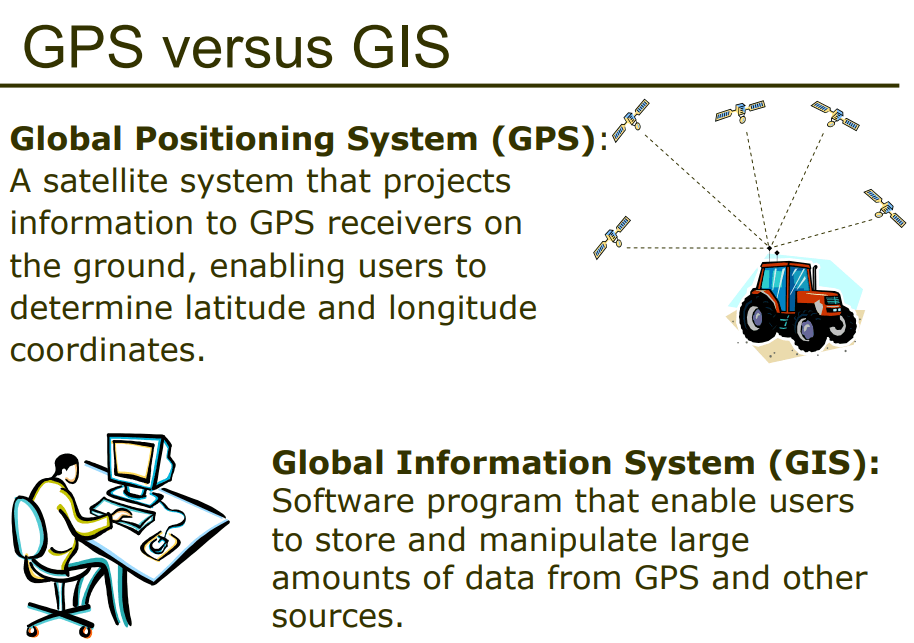
GPS and GIS are examples of contemporary mapping tools that rely on ______ technology.
a)
remote sensing
b)
computer
c)
smart phone
d)
International Space Station
49.

Which of these is a TRUE statement about the role of scale in geographic inquiry?
a)
Small and large scale maps depict data in similar ways.
b)
Scale affects level of detail and allows geographers multiple ways of looking at data.
c)
Scale is only used to determing distance on a map.
d)
Geographers do not consider scale when studying a particular issue.
50.
All of the following are types of subsistence agriculture EXCEPT
a)
pastoral nomadism.
b)
shifting cultivation.
c)
swidden agriculture
d)
truck farming
51.
Longitude lines indicate
a)
distance north and south of the Equator
b)
distance north and south of the Prime Meridian
c)
distances east and west of the Equator
d)
distances east and west of the Prime Meridian
52.

Which term does this image demonstrate?
a)
Cultural Diffusion
b)
Cultural Appropriation
c)
Innovation
d)
Cultural Hearth
53.
Jewish places for prayer and worship are called...
a)
cathedrals
b)
churches
c)
schools
d)
synagogues
54.
Which religion is based on Siddhartha Gautama's teachings?
a)
Hinduism
b)
Buddhism
c)
Islam
d)
Judaism
55.
Which religion has the holy month of Ramadan?
a)
Islam
b)
Judaism
c)
Hinduism
d)
Christianity
56.
What is monotheism?
a)
Having many gods
b)
Having one god
c)
Having no god
d)
You are god
57.

Which term does this image demonstrate?
a)
Cultural Hearth
b)
Stereotyping
c)
Acculturation
d)
Innovation
58.
Which of the following is a polytheistic religion?
a)
Hinduism
b)
Christianity
c)
Islam
d)
Judaism
59.
What are the main branches of Islam?
a)
Orthodox and conservative
b)
Muslim and infidel
c)
Sunni and Shi'a
d)
Reform and liberal
60.
What is the Muslim place of worship called?
a)
Church
b)
Synagogue
c)
Temple
d)
Mosque
61.
Towards what city do Muslims pray?
a)
Mecca
b)
Medina
c)
Jerusalem
d)
Damascus
62.
What is the pilgrimage to Mecca called?
a)
Kaaba
b)
Tajj
c)
Hajj
d)
Medina
63.
What are the basic tenants of the Islam faith called?
a)
Four Noble Truths
b)
Five Pillars
c)
Eightfold path
d)
Three Wise Sayings
64.

a)
México
b)
Perú
c)
Paraguay
d)
España
65.

a)
Guatemala
b)
Honduras
c)
Nicaragua
d)
La República Dominicana
66.

a)
El Salvador
b)
Honduras
c)
Panamá
d)
La República Dominicana
67.

a)
Panamá
b)
Puerto Rico
c)
Cuba
d)
Costa Rica
68.

a)
Ecuador
b)
Perú
c)
Venezuela
d)
Colombia
69.
Creation of desert
a)
Desertification
b)
Deforestation
c)
Unequal Distribution of Water
d)
Water Pollution
70.
Largest ethnic group in Africa. Most people trace their ancestry to this group.
a)
Swahili
b)
Bantu
c)
Arab
d)
Ashanti
71.
When a country controls the lands of another to gain from their resources...
a)
imperialism/colonialism
b)
segregation
c)
enclave
d)
partition
72.
The Apartheid laws affected which African nation?
a)
Nigeria
b)
Kenya
c)
South Sudan
d)
South Africa
73.
Who became South Africa’s president in 1994?
a)
Nelson Mandela
b)
Barack Obama
c)
F.W. de Klerk
d)
Afrikan Abul
74.

Which is the longest river in the world?
a)
Amazon
b)
Nile
c)
Congo
d)
Mississippi
75.
This desert, located in Northern Africa, is the largest desert in the world.
a)
Savanah
b)
Sahara
c)
Death Valley
d)
Sanoma
76.

Feature #3
a)
Atlantic Ocean
b)
Indian Ocean
c)
Southern Ocean
d)
Pacific Ocean
77.

Feature #1
a)
Sahara Desert
b)
Kalahari Desert
c)
Sahel
d)
Congo Basin
78.

Which region of Africa is this?
a)
Sahel
b)
Sahara
c)
Savannah
d)
Rain Forest
79.

This graphic most closely depicts which geographic theory?
a)
Ratzel's Organic Theory
b)
Mackinder's Heartland Theory
c)
Spykman's Rimland Theory
80.
What is the military alliance set up by West Europe and the US to align against communism?
a)
NATO
b)
UNHCR
c)
Warsaw Pact
d)
NAFTA
81.
Who created the Least Cost theory?
a)
William Cooke
b)
Alex Weber
c)
Alfred Winburn
d)
Alfred Weber
82.
Which of these was a natural resource that helped Great Britain start the Industrial Revolution?
a)
Wind Resistence
b)
Lumber
c)
Steel
d)
Water Power
83.
What type of farming is defined by a group that uses a field until the soil is exhausted, and then they burn the plants on the field and move to the next one?
a)
Shifting
b)
Commercial
c)
Hybrid Seed Farming
d)
Agribusiness
84.
What ring of Von Thunen's Model would not exist today?
a)
Market Gardening
b)
Forest
c)
Grains and Field Crops
d)
Livestock Ranching
85.
Which of the following is not an example of a state?
a)
France
b)
Spain
c)
Kurdistan
d)
Mexico
86.
An example of a multinational state is
a)
Rwanda
b)
Canada
c)
Russia
d)
China
87.
A state that contains two or more ethic groups with traditions of self-determinism that agree to coexist peacefully.
a)
multi-state nation
b)
state
c)
nation-state
d)
multinational state
88.
What does "cultivate" mean?
a)
To grow
b)
To care for
c)
To harvest
d)
To raise animals
89.
Economic activities are grouped into five major aggregates of productive activities. Which denotes the “extractive sector” where agriculture falls in?
a)
Primary
b)
Secondary
c)
Tertiary
d)
Quaternary
90.
What type of agriculture is practiced to feed the farmer and the farmer's family?
a)
Commercia
b)
Subsistence
c)
Seed
d)
Vegetative Planting
91.
The primary differences between agriculture practices in the world are between those of what two types of regions/countries?
a)
Africa and Asia
b)
Northern and Southern Hemispheres
c)
Eastern and Western Hemispheres
d)
MDCs and LDCs
92.
Coal, oil, and natural gas are all examples of
a)
A. alternative energy sources.
b)
B. capital resources.
c)
C. fossil fuels.
d)
D. renewable resources.
93.

This population pyramid demonstrates a country that is most likely...
a)
developed
b)
developing
c)
in transition
d)
highly developed
94.

Which economic alliance is this map showing?
a)
ASEAN
b)
NAFTA
c)
OPEC
d)
EU
95.
What is the total value of goods and services produced by a country
a)
Gross Product Domestic
b)
Domestic Gross Product
c)
Product Gross Domestic
d)
Gross Domestic Product
96.

a)
Indonesia
b)
Malaysia
c)
Philippines
d)
Singapore
97.

a)
Laos
b)
Cambodia
c)
Vietnam
d)
Myanmar (Burma)
98.

a)
Yangtze River
b)
Irrawaddy River
c)
Mekong River
d)
Red River
99.
What Chinese school of thought teaches respect to elders and the law as the best way to maintain a peaceful society?
a)
Taoism
b)
Christianity
c)
Confucianism
d)
Buddhism
100.

a)
Uruguay
b)
Perú
c)
Bolivia
d)
Paraguay
100 %

