
Font size
S
M
L
XL
 Worksheets
Vietnam War, Dictators, WWI & WWII Age of Discovery Holocaust
Total questions: 144
Worksheet time: 2hrs 11mins
Name
Class
Date
1.

Who was the President during WWII?
a)
Herbert Hoover
b)
Abraham Lincoln
c)
Franklin D. Roosevelt
2.

What is a dictator?
a)
Someone who helps a country in need
b)
Someone who gives control of the government to the people
c)
Someone who gains complete control of a country's government
3.
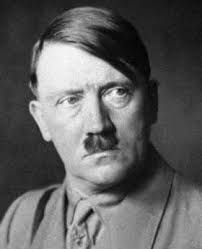
Who became the dictator of Germany and led that country into WWII?
a)
Winston Churchill
b)
Benito Mussolini
c)
Adolf Hitler
4.
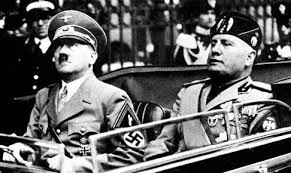
What was the name of Hitler's form of government which denied individual freedoms took complete power of the Germany?
a)
democracy
b)
fascism
c)
dictatorship
d)
monarchy
5.

What ethnic group of people did Hitler hate the most?
a)
Americans
b)
African Americans
c)
Jews
d)
Russians
6.
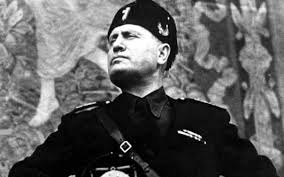
Who was Benito Mussolini?
a)
The fascist ruler of Italy
b)
The fascist ruler of Germany
c)
The fascist ruler of France
d)
The fascist ruler of England
7.

What was Germany, Italy, and Japan known as during WWII?
a)
The Allied Powers
b)
The Central Powers
c)
The Axis Powers
8.

What was Great Britain and France known as during WWII?
a)
The Allied Powers
b)
The Central Powers
c)
The Axis Powers
9.

Why did Great Britain and France declare war on Germany?
a)
Germany attacked England
b)
Germany Attacked France
c)
Germany attacked Gelgium
d)
Germany attacked Poland
10.

Who was the leader of the British government during WWII?
a)
Franklin D. Roosevelt
b)
Winston Churchill
c)
Charles De Gaulle
d)
Hideki Tojo
11.

What policy did the U.S. follow at the start of WWII?
a)
Militarism
b)
Imperialism
c)
Isolationism
d)
Nationalism
12.

What was the Lend-Lease Act?
a)
Where the U.S. provided Britain with military supplies to fight Germany
b)
Where the U.S. provided France with Military supplies to fight Germany
c)
Where the U.S. provided Italy with military supplies to fight Germany
13.

Who was the military leader of Japan during WWII?
a)
Charles De Gaulle
b)
Winston Churchill
c)
Hideki Tojo
d)
Benito Mussolini
14.

What happened on December 7, 1941?
a)
The U.S. attacked Japan
b)
Japan attacked Pearl Harbor, Hawaii
c)
Britain attacked Germany
d)
Italy attacked Ethiopia
15.

Why did Japan attack Pearl Harbor?
a)
They wanted Hawaii for themselves
b)
They often attacked islands
c)
They felt the U.S. was going to stop their expansion in Asia
16.

Why did Germany declare war on the United States?
a)
The United States had declared war on Japan; their ally
b)
The U.S. had bombed Germany
c)
The U.S. had declared war on Germany first
17.
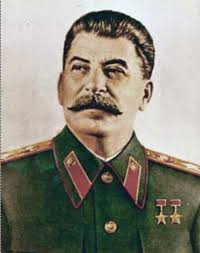
Who was the dictator of the Soviet Union during WWII?
a)
Adolf Hitler
b)
Joseph Stalin
c)
Benito Mussolini
18.

Who did Joseph Stalin and the Soviet Union join with during the beginning of WWII?
a)
The Allied Powers
b)
The Axis Powers
c)
The Central Powers
19.

How did the U.S. government get young American men to join the army?
a)
They paid them
b)
They enacted the draft
c)
They used propoganda
20.
Collectivization
a)
Combining small farms into large factory-like farms run by government
b)
Large farms ran by people
21.
Joseph Stalin
a)
Leader of communist Soviet Union
b)
Leader of capitalist Soviet Union
22.
Concentration Camp
a)
A camp for German soldiers
b)
A camp where prisoners of war are detained, used as labor or killed
23.
Mein Kampf
a)
My Happiness by Adolf Hitler
b)
My Struggle by Adolf Hitler
24.
Anti- Semitism
a)
Hatred of Christians
b)
Hatred of Jews
25.
Adolf Hitler
a)
Leader of France
b)
Leader of Nazi Germany
26.
Fascisim
a)
A form of government led by a dictator in which opposition and criticism is forcibly suppressed by the military
b)
A form of government led by a dictator in which opposition and criticism is forcibly suppressed by the citizens
27.
Benito Mussolini
a)
Leader of fascist Italy
b)
Leader of England
28.
Communism
a)
A form of government where the state owns all means of production and provides for people's needs
b)
A form of government where the the citizens owns all means of production and provides for people's needs
29.
Demoncracy
a)
A form of government in which all citizens share in the running of the government
b)
A form of government in which all rulers share in the running of the government
30.
The 'March on Rome' can best be described as:
a)
An act of opposition to Mussolini
b)
When tens of thousands of Mussolini supporters marched to claim Mussolini victory
c)
A protest in opposition to Mussolini and Hitler becoming allies
d)
A demonstration against constitutional monarchy
31.
What was the name of the group Mussolini organized into his "combat squads"?
a)
The Black Hand Society
b)
The Nazi Party
c)
The Democratic-Socialists
d)
The Black Shirts
32.
Stalin lead which kind of economy when he went into power?
a)
Capitalist Economy
b)
Socialist Economy
c)
Command Economy
d)
Collective Economy
33.
A Totalitarian State can best be defined as:
a)
A country where multiple parties run the state
b)
a government in which a one-party dictatorship controls all aspects of citizens lives
c)
A one-party government that controls some aspects of citizens lives
34.
Hitler used these to begin the process of separating Jews:
a)
Kristallnact
b)
Propaganda Posters
c)
Nuremberg Trials
d)
Nuremberg Laws
35.
The incident when Hitler authorized mass attacks against Jewish businesses, neighborhoods and synagogues is called:
a)
The Great Purge
b)
Kristallnacht
c)
Gestapo
d)
Scapegoating
36.
Gestapo can best be defined as:
a)
Hitler's secret police
b)
Purging of undesirables
c)
The name of Hitler's worse concentration camp
d)
Hitler's real name
37.
Hitler called this group the superior beings of the human race:
a)
Scandinavians
b)
Europeans
c)
Aryan
d)
Totalitarians
38.
a period of low economic activity and rising unemployment
a)
deficit spending
b)
New Deal
c)
depression
d)
collective bargaining
39.
a rapid increase in prices
a)
New Deal
b)
deficit spending
c)
inflation
d)
Depression
40.
Enforcement of the Treaty of Versailles began with the issue of
a)
reparations.
b)
border disputes.
c)
new states to form.
d)
a peace settlement.
41.

When speaking about the "Holocaust," what time period are we referring to?
a)
1933-1945
b)
1925-1930
c)
1945-1950
d)
1970-1975
42.

How many Jews were murdered during the Holocaust?
a)
1 million
b)
6 million
c)
100'000
d)
60 million
43.

What does the term "Final Solution" mean?
a)
Germany's plan to send all the Jews to Israel
b)
Hitler's plan to commit suicide
c)
Hitler's plan to kill all the Jews in Germany
d)
Hitler's plan to move all Jews to the U.S.
44.

What does the term genocide mean?
a)
the killing of all the pets in a country
b)
The murder of all the children in a country
c)
The murder of a particular gender of people like all the males
d)
the deliberate killing of a large group of people, especially those of a particular ethnic group or nation.
45.

What was a concentration camp?
a)
a place where large numbers of people, especially political prisoners or members of persecuted minorities, are deliberately imprisoned
b)
A place where prisoners of war are placed
c)
A camp where people go to do work for the government
d)
A camp for students that have a hard time focusing on school
46.

What does persecution mean?
a)
Treating people well because of their political views
b)
Treating someone cruelly due to their race, religion, or political views
c)
Treating someone well because you really like them
d)
Treating people bad because you dislike the same people they dislike
47.

Hostility to or prejudice against Jews is known as
a)
Pro-Judaism
b)
Anti-Judaism
c)
Anti-Jewishism
d)
Anti-Semitism
48.
Which Jews were spared during the Holocaust?
a)
Women
b)
Old Men
c)
Children
d)
None of the above
49.

Certain sections of cities were set aside to imprison Jews, these sections were called
a)
apartments
b)
projects
c)
ghettos
d)
government housing
50.

What did Jewish people in Nazi controlled areas have to wear to identify them as Jews?
a)
a yellow star of David
b)
a sign that said Jew
c)
Black clothes
d)
A yellow cross
51.
What was the name of the largest death camp located in Poland?
a)
Auschwitz
b)
Bergen-Belsen
c)
Belzec
d)
Treblinka
52.
Jewish worship houses
a)
church
b)
synagogues
c)
mosque
d)
barracks
53.
What was the Holocaust?
a)
Ethnic killings in Rwanda between the Hutus and the Tutsis
b)
The systematic killing of Jews by Nazi Germany
c)
The destruction of Islamic holy sites in the Middle East
d)
The genocide in Kosovo
54.

Trials used to convict criminals who were in charge of the Holocaust.
a)
Nuremberg Trials
b)
Scopes Trials
55.

What happened September 11, 1938 when Adolf order the Jewish businesses and synagogues to be destroyed?
a)
Lieben
b)
Schmerzhaft
c)
Kristallnacht
d)
Glucklich
56.
Which statement is true about the "Age of Discovery"?
a)
The Age of Discovery only lasted a few years.
b)
The Age of Discovery was a time when most people became very wealthy.
c)
The Age of Discovery was a time of exploration and discovery of new ideas and information.
d)
The Age of Discovery was not an important time in world history.
57.
What is the most likely reason European countries wanted to establish colonies in the New World?
a)
Colonies would firmly establish their presence in the New World.
b)
Colonies would keep other European countries from trying to claim the land.
c)
Colonies would keep problems with American Indians in the area to a minimum.
d)
all of the above
58.
Why did Europeans want spices from Asia?
a)
Spices help preserve food and mask flavors of spoiled food.
b)
Spices were not grown in Europe, so they had to be traded with Asian markets.
c)
Spices were used in making medicine, perfumes, and incenses.
d)
all of the above
59.
Which conquistador conquered the Aztecs?
a)
Ponce de Leon
b)
Hernando de Soto
c)
Hernan Cortes
d)
Francisco Coronado
60.
To go all the way around the Earth by ship or plane is to...
a)
circumnavigate
b)
equate
c)
latitudinate
d)
circulate
61.
What is the Strait of Magellan?
a)
a passage through Africa
b)
ruler for explorers
c)
a waterway near the tip of South America
d)
a way to the South Pole
62.
Who was Prince Henry the Navigator?
a)
a Portuguese prince
b)
He helped start European exploration and trade.
c)
He sent several explorers on expeditions to sail around the west coast of Africa in attempts to find a route to India.
d)
all of the above
63.
European explorers were sent to the New World for ______.
a)
gold, spices, and ships
b)
gold, land, and to convert native people to Christianity
c)
silver, pearls, and slaves
d)
slaves, navigators, and cartographers
64.
Which European explorer was looking for the Fountain of Youth and landed in modern day Florida?
a)
Ponce de Leon
b)
John Cabot
c)
Jacques Cartier
d)
Vasco da Gama
65.
This Portuguese explorer's expedition was the first to circumnavigate the world. Who was he?
a)
Robert La Salle
b)
Bartholomeu Diaz
c)
Henry Hudson
d)
Ferdinand Magellan
66.
Sir Francis Drake, the "Savage Sea Dog", was knighted for circumnavigating the globe. Who knighted him?
a)
Prince Henry the Navigator
b)
Queen Isabella of Spain
c)
Queen Elizabeth of England
d)
King Louis the 14th of France
67.
The exchange of foods, goods, and ideas between the Old World and the New World in the 1500s is called the _________.
a)
Elizabethan Exchange
b)
Currency Exchange
c)
The Age of Discovery
d)
Columbian Exchange
68.
Slaves were brought to the New World from _________.
a)
Africa
b)
New Netherland
c)
Canada
d)
New Zealand
69.
What does the word "converting" mean in this sentence? "And they worked on converting the Indians to Christianity."
a)
continuing in their beliefs
b)
changing from one belief to another
c)
writing new beliefs
d)
moving to a new place
70.
What word means having to do with farming?
a)
agricultural
b)
farmical
c)
growic
d)
aquamarine
71.
A disease brought by Europeans to the New World in the 1500s was ________.
a)
cancer
b)
influenza
c)
smallpox
d)
small plague
72.
What difficulties did early explorers face during the Age of Discovery?
a)
inaccurate maps
b)
bad weather
c)
disease
d)
all of the above
73.
Which 1968 Democratic presidential candidate was assassinated?
a)
Richard M. Nixon
b)
John F. Kennedy
c)
Robert Kennedy
d)
Martin Luther King Jr.
74.
Vietcong
a)
South Vietnam force
b)
North Vietnam force
c)
North Vietnamese forces in South Vietnam
d)
Another name for Communists
75.
MIA
a)
Intelligence for North Vietnam
b)
Military unit fight for the CIA
c)
Abused war animal agency
d)
Soldiers that went missing during war
76.
Napalm
a)
A chemical herbicide used to clear out forests and tall grasses
b)
A type of lotion soldiers would use to get rid of the sent on their clothing
c)
Another name for a flamethrower
d)
An intensely burning explosive used to destroy jungle growth
77.
Agent Orange
a)
Nickname of a Soviet agent that would always wear orange while on important missions
b)
Term used to describe the South Vietnamese agents because they
c)
A chemical herbicide used to clear out forests and tall grasses
d)
An intensely burning explosive used to destroy jungle growth
78.
Guerrilla Warfare
a)
Fighting by small groups using tactics such as the ambush
b)
Using gorillas to fight against enemy soldiers
c)
Dressing up as gorillas and fighting while hitting your chest
79.
Dwight Eisenhower "invented" what theory?
a)
Vietnamization
b)
Domino Theory
c)
Search - and - Destroy Theory
d)
Chemical Warfare Theory
80.
Lyndon Johnson did which of the following?
a)
Decreased American Involvement
b)
Increased American Involvement
81.
What were the problems of fighting in Vietnam?
a)
Identifying the enemy
b)
Jungle/Location provided cover and a place to transport enemy supplies
c)
Neither
d)
Both
82.
Who inherited the problem of Vietnam from Kennedy?
a)
Ho Chi Minh
b)
Ngo Dinh Diem
c)
Lyndon Johnson
d)
Robert McNamara
83.
What are Napalm and Agent Orange are two examples of?
a)
guerilla fighting
b)
chemical weapons
c)
army helicopters
d)
missiles
84.
These were South Vietnamese who supported the communist north
a)
North Vietnamese Army
b)
Deferment
c)
Tet
d)
Viet Cong
85.
He was the communist leader of North Vietnam
a)
Diem
b)
Johnson
c)
Ho Chi Minh
d)
Castro
86.
What was the domino theory?
a)
A Game played by soldiers
b)
A strategy for the communists to advance against US forces
c)
A reason to stop the spread of communism
d)
An app on a smart phone
87.
What country had control of Vietnam during WWII?
a)
France
b)
Germany
c)
Japan
d)
India
88.
Who "won" the Vietnam War?
a)
North Vietnam
b)
United States of America
c)
South Vietnam
d)
North Korea
89.
What was the chemical used to kill the vegetation in Vietnam?
a)
Agent Orange
b)
Agent Yellow
c)
Agent Napalm
d)
Agent Magenta
90.

Networks of jungle paths used by N. Vietnam to transport supplies to the Vietcong?
a)
Saigon Route
b)
Bataan Death March
c)
Trail of Tears
d)
Ho Chi Minh Trail
91.

What event sparked significant protests in the United States during the 1960s?
a)
WWII
b)
Vietnam War
c)
Cuban Missile Crisis
d)
WWI
92.

Allowed the public to be negatively influenced concerning the Vietnam war?
a)
Television and media bias
b)
Radio
c)
Telegraph
d)
Internet
93.

What were the problems of fighting in Vietnam?
a)
Identifying the enemy
b)
Jungle/Location provided cover and a place to transport enemy supplies
c)
Weather and climate
d)
all of these
94.

In Vietnam the fighters used an irregular warfare tactic that made it difficult for our soldiers to be successful...it was called?
a)
Vietnamese Warfare tactics
b)
Cheetah Warfare
c)
Hidden Warfare
d)
Guerrilla warfare
95.
What was Ho Chi Minh's group of communist called
a)
Vietcong
b)
Vietminh
c)
Saigonese
d)
Hanoians
96.
He was the U.S. backed leader of South Vietnam
a)
Diem
b)
Johnson
c)
Ho Chi Minh
d)
Castro
97.
This jelly-like substance burns uncontrollably.
a)
Agent Orange
b)
Deferment
c)
Kent
d)
Napalm
98.
This herbicide that was used to destroy Vietnam's jungle
a)
Agent Red
b)
Agent Orange
c)
Napalm
d)
Saturation Bombing
99.
What kind of government did Ho Chi Minh want?
a)
Communist
b)
Democratic
c)
Socialist
d)
Monarchy
100.
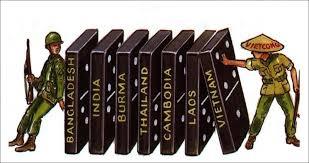
The idea that if South Vietnam fell to communism, other nations would soon follow...
a)
Vietnamization
b)
Communism
c)
Domino Theory
d)
Imperialism
101.
An "Abolitionist..."
a)
wants to get rid of alcohol
b)
wants equality
c)
wants to eliminate slavery
d)
fights for better education
102.
The nickname "Black Moses" was given to...
a)
Harriet Tubman
b)
Sojourner Truth
c)
Abraham Lincoln
d)
Frederick Douglass
103.
The Underground Railroad was...
a)
A system of hiding places and routes that led slaves to the South
b)
A system of hiding places and routes that led slaves to the North
c)
A railroad that went through a tunnel into Pennsylvania
d)
Abraham Lincoln's most famous speech
104.
The Fugitive Slave Law of 1850...
a)
forced slave owners to capture their own runaway slaves
b)
forced all people in the United States to help catch runaway slaves
c)
got rid of slavery in the North
d)
allowed runaway slaves to settle in New York
105.

Which clue was left at the lost colony of Roanoke?
a)
Danger
b)
Croatoan
c)
Death
d)
Disease
106.
What was the first permanent colony in America?
a)
Roanoke
b)
Jamestown
107.

Which of the following was NOT a problem at Jamestown?
a)
swampy
b)
mosquitoes
c)
unsanitary water
d)
Bigfoot
108.
Who issued a law that stated "If you don't work you don't eat"?
a)
John Rolfe
b)
John Smith
c)
Sir Walter Raleigh
d)
King James 1
109.
Why were the colonies of Plymouth and Massachusetts Bay established?
a)
Religious Freedom
b)
Economic Reasons
110.
What was the lost colony?
a)
Jamestown
b)
Roanoke
c)
Plymouth
111.
Which was not a struggle Jamestown faced?
a)
Lack of cooperation from natives
b)
Starvation
c)
Lack of necessary skill
d)
Attack from wild animals
112.
This person was supposedly saved by Pocahontas.
a)
Sir Walter Raleigh
b)
John Smith
c)
John Rolfe
113.
What state is Jamestown in?
a)
Virginia
b)
Maryland
c)
North Carolina
d)
Delaware
114.
A biography is a story of a person's life that someone else wrote.
a)
True
b)
False
115.
In what city do the Franks hide?
a)
Poland
b)
Amsterdam
c)
Germany
d)
United States
116.
The stairway to the Secret Annex was hidden behind...
a)
a desk
b)
the wall
c)
the bookcase
d)
a curtain
117.
Jewish people and others considered undesireable by the Nazi party were sent to...
a)
work on farms
b)
Siberia
c)
America
d)
concentration camps
118.
Anne and her family were afraid of being caught by...
a)
werewolves/vampires
b)
Green Police/Gestapo
c)
Miep and Mr. Kraler
d)
bears/wolves
119.
What war is taking place during "The Diary of Anne Frank"?
a)
The War of 1812
b)
World War I
c)
World War II
d)
The Vietnam War
120.
Frank Otto was the only surviver of the people who lived in the Secret Annex.
a)
True
b)
False
121.

Who was Anne Frank?
a)
A young Jewish girl.
b)
A young Dutch girl.
c)
A young American girl.
d)
A young Polish girl.
122.
What did Ann receive for her 13th birthday?
a)
a pony
b)
a diary
c)
a novel
d)
flowers
123.
Why did the Franks immigrate from Germany?
a)
Because Hitler came to power.
b)
Because they had family in Holland.
c)
Because Mr. Frank got a job offer.
d)
Because the war started in Germany.
124.
Where did the Franks hide?
a)
In a basement.
b)
In an abandoned warehouse.
c)
In their friends' house.
d)
In an attic.
125.
Why did the Franks go into hiding?
a)
Mr. Frank received a letter to go to a labor camp.
b)
Mrs. Frank received a letter to go to a labor camp.
c)
Margot received a letter to go to a labor camp.
d)
Anne received a letter to go to a labor camp.
126.

Who found Anne's diary?
a)
Miep Gies
b)
Mr. Frank
127.
In The Diary of Anne Frank, Act I, why do the Franks and Van Daans need to be quiet all day?
a)
because the children need to study
b)
because noise makes Mrs. Van Daan nervous
c)
because they don't want the workers in the building to hear them
d)
because the Nazis ordered the Jews to be quiet during the day
128.
In The Diary of Anne Frank, Act I, why do Anne and Peter tease each other so much?
a)
They do not like each other.
b)
They were enemies in school.
c)
They each want to make the other angry
d)
They are growing fond of each other.
129.

Why are the Jews given yellow stars by the Nazis?
a)
The stars qualify the Jews for meat and other food supplies
b)
The stars identify the Jews as people of quality
c)
The stars are used to identify and separate the Jews from the rest of the population
d)
The stars mean the Jews are a special, protected class
130.

What does Mr. Frank ask Miep Gies to do?
a)
Take care of the business affairs of the spice company during the war
b)
Marry Mr. Frank's brother Helmut
c)
Take Anne and Margot and escape to London
d)
Help supply the family in hiding
131.
“Everything she does it right, and everything I do is wrong! I’m the goat around here! You’re all against me!”
a)
Peter
b)
Margot
c)
Anne
d)
Mrs. Van Daan
132.
“I can’t stay in Amsterdam, Miep. It has too many memories for me. Everywhere there’s something…the house we lived in…the school…that street organ playing out there…I’m not the person you used to know, Miep. I’m a bitter old man.”
a)
Mr. Kraler
b)
Mr. Frank
c)
Mr. Dussel
d)
Mr. Van Daan
133.
“I’m jealous…jealous that you’ve got something to get up in the morning for…but jealous of you and Peter? No.”
a)
Margot
b)
Anne
c)
Mrs. Frank
d)
Mr. Frank
134.
“In spite of everything, I still believe people are really good at heart.”
a)
Peter
b)
Margot
c)
Anne
d)
Mr. Frank
135.
“Will you please let me in my room.”
a)
Anne
b)
Margot
c)
Mr. Dussel
d)
Peter
136.
A king or queen who holds ALL power within their state / country.
a)
Dictator
b)
Absolute Monarch
c)
Super Monarch
d)
Tyrant
137.
Louis XIV built a new capital city, and palace, in this French town.
a)
Normandy
b)
Paris
c)
Sienne
d)
Versailles
138.
True or false: Building Versailles was very expensive.
a)
True
b)
False
139.
What is "divine right of kings?"
a)
God chooses who rules the nation
b)
Only the faithful can rule kingdoms
c)
God chooses how healthy the ruler will be
d)
Kings and queens are elected
140.
How does absolutism clash with democracy?
a)
Absolutism & democracy do not clash
b)
Absolutism allows election of most capable leader
c)
Absolutism does not allow a lot of personal liberties/powers
d)
Absolutism does not allow one person to have all of the power
141.
King Louis XIV was nicknamed ...
a)
the Great
b)
the Moon King
c)
the Sun King
d)
the Powerful
142.
How long was King Louis XIV in power?
a)
72 years
b)
5 years
c)
65 years
d)
42 years
143.
The Palace of Versailles was originally ...
a)
a church
b)
a museum
c)
a foreign embassy
d)
a hunting lodge
144.
Who was taxed in France during the reign of King Louis XIV?
a)
everyone
b)
(only) the peasants
c)
the lower and middle classes
d)
(only) the nobility
Reset

