
NEW
Font size
S
M
L
XL
 Worksheets
Cells
Total questions: 22
Worksheet time: 12mins
Name
Class
Date
1.

Directs all cell activities through the DNA located there.
a)
Lysosomes
b)
Nucleus
c)
ribosomes
d)
Mitochondria
2.
Which of the following is directly involved in the transportation of materials inside/within the cell?
a)
Endoplasmic Reticulum
b)
Vacuole
c)
Lysosome
d)
Mitochondria
3.
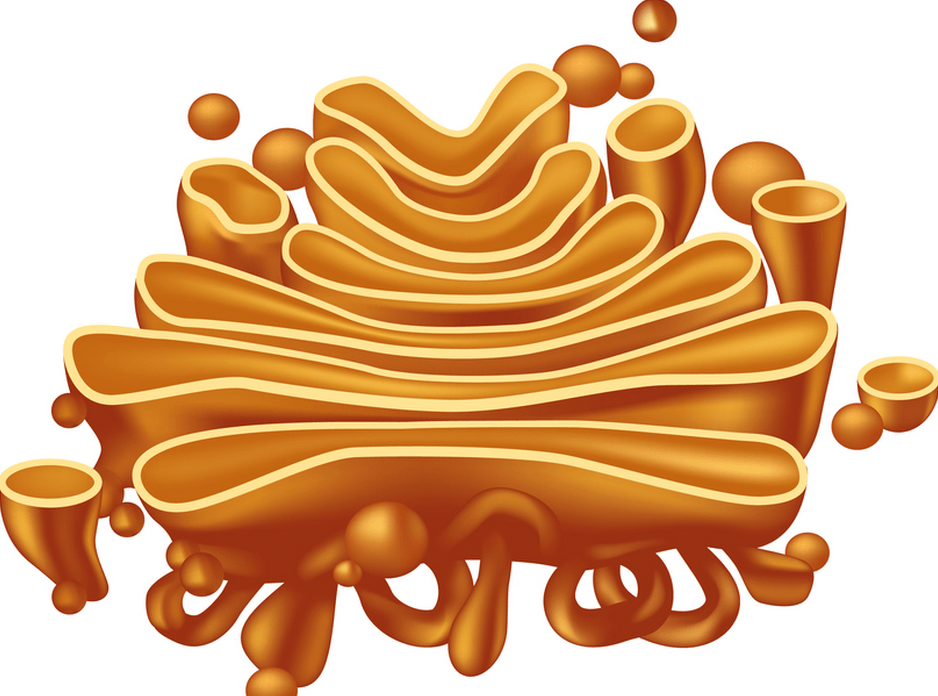
I am a protein packaging and shipping machine! Who am I?
a)
vacuole
b)
ribosome
c)
mitochondrion
d)
golgi apparatus
4.
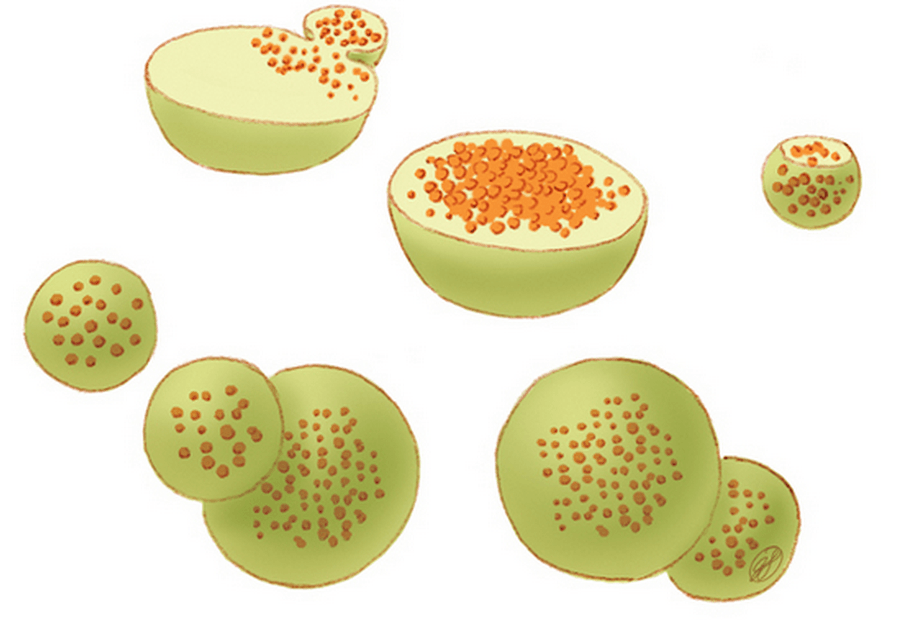
You might think of me as the trash collector, but recycler is maybe more accurate. What am I?
a)
mitochondria
b)
lysosome
c)
vacuole
d)
ribosome
5.
Where are proteins made?
a)
Golgi body
b)
Mitoichondria
c)
Chromosomes
d)
Ribosomes
6.
This organelle takes food and turns it into ENERGY for plant and animal cells.
a)
Chloroplast
b)
Mitochondria
c)
Lysosome
d)
Ribosome
7.

I am the outer most layer of an animal cell. What am I?
a)
cell wall
b)
nucleus
c)
cell membrane
d)
cell skin
8.
What is the gel-like substance inside of cells called?
a)
photoplasm
b)
photosynthesis
c)
cytoskeleton
d)
cytoplasm
9.
Which of the following best describes the fluid mosaic model?
a)
A single layer of phospholipids with embedded proteins
b)
A double layer of phospholipids with embedded proteins
c)
A single layer of embedded proteins interspersed with phospholipids and cholesterol
d)
A double layer of embedded proteins interspersed with phospholipids and cholesterol
10.
In the plasma membranes of animals, _________________ makes the membrane more flexible.
a)
Proteins
b)
Phospholipids
c)
Cholesterol
d)
Glycolipids
11.
Simple diffusion is when substances:
a)
move against a concentration gradient as a passive process.
b)
move down a concentration gradient as an active process.
c)
move down a concentration gradient as an active process.
d)
move down a concentration gradient as a passive process.
12.
Facilitated diffusion:
a)
requires energy.
b)
moves molecules against a concentration gradient.
c)
uses carrier and channel proteins.
d)
is used to move small molecules, including water.
13.
If the concentration of glucose outside a cell is lower than inside:
a)
water will enter the cell by osmosis.
b)
water will leave the cell by osmosis.
c)
glucose will enter the cell by osmosis.
d)
glucose will leave the cell by osmosis.
14.
A dye, such as potassium permanganate crystals, is added to water. The __________ is the solute and the ______________ is the solvent.
a)
water, dye
b)
dye, water
c)
water, water
d)
dye, dye
15.
Extracellular fluid contains approximately 10 times more sodium ions compared to intracellular fluid. This is possible through the process of:
a)
facilitated diffusion
b)
osmosis
c)
exocytosis
d)
active transport
16.
Which of the following processes uses ATP as a source of energy?
a)
Osmosis
b)
Facilitated diffusion
c)
Active transport
d)
Simple diffusion
17.
As the size of a cell increases:
a)
the volume and surface area decrease at the same rate.
b)
the volume and surface area increase at the same rate.
c)
the surface-area-to-volume ratio decreases.
d)
the surface-area-to-volume ratio increases.
18.
The main advantage in having small cells is that:
a)
a small cell weighs very little and is more able than a large cell to conserve energy.
b)
a small cell takes up less room than a large cell.
c)
a small cell has a small volume relative to surface area, increasing its efficiency of obtaining nutrients.
d)
a small cell has a small surface area relative to volume, increasing its access to nutrients.
19.
Muscle cells in athletes often have more mitochondria than muscle cells in nonathletes. Based on this observation, it can be inferred that the muscle cells in athletes
a)
have a smaller demand for cell proteins than the muscle cells of nonathletes
b)
reproduce less frequently than the muscle cells of nonathletes
c)
have nuclei containing more DNA than nuclei in the muscle cells of nonathletes
d)
have a greater demand for energy than the muscle cells of nonathletes
20.

Which structure in the cells below produces energy in the form of ATP?
a)
A
b)
B
c)
C
d)
D
21.
A structure that performs a specialized function within a cell is known as an
a)
a tissue
b)
an organ
c)
an organelle
d)
a system
22.

State the process that organelle X performs.
a)
photosynthesis
b)
cellular respiration
c)
protein synthesis
d)
information storage
Reset

