
 Worksheets
Yr. 9 Chemistry
Total questions: 20
Worksheet time: 13mins
Name
Class
Date
1.
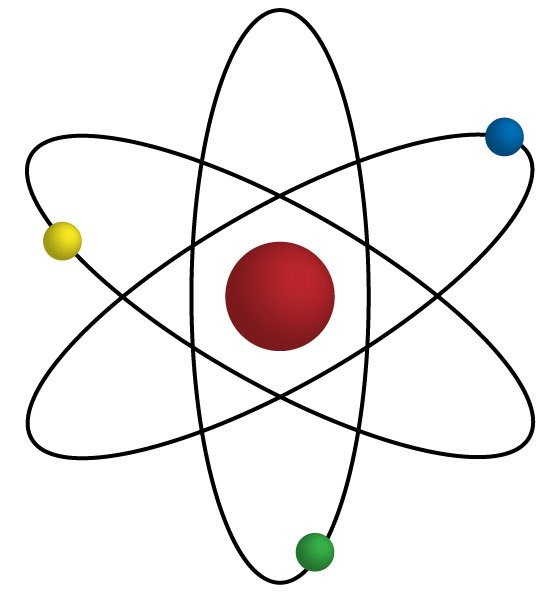
What are the 3 particles that make-up the atom?
a)
protons, neutrons, and isotopes
b)
neutrons, isotopes, and electrons
c)
positives, negatives, and electrons
d)
protons, neutrons, and electrons
2.

What is the number of protons that the element in this image contain?
a)
14
b)
7
c)
15
d)
18
3.
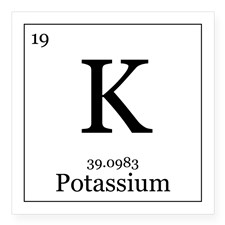
How many neutron are in the atom "K"?
a)
7
b)
2
c)
39
d)
12
4.
Most of the mass in an atom is concentrated in the...
a)
electrons
b)
nucleus
c)
protons
d)
empty space
5.
"C" is the element symbol for which element?
a)
calcium
b)
carbon
c)
chlorine
d)
cadmium
6.
True or False? Neutrons have a negative charge
a)
True
b)
False
7.
If I gain electrons I become
a)
Positive because I've added to my atom
b)
negative because I've added electrons
c)
same because i'm balanced
d)
equal because now I have electrons
8.
The proper formula for magnesium hydroxide:
a)
MgOH
b)
Mg2OH
c)
Mg(OH)2
d)
Mg2OH2
9.
How do the following two elements bond together?
Al3+ O2-
a)
AlO
b)
Al2O3
c)
Al3O6
d)
Al3O2
10.
An ion with a positive charge is a/an
a)
anion
b)
cation
11.
The rate at which a radioactive element decays is its ____.
a)
quarter life
b)
whole life
c)
wonderful life
d)
half life
12.
The three types of nuclear radiation in order of increasing penetrating power are
a)
alpha, beta, gamma
b)
alpha, gamma, beta
c)
beta, alpha, gamma
d)
gamma, alpha, beta
13.
What makes something radioactive?
a)
elements with an atomic number above 81
b)
an unstable nucleus
c)
contaminated sewage
d)
It decays over time
14.

An isotope of an element has the same number of _________, but a different number of _________.
a)
Protons, electrons
b)
Protons, neutrons
c)
Electrons, neutrons
15.
How many elements are in C6H12O6?
a)
1
b)
2
c)
3
d)
4
16.
Which of the following is a compound?
a)
Co
b)
O2
c)
C
d)
CO2
17.
You know you a chemical reaction has occurred if
a)
there is a precipitate.
b)
there is a color change.
c)
there is a temperature change.
d)
All of these answers are evidence.
18.
A molecule is made up of
a)
one or more mixtures.
b)
one or more compounds.
c)
one or more atoms.
d)
one or more solutions.
19.
Which scientific law states that an atom cannot be created or destroyed:
a)
Law of Conservation of Matter
b)
Law of Gravity
c)
Law of Conservation of Mass
d)
Law of Motion
20.
Which best describes a chemical reaction?
a)
Products --> Reactants
b)
Reactants --> Products
100 %

