
 Worksheets
MASSIVE AMERICAN HISTORY KNOWLEDGE CHECK EXTRA CREDIT
Total questions: 125
Worksheet time: 2hrs 29mins
Name
Class
Date
1.
What constitutional principle gives the power to the people?
a)
Republicanism
b)
Popular Sovereignty
c)
Limited Government
2.
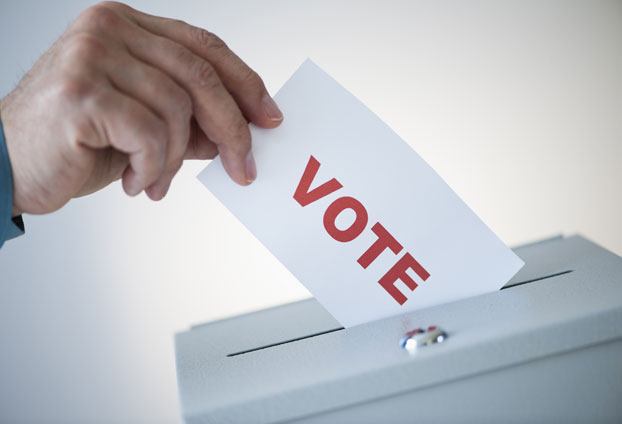
People voting on their elected representatives is an example of what constitutional principle?
a)
Republicanism
b)
Popular Sovereignty
c)
Separation of Powers
3.
The fact that states can make their own laws is an example of which constitutional principle?
a)
limited government
b)
federalism
c)
individual rights
4.

When the Congress disagrees with a law President Obama is trying to pass they can veto the law. This action is an example of...
a)
Checks and balances
b)
Separation of powers
c)
Individual rights
5.
The fact that states can make their own laws is an example of which constitutional principle?
a)
limited government
b)
federalism
c)
individual rights
6.
-Idea that absolute power rests with the people (people rule)
a)
Limited Government
b)
Popular Sovereignty
c)
Federalism
d)
Republicanism
7.
- Idea that government power is divided/shared between the national and state levels.
a)
Repubicanism
b)
Popular Sovereignty
c)
Limited Government
d)
Federalism
8.
-Idea that its power is limited to only certain powers stated in the constiution
a)
Federalism
b)
Individual Rights
c)
Limited Government
d)
Popular Sovereignty
9.

Principle of US Gov’t
People = source of Gov’t Power
Gov’t exists only w/consent of People
People = source of Gov’t Power
Gov’t exists only w/consent of People
a)
Popular Sovereignty
b)
Separation of Powers
c)
Checks & Balances
d)
Federalism
10.

System of overlapping powers of Legislative, Executive & Judicial branches to check actions of the others
a)
Checks & Balances
b)
Unconstitutional
c)
Concurrent Powers
d)
Amendment
11.
Which principle is reflected below?
Every bill that passes both houses of legislature shall be presented to the governor, who may approve it, or send it back to the legislature. If two-thirds or the legislature still wants the law passed they may approve it...
Every bill that passes both houses of legislature shall be presented to the governor, who may approve it, or send it back to the legislature. If two-thirds or the legislature still wants the law passed they may approve it...
a)
Republicanism
b)
Federalism
c)
Checks & Balances
d)
Separation of Powers
12.
Only the Legislative branch can write laws.
a)
Checks and Balances
b)
Separation of Powers
c)
Federalism
d)
Limited Government
13.
Our government gains its power from consent of the people.
a)
Popular Sovereignty
b)
Limited Government
c)
Republicanism
d)
Checks and Balances
14.
This principle states that the government should be DIVIDED into 3 branches: legislative, judicial, and executive.
a)
Separation of Powers
b)
Popular Soveriegnty
c)
Limited Government
d)
Checks and Balances
15.

When the Congress disagrees with a law President Trump is trying to pass they can veto the law. This action is an example of...
a)
Checks and balances
b)
Separation of powers
c)
Individual rights
16.

The idea of _________ divides the US Gov’t into 3, equal, branches of Gov’t.
a)
Separation of Powers
b)
Judicial Review
c)
Popular Sovereignty
d)
Implied Powers
17.

a)
Checks & Balances
b)
Unconstitutional
c)
Concurrent Powers
d)
Amendment
18.

System of Gov’t where a Constitution divides power between a national Gov’t, & regional Gov’ts
a)
Federalism
b)
Concurrent Powers
c)
Implied Powers
d)
Separation of Powers
19.
The Federal Government decided that states no longer have the right to pass marriage laws within their state.
a)
Federalism
b)
Popular Sovereignty
c)
Republicanism
d)
Separation of Powers
20.
The Judicial Branch declares a law passed by Congress unconstitutional.
a)
Checks and Balances
b)
Separation of Powers
c)
Federalism
d)
Limited Government
21.
The Executive Branch has the responsibility to carry out laws.
a)
Separation of Powers
b)
Checks and Balances
c)
Federalism
d)
Republicanism
22.
Congress impeaches the President or a Supreme Court Justice
a)
Checks and Balances
b)
Separation of Powers
c)
Federalism
d)
Individual Rights
23.

This illustration shows
a)
checks and balances
b)
separation of powers
24.

The people in the 27th District of Texas elected Blake Farenthold to serve as their US Congressman.This is an example of...
a)
Republicanism
b)
Separation of Powers
c)
Checks and balances
d)
federalism
25.
-Idea that its power is limited to only certain powers stated in the constiution
a)
Federalism
b)
Individual Rights
c)
Limited Government
d)
Popular Sovereignty
26.

The people of Montgomery County in Precinct 4 elected Judge James Metts to serve as Justice of the Peace. This is an example of...
a)
Republicanism
b)
Separation of Powers
c)
Checks and balances
d)
federalism
27.
The powers of the government are divided into 3 LEVELS- local, state and national
a)
limited government
b)
republicanism
c)
checks and balances
d)
Federalism
28.
Requires grand jury indictment for a serious crime, bans double jeopardy, no loss of life, liberty or property without due process of law.
a)
5th
b)
7th
c)
9th
d)
10th
29.
Guarantees the right to jury trial in civil suits involving $20.00 or more.
a)
5th
b)
7th
c)
8th
d)
9th
30.
Guarantees the right to a speedy, impartial public trial in criminal cases with counsel and the right to cross examine.
a)
6th
b)
7th
c)
9th
d)
10th
31.
Prohibits excessive bail or fines or cruel or unusual punishment
a)
3rd
b)
5th
c)
7th
d)
8th
32.
Guarantees the right to bear arms.
a)
1st
b)
2nd
c)
7th
d)
8th
33.
Prohibits unreasonable searches and seizures.
a)
2nd
b)
3rd
c)
4th
d)
7th
34.
Asserts that powers not delegated to the national government or denied to the states are reserved to the states.
a)
2nd
b)
8th
c)
9th
d)
10th
35.
Prohibits the quartering of soldiers in homes in peacetime.
a)
1st
b)
3rd
c)
5th
d)
6th
36.
Guarantees the freedom of religion, speech, press, assembly and the right to petition government.
a)
1st
b)
4th
c)
9th
d)
10th
37.

The Bill of Rights are included in which document?
a)
Declaration of Independence
b)
The U.S. Constitution
c)
Articles of Confederation
d)
Treaty of Paris
38.

What amendment aligns with the principle of Federalism?
a)
5th
b)
10th
c)
1st
d)
8th
39.

Right to bear arms and create a militia
a)
1st
b)
2nd
c)
3rd
d)
4th
40.
No one has to house (quarter) soldiers in their home
a)
1st
b)
2nd
c)
3rd
d)
4th
41.

Rights that are not written in the U.S. Constitution are reserved to the people --
a)
10 amendment
b)
4th amendment
c)
6th amendment
d)
9th amendment
42.

These amendments will protect your rights if you are ever charged with a crime.
a)
Amendments 1, 3, 9
b)
Amendments 2, 4, 10
c)
Amendments 4, 5, 6, 8
d)
Amendments 1, 2, 3
43.

Guarantees the right for you to have a lawyer for your defense
a)
2nd Amendment
b)
4th Amendment
c)
6th Amendment
d)
8th Amendment
44.

Guarantees a trial by jury in a civil lawsuit of more than $20
a)
1st Amendment
b)
3rd Amendment
c)
5th Amendment
d)
7th Amendment
45.
Federalists and Democratic-Republicans are two examples of--
a)
Political parties
b)
mercenaries
c)
interest groups
d)
Cabinet secretaries
46.

The leaders of the Democratic Republicans and Federalists are
a)
Thomas Jefferson and Aaron Burr
b)
George Washington and Alexander Hamilton
c)
John Adams and Henry Knox
d)
Thomas Jefferson and Alexander Hamilton
47.
Support of a National Bank, Great Britain, and manufacturing industry are qualities of a--
a)
Federalist
b)
Democratic Republican
48.
Support of the French, farmers, and the state governments are qualities of a--
a)
Federalist
b)
Democratic Republican
49.
The idea that the Constitution is a flexible document that allows for changes and implied powers for the federal government is known as--
a)
Strict interpretation
b)
Loose interpretation
c)
Federalism
d)
Separation of Powers
50.
The idea that the Constitution should be taken literally, and that it is a specific set of unbreakable rules, is called--
a)
Loose interpretation
b)
Strict interpretation
c)
Checks and Balances
d)
Judicial Review
51.
President George Washington faced his first test as a President when Pennsylvania farmers rose up in events known as--
a)
Shays Rebellion
b)
Whiskey Rebellion
c)
Burr's Rebellion
d)
Hamilton's Revolt
52.
President Washington's response to the Whiskey Rebellion proved that--
a)
the state governments were the focus of power in the U.S.
b)
the federal government was just as weak as it had been under the AoC
c)
he required the use of a foreign army to enforce his own laws
d)
the federal government was strong and would use force if necessary
53.
The tax on whiskey was created by Alexander Hamilton, a member of Washington's ________ and _______________.
a)
Cabinet, Vice President
b)
Secretaries; Secretary of State
c)
Cabinet, Secretary of Treasury
d)
Staff, Aide-de-camp
54.
Secretary of Treasury Alexander Hamilton raised a whiskey tax in order to--
a)
pay off war debts
b)
reward soldiers for service in the revolution
c)
pay French soldiers for their assistance
d)
support American farmers
55.
What two things did George Washington warn against in his Farewell Address?
a)
Foreign wars and trade with Great Britain
b)
Political alliances and foreign tariffs
c)
Political parties and permanent alliances
d)
Slavery and trade with France
56.
What word means to set an example, establish an expectation, or create a tradition?
a)
Precedent
b)
Orthodox
c)
Cabinet
d)
Liberty
57.
What precedent was NOT set by George Washington during his administration?
a)
Two terms of service
b)
Making a Farewell Address
c)
Using a Cabinet
d)
Leading soldiers against a rebellion
58.
The purpose of the President's Cabinet was to--
a)
Replace the President after he retires
b)
Serve as a Vice-President when the President is out of the country
c)
Lead the three branches of government
d)
advise and assist the President
59.
Hamilton's financial plan was to assume state debt, raise taxes and tariffs, establish a National Bank, and--
a)
Encourage free enterprise
b)
Sell a surplus of cotton
c)
Encourage the South to end slavery
d)
Sell American land in the west
60.
George Washington, in his Farewell Address, warned that permanent alliances with foreign countries would--
a)
drain the country's treasury
b)
entangle the U.S. with foreign countries.
c)
split the country into political parties
d)
make the US rely too much on slavery
61.
A Federalist who added power to the federal government, judicial branch, and the Supreme Court during his time as Chief Justice
a)
Thomas Jefferson
b)
Alexander Hamilton
c)
John Marshall
d)
John Jay
62.
In the court case Marbury v. Madison, the Supreme Court assumed control of this power.
a)
National supremacy
b)
Separation of powers
c)
right to censure
d)
judicial review
63.
The power of judicial review allows judges to check and evaluate the __________________________ of laws.
a)
Constitutionality or legality
b)
appropriateness
c)
racism
d)
popularity
64.
The court case Gibbons v. Ogden had which result?
a)
Interstate commerce would be regulated and managed by the President
b)
Interstate commerce would be regulated and managed by Congress
c)
Interstate commerce would be regulated and managed by the states
d)
Interstate commerce would be regulated and managed by the people
65.
McCulloch v. Maryland established the Supremacy Clause. The Supremacy Clause can best be defined as--
a)
the states having superiority over the federal government
b)
the removal of immigrants during the Adams administration
c)
the federal government having superiority over the states
d)
The choice of the people having popularity over all institutions
66.
Which court case gave the Supreme Court the power of JUDICIAL REVIEW?
a)
Gibbons v. Ogden
b)
McCulloch v. Maryland
c)
Marbury v. Madison
d)
Worcester v. Georgia
67.
Which court case gave the federal government the SUPREMACY CLAUSE over state governments?
a)
Gibbons v. Ogden
b)
McCulloch v. Maryland
c)
Marbury v. Madison
d)
Worcester v. Georgia
68.
Which court case determined that Congress and the federal government have the power to regulate interstate commerce?
a)
Gibbons v. Ogden
b)
McCulloch v. Maryland
c)
Marbury v. Madison
d)
Worcester v. Georgia
69.
JUDICIAL REVIEW gives the Supreme Court the power to review the ______________ of laws.
a)
appropriateness
b)
popularity
c)
force
d)
constitutionality
70.
Edmund Randolph was a member of Washington's first Cabinet as Attorney General.
What were the other positions in Washington's Cabinet?
What were the other positions in Washington's Cabinet?
a)
Secretary of War, State, and Commerce
b)
Secretary of Defense, War, and Armed Forces
c)
Secretary of War, State, and Treasury
d)
Secretary of Foreign Affairs, Defense, and National Bank
71.

This image is stopping who from passing the Atlantic Ocean?
a)
European Nations
b)
Chinese
c)
Soviets
d)
Japanese
72.

What prohibited trade with other countries?
a)
The Embargo Act
b)
The Sedition Act
c)
Hamiliton's tariffs
73.
Which event happened under President John Adams
a)
XYZ affair
b)
Whiskey Rebellion
c)
Embargo Act
d)
War of 1812
74.
The Era of ____________ marked a time of nationalism after the War of 1812.
a)
Good Feelings
b)
Fuzzy Feelings
c)
Scary Feelings
d)
Confident Feelings
75.
The feeling of pride and accomplishments refers to what time period.
a)
Age of Enligtenment
b)
Industrial Age
c)
Era of WestwardExpansion
d)
Era of Good Feelings
76.

What was the idea Monroe drew upon that came from Washington's Farewell Address?
a)
Avoiding war
b)
Staying out of Europe's affairs
c)
Not trying to conquer other nations
77.
Which of the following stopped European colonization in America.
a)
Adams-Onis Treaty
b)
Monroe Doctrine
c)
Watauga Compact
d)
Convention of 1818
78.
The Monroe Doctrine said __________________.
a)
no more European colonies could be started in the Americas
b)
Europe must leave the Americas alone
c)
the United States would stay out of Europe's business
d)
all of the above
79.
James Monroe
a)
tried to unite all Indian tribes in America.
b)
kept Europe out of the affairs of the Western Hemisphere.
c)
was the only Federalist President.
d)
was part of the War Hawks in Congress.
80.
Which of the following stopped European colonization in America.
a)
Adams-Onis Treaty
b)
Monroe Doctrine
c)
Watauga Compact
d)
Convention of 1818
81.
Why did the Americans want the Louisiana territory?
a)
For control of the Mississippi ports
b)
To spy on the Spanish
c)
To control Haiti
d)
For gold and silver
82.
Who was the French leader who sold Louisiana to the US?
a)
Richard Lee
b)
Prince Phillip
c)
Napoleon
d)
King Louie
83.
In what year was the Louisiana Purchase signed?
a)
1767
b)
1798
c)
1819
d)
1803
84.
Which of these is true of the Louisiana Purchase?
a)
It cut the size of the land area of US in half.
b)
It doubled the size of the land area of US.
c)
It doubled the size of the state of Georgia.
d)
It cut the population of the US. in half.
85.
What doubled the size of the US?
a)
Mexico
b)
Canada Purchase
c)
Louisiana Purchase
d)
California Purchase
86.

When did the United States of America purchase the territory of Louisiana?
a)
1703
b)
1903
c)
1803
d)
1813
87.
Who sold the Louisiana territory to the US?
a)
Spain
b)
France
c)
Britian
d)
Portugal
88.
Why was the port of New Orleans so important?
a)
It was the best place to go fishing
b)
It was a party town
c)
It was the Catholic headquaters
d)
It was the main center for trade along the Mississippi river
89.
What word means a love for your country?
a)
treason
b)
capitalism
c)
nationalism
d)
democracy
90.
What was there a great sense of in America after the War of 1812 because of how Britain had damaged the nation's capital causing Americans to band together?
a)
curiosity
b)
nationalism
c)
confusion
d)
international respect
91.
Who was the War of 1812 between?
a)
Great Britain and France
b)
France and the United States
c)
the United States and American Indians
d)
the United States and Great Britain
92.
How did impressment help lead to the War of 1812?
a)
French were taking American sailors and forcing them to work in the French navy
b)
Americans were taking British sailors and forcing them to work in the American navy
c)
British were taking American sailors and forcing them to work in the British navy
93.
How were blockades a cause of the War of 1812?
a)
the Americans were blocking British ports preventing their trade
b)
the British were blocking American ports preventing their trade
c)
the British were blocking French ports preventing their trade
94.
What were the three main causes of the War of 1812?
a)
blockades, impressment, and James Madison being annoying
b)
James Madison being elected president, blockades, and impressment
c)
blockades, impressment, and the British encouraging American Indians to fight against Americans
95.
How did the Native Americans try to stop the westward expansion of the Americans?
a)
Lather trails with molasses
b)
Get weapons and supplies from Great Britain
c)
Cut off trade to America
d)
Invade NYC
96.
Who became a famous general after the War of 1812?
a)
Thomas Jefferson
b)
Andrew Johnson
c)
James Madison
d)
Andrew Jackson
97.
_____________ is when a country stops trade with another country as
a)
impressment
b)
embargo
c)
neutrality
d)
violation
98.
Which is NOT a cause of the War of 1812?
a)
British impressment of American sailors
b)
British searching and seizing American ships
c)
British giving guns and ammunition to Native Americans
d)
British burning down Washington D.C.
99.
What is the defintion of IMPRESSMENT?
a)
British capturing American sailors
b)
Showing off to the person next to you
c)
Forcing Native Americans west of the Mississippi
d)
British giving guns and ammunition to Native Americans
100.
Who won the War of 1812?
a)
England
b)
United States
c)
France
d)
No one
101.
They wanted the government to be modeled after the British Government.
a)
Federalist Party
b)
Democratic-Republican Party
102.
They admired the French because they thought the French Revolution was modeled after the American Revolution.
a)
Federalist Party
b)
Democratic-Republican Party
103.
Supporters were farmers and common people
a)
Federalist Party
b)
Democratic-Republican Party
104.
Led by Thomas Jefferson
a)
Federalist Party
b)
Democratic-Republican Party
105.
Thought that the state governments should be stronger than the national government
a)
Federalist Party
b)
Democratic-Republican Party
106.
Wanted a country based on farming and agrarian
a)
Federalist Party
b)
Democratic-Republican Party
107.
Felt government should be led by the educated
a)
Federalist Party
b)
Democratic-Republican Party
108.
Supporters were businessmen, professionals, and large landowners
a)
Federalist Party
b)
Democratic-Republican Party
109.
Wanted a country based on industry (manufacturing and selling goods)
a)
Federalist Party
b)
Democratic-Republican Party
110.
Led by Alexander Hamilton
a)
Federalist Party
b)
Democratic-Republican Party
111.
They believed that most of the power of government should lie in the state governments and the federal government should be weak.
a)
Federalist Party
b)
Democratic-Republican Party
112.
A political party founded in the 1790s by Thomas Jefferson, James Madison and other leaders who wanted to preserve the power of the state governments and promote agriculture
a)
Thomas Jefferson
b)
Alexander Hamilton
c)
Federalist Party
d)
Democratic-Republican Party
113.
A political party created in the 1790s and influenced by Alexander Hamilton that wanted to strengthen the federal government and promote industry and trade
a)
Thomas Jefferson
b)
Alexander Hamilton
c)
Federalist Party
d)
Democratic-Republican Party
114.
A way of interpreting the Constitution that allows the federal government to take only those actions the Constitution specifically says it can take
a)
Loose Constructionist
b)
Strict Constructionist
c)
National Debt
d)
Neutrality Proclamation
115.
A way of interpreting the Constitution that allows the federal government to take actions that the Constitution does not specifically forbid it from taking.
a)
Loose Constructionist
b)
Strict Constructionist
c)
National Debt
d)
Neutrality Proclamation
116.
1794 A protest of small farmers in Pennsylvania against new taxes on whiskey
a)
Bank of the United States
b)
French Revolution
c)
Whiskey Rebellion
d)
Political Parties
117.
1798-1799 Republican documents that argued that the Alien and Sedition Acts were unconstitutional
a)
Shay's Rebellion
b)
Marbury v. Madison
c)
Alien and Sedition Acts
d)
Kentucky and Virginia Resolutions
118.
A group of advisors to the president is called...
a)
partisan
b)
cabinet
c)
states' rights
d)
precedent
119.
What was the most significant threat facing the Early Republic when Washington became President?
a)
Debt
b)
Native Americans
c)
British
d)
French
120.
One goal of Alexander Hamilton's financial plan was the establishment of a
a)
chain of fast food restaurants called Hamilton Burgers
b)
federal income tax
c)
national bank
d)
stock exchange
121.
Tariff is
a)
tax on imports
b)
tax on exports
c)
sales tax
d)
income tax
122.
What was Washington's view on foreign policy?
a)
Set up permanent alliances with other nations
b)
Do not set up permanent alliances with other countries
c)
Do not let foreign ships into harbors without paying taxes
d)
Letting ships freely enter U.S. waters will promote trade
123.
What did Washington warn against in his Farewell Address ?
a)
The dangers of political parties
b)
Thomas Jefferson becoming president
c)
A national bank
124.

What does Loose Construction of the Constitution mean?
a)
Use it as a guide
b)
Follow it word for word
c)
Relax fit jeans were banned by the Constitution
125.
What does Strict Construction of the Constitution mean?
a)
Use it as a guide
b)
Follow it word for word
c)
Doing your chores the first time you are asked
100 %

