
 Worksheets
The Structure of Atoms
Total questions: 30
Worksheet time: 25mins
Name
Class
Date
1.
all matter is made of what
a)
energy
b)
atoms
c)
electrons
d)
compounds
2.
The positive particles of an atom are
a)
electrons
b)
positrons
c)
neutrons
d)
protons
3.
the central region of an atom where its neutrons and protons are is its
a)
nucleus
b)
electron cloud
c)
core
d)
center
4.
an atom with atomic number 6 would have how many protons
a)
6
b)
12
c)
3
d)
cannot be determined
5.
Particles in an atom that are neutral and have no charge are
a)
negatrons
b)
electrons
c)
neutrons
d)
protons
6.
True or False? Neutrons have a negative charge
a)
True
b)
False
7.
What is the atomic number for an element with three protons?
a)
2
b)
1
c)
3
d)
6
8.
A particle that moves around the nucleus is a(n)...
a)
Proton
b)
Neutron
c)
Electron
d)
Quark
9.
In the modern periodic table elements are arranged by:
a)
atomic mass
b)
atomic number
c)
valence electrons
d)
number of isotopes
10.

What does the 1.00794 stand for?
a)
Hydrogen
b)
atomic number
c)
atomic mass
d)
atomic explosion
11.

What is the atomic mass of "F"
a)
9
b)
18
c)
17
d)
19
12.
The first energy level can hold up to how many electrons?
a)
8
b)
4
c)
2
d)
5
13.
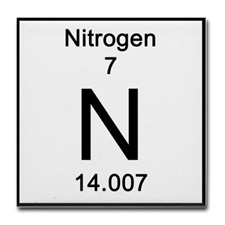
What is the number of protons that the element in this image contain?
a)
14
b)
7
c)
15
d)
18
14.
The particles that are found in the nucleus of an atom are
a)
neutrons and electrons
b)
electrons only
c)
protons and neutrons
d)
protons and electrons
15.
Where are electrons of an atom found?
a)
Nucleus
b)
Electron Cloud
c)
Some are in the nucleus and some in the electron cloud.
d)
They are moving everywhere.
16.
Most of the mass in an atom is concentrated in the...
a)
electrons
b)
nucleus
c)
protons
d)
empty space
17.

What is the number of protons that the element in this image contain?
a)
14
b)
7
c)
15
d)
18
18.
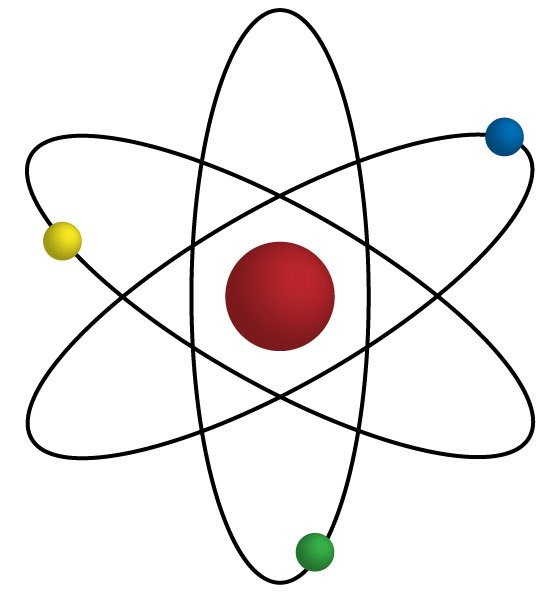
What are the 3 particles that make-up the atom?
a)
protons, neutrons, and isotopes
b)
neutrons, isotopes, and electrons
c)
positives, negatives, and electrons
d)
protons, neutrons, and electrons
19.
What particle uniquely identifies an element?
a)
Number of Valence Electrons
b)
Number of Protons
c)
Number of Electrons
d)
Atomic Mass
20.
Which one of these is NOT located in the element square on the Periodic Table?
a)
Atomic Number
b)
Atomic Mass
c)
Room Temperature
d)
Chemical Symbol
21.
What is the atomic number?
a)
the number of protons
b)
the number of protons and neutrons
c)
the number of neutrons
d)
the number of protons and electrons
22.
What is the mass number?
a)
the number of protons
b)
the number of protons and neutrons
c)
the number of neutrons
d)
the number of protons and electrons
23.
Atoms are mostly filled with?
a)
electrons
b)
empty space
c)
protons
24.
The smallest unit of an element is __________
a)
matter
b)
a cell
c)
a proton
d)
an atom
25.
What is the center of an atom called?
a)
neutron
b)
nucleus
c)
proton
d)
electron
26.
What have a neutral charge (or no charge)?
a)
protons
b)
electrons
c)
neutrons
d)
atoms
27.
A substance that cannot be broken down into anything simpler is _____________________.
a)
an element
b)
a compound
c)
atoms
d)
matter
28.

A substance made up of two or more different elements is _______________________.
a)
a compound
b)
an element
c)
matter
d)
atoms
29.
An example of an element is _______________ (pick all that apply).
a)
matter
b)
oxygen
c)
water
d)
hydrogen
30.
An example of a compound is _________________.
a)
water
b)
hydrogen
c)
oxygen
d)
aluminum
100 %

