Wayground logo

Free Printable Worksheets

Font size

S
M
L
XL
Worksheets

Gravity

Total questions: 22

Worksheet time: 19mins

Name
Class
Date
1.

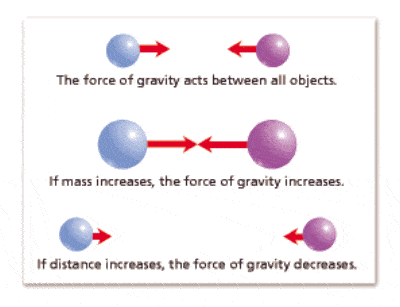
Two factors effecting the magnitude of the force of gravity between 2 objects are _?_.

a)

mass and distance

b)

mass and matter

c)

distance and weight

d)

weight and mass

2.

As distance between two objects increase the pull of gravity _?_.

a)

increases

b)

decreases

c)

stays the same

3.

Two objects with a greater mass have _?_.

a)

less gravitational force

b)

stronger gravitational force

c)

no clue

d)

a way to break apart

4.

The closer two objects are to each other, _?_.

a)

the harder they will collide

b)

the less gravitational force there is between them

c)

the more gravitational force there is between them

d)

there is no change in the gravitational force there is between them

5.

A person would weigh more on Jupiter than on the Earth because _?_.

a)

Jupiter has more mass, and therefore more gravity

b)

Jupiter has less mass, and therefore more gravity

c)

Jupiter has more mass, and therefore less gravity

d)

Jupiter has less mass and therefore less gravity
6.
Mercury has ______ gravity than Earth.
a)
less
b)
more
c)
the same
7.

As mass increases, what happens to gravitational force?

a)

increases

b)

decreases

c)

stays the same

8.
The Earth’s gravitational field is stronger on an object closer to its surface.
a)
True
b)
False
9.
What force keeps objects in our solar system orbiting our Sun?
a)
push
b)
gravity
c)
motion
d)
pull 
10.
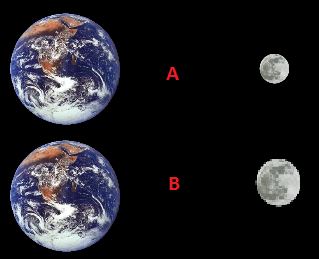
Which model has greater gravitational attraction (if any)
a)
Model A
b)
Model B
c)
Both Model A and Model B (same gravity)
11.
Which system has the greater gravitational attraction between the two objects (if any)?
a)
System A
b)
System B
c)
Same gravitational attraction fro System A and System B
12.

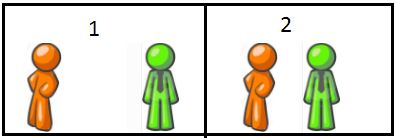
Which System has the greater gravitational pull between the two objects?

a)

System 1

b)

System 2

c)

There is no gravitational attraction between the two objects. their mass is too small.
13.
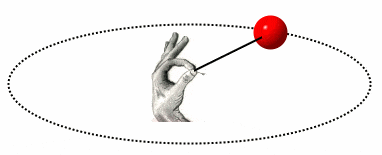
How does changing the distance of the string in the model represent the orbits of the planets?
a)
the longer the string means the larger the planet
b)
the longer the string, the longer the orbit time of a planet
c)
the shorter the string, the longer the orbit time of the planet
d)
the shorter the string, the smaller the planet
14.

Do planets affect the sun? Why?

a)

No. The Sun pulls on the planets and keep them in orbit.

b)

Yes. Sun pulls on planets; planets pull on Sun.

15.

What best describes the mass and weight of a person as they move around the universe?

a)

Mass and weight changes.

b)

Mass and weight stays constant.

c)

Weight remains constant and mass changes.

d)

Mass stays constant and weight changes.
16.
What is mass?
a)
Attraction between objects
b)
How much matter in an object
c)
Amount of space in object
17.
What would be true of weight if you went to Jupiter?
a)
Weight lowers because Jupiter's gravity is less than Earth's
b)
Weight and mass increase because Jupiter has more gravity
c)
Weight would increase because Jupiter has more gravity
d)
Weight and mass decrease because Jupiter has more gravity
18.
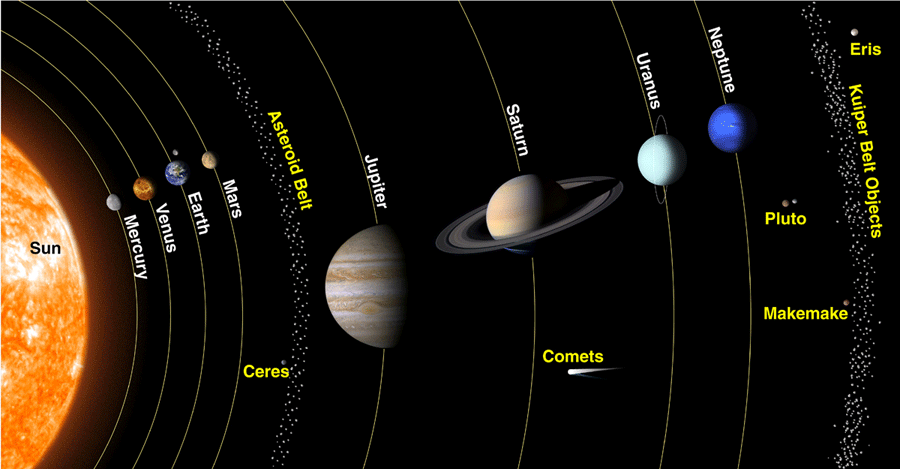
Which planet would have the greatest velocity?
a)
Mercury
b)
Mars
c)
Jupiter
d)
Neptune
19.
Which planet would have the longest year?
a)
Mercury
b)
Mars
c)
Jupiter
d)
Neptune
20.
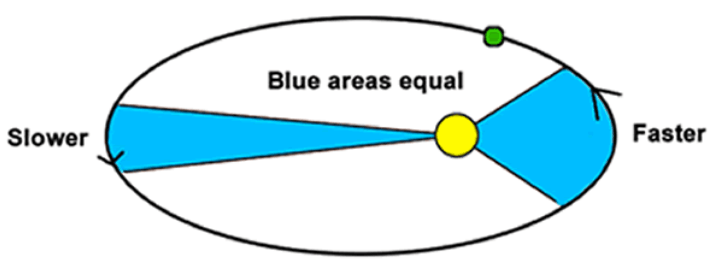
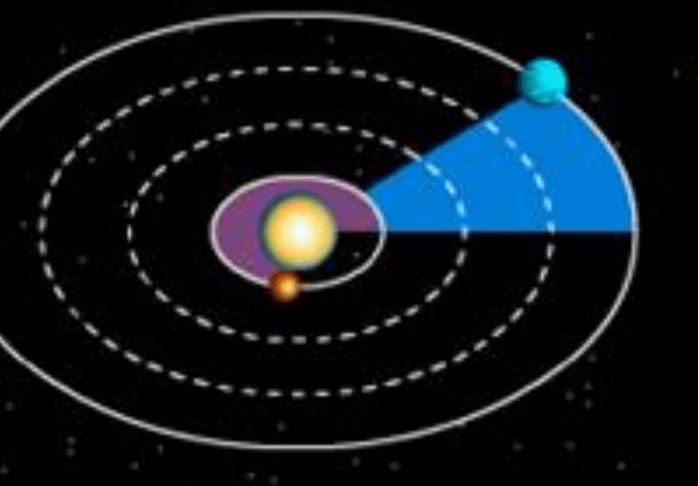
This model best illustrates which of the following laws?
a)
Kepler's 2nd Law of Motion
b)
Newton's 1st Law of Motion
c)
Kepler's 3rd Law of Motion
d)
Newton's Law of Universal Gravitation
21.
Planets revolve around the sun in an elliptical orbit. Is this Kepler's 1st, 2nd, or 3rd Law? ?  
a)
1st
b)
2nd
c)
3rd
d)
None
22.
Which law explains why the blue planet takes longer to move around the sun than the red planet?
a)
Kepler's 2nd Law of Motion
b)
Newton's 2nd Law of Motion
c)
Kepler's 3rd Law of Motion
d)
Newtons Law of Universal Gravitation