wayground logo

Free Printable Worksheets

Font size

S
M
L
XL
Worksheets

Ancient Egypt YEET

Total questions: 109

Worksheet time: 1hrs 6mins

Name
Class
Date
1.
What is a dynasty?
a)
a collection of queens
b)
a collection of kingdoms
c)
series of rulers from different families
d)
series of rulers from the same family
2.
Which of the following beliefs was  central to Egyptian religion?
a)
the afterlife
b)
the pyramids
c)
the pharaohs
d)
the heavens
3.
Describe the burial practices of Egyptians?
a)
They used a funeral pyre for the dead.
b)
They carried the dead to a nearby country.
c)
They preserved bodies as mummies.
d)
They were buried in the river.
4.
Why were tombs filled with art, jewelry, etc.....?
a)
Tombs were museums.
b)
Tombs were private storage for the pharaoh.
c)
Tombs were the safest place in the kingdom.
d)
They believed the dead enjoyed their materials in the afterlife.
5.
How was Egypt able to build pyramids and temples?
a)
The pharaohs family paid the cost.
b)
Egypt collected taxes from the people.
c)
Egypt collected taxes from Sumer.
d)
The priests held religious festivals.
6.
Whose tomb was discovered in 1922?
a)
King Tutankhamen
b)
Ahmose
c)
Ramese
d)
Queen Hatsheput
7.
What was learned through studying King Tut's tomb?
a)
He was a king.
b)
The burial practices of Egyptians.
c)
He was wealthy.
d)
He had many wives.
8.
The worship of many gods.
a)
monotheism
b)
irrigation
c)
polytheism
d)
epic
9.
Who would write and record information?
a)
slaves
b)
scribes
c)
farmers
d)
craftspeople
10.
Egyptian writing system
a)
papyrus
b)
alaphabet
c)
cuneiform
d)
heiroglyphics
11.
Where is the most fertile soil in Egypt?
a)
Nile Delta
b)
desert
c)
far south
d)
cataracts
12.
What is papyrus?
a)
mud used in building
b)
plant from which paper is made
c)
rock used to make tools
d)
animal skin
13.
The queen that ruled as pharaoh and traded with Punt
a)
Khufu
b)
Menes
c)
Pianki
d)
Hatsheput
14.
Who is at the top of the Egyptian social hierarchy?
a)
slaves
b)
pharaoh
c)
scribe
d)
merchant
15.
This device helped lift water from the river
a)
ladle
b)
scoop
c)
shaduf
d)
jar
16.
Steep river rapids, almost impossible to sail by boat
a)
delta
b)
canal
c)
dam
d)
cataracts
17.

What is a Pharaoh?

a)

emperor

b)

King only

c)

God only

d)

God and king

18.

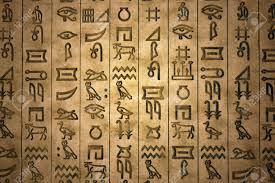
What is this system of writing called?

a)

calligraphy

b)

Hieroglyphs

c)

Cuneiform

d)

Alphabet

19.
What happened to wealthy Egyptians after they died?
a)
They were mummifed
b)
They were buried in a casket
c)
They floated down the Nile River
d)
They were burned
20.
Egypt is in
a)
Antrartica
b)
Asia
c)
Africa
d)
Europe
21.
How often did the Nile River flood?
a)
Every now and then
b)
Every 3 months
c)
Every year at some time
d)
Every year at about the same time
22.
How did the Egyptians feel about Nile River flooding?
a)
They were sad because the flood caused great problems
b)
They were happy because the flood caused crops to grow
23.
an ancient writing paper
a)
perfume
b)
papyrus
c)
hieroglyphics
d)
stone
24.
Which describes a technique that the ancient Egyptians used to adapt to their environment?
a)
They built underground sewer systems.
b)
They were able to irrigate water from the Red Sea for their crops.
c)
They farmed on land that had been flooded by the Nile River.
d)
They built walls around their city to keep out invaders.
25.
who was the youngest Egyptian king
a)
hatshepsut
b)
king tut
c)
randy
d)
khfu
26.
An Egyptian king was called a ___________
a)
scribe
b)
servant
c)
papyrus
d)
pharaoh
27.
What the major river that was in Ancient Egypt?
a)
Amazon
b)
Mississippi
c)
Nile
d)
Tiber
28.
Ancient Egyptians believed their king was ___________________
a)
a normal person
b)
a representative of the gods
c)
a god
d)
a cat that came back to life
29.
Egyptians had a written language using pictures. It was called ____________.
a)
cuneiform
b)
English
c)
hieroglyphics
d)
Cursive
30.
Because one physical feature was so vital to ancient settlers of Egypt and Kush, MOST of their settlements were
a)
on hills
b)
in a desert
c)
near a river
d)
around trees
31.
How did the desert help the people of Egypt and Kush?
a)
It had fertile land for crops.
b)
It made trade and travel easier.
c)
It was grassy for grazing sheep.
d)
It gave protection from invaders.
32.
How did the yearly flooding of the Nile River affect the people of Egypt and Kush?
a)
It isolated the settlements.
b)
It left silt that improved the soil.
c)
It spread diseases that destroyed whole empires.
d)
It attracted hunters and gatherers looking for wildlife.
33.
What was a MAJOR purpose for building the pyramids?
a)
temples for religious worship
b)
storehouses for reserves of grain
c)
homes for the pharaohs' servants
d)
tombs for pharaohs when they died
34.
Which period is often called the Golden Age, a time when Egypt had reached the height of its power?
a)
the Old Kingdom
b)
the Middle Kingdom
c)
the New Kingdom
d)
after the New Kingdom
35.
Hatshepsut was the FIRST pharaoh was was
a)
a god.
b)
a child.
c)
a priest.
d)
a woman.
36.
Of these four groups, which one had the LOWEST social status?
a)
priests
b)
scribes
c)
artisans
d)
government officials
37.
How did most people in Egypt earn a living?
a)
trade
b)
fishing 
c)
farming
d)
metal working
38.
The Nile River is the _____________ river in the world.
a)
widest
b)
shortest
c)
fastest
d)
longest
39.
During the ____________, the Egyptians began to build pyramids.
a)
Old Kingdom
b)
Middle Kingdom
c)
New Kingdom
d)
Newest Kingdom
40.
What was an effect of increased farming and trade in early Egypt?
a)
A complex writing system was formed
b)
An organized government developed
c)
Geometry was developed
d)
The deserts became populated
41.
How did the Egyptians take advantage of the Nile's yearly spring flooding?
a)
They became successful farmers
b)
They created hieroglyphics
c)
They grew papyrus
d)
They irrigated during the dry season
42.
a line of rulers from one family
a)
delta
b)
papyrus
c)
hieroglyphic
d)
dynasty
43.
Hatshepsut and Ramses II ruled during this kingdom.
a)
Old
b)
Middle
c)
New
d)
Ancient
44.
Why did ancient Egyptians make mummies?
a)
to prepare for burial in the river
b)
to protect the body from decay
c)
to ward off evil spirits
d)
to honor the gods
45.
What social class was responsible for growing crops that supplied food and for building monuments?
a)
Artisans
b)
Scribes
c)
Peasants
d)
Government Officials 
46.
How did ancient Egyptians show their belief in an after life?
a)
They believed in only one god
b)
They preserved (Mummified) the bodies of the dead
c)
They became famous warriors
d)
They prayed in temples everyday
47.
Why did the ancient Egyptians place the favorite belongings of the pharaoh in his tomb?
a)
So no other human would ever use them
b)
To keep thieves from stealing them
c)
To prevent his servants from stealing them
d)
So they could be used by the pharaoh in the next life
48.
Ancient Egyptians believed in many gods, this is a practice known as
a)
Monotheism
b)
Socialism
c)
Polytheism
d)
Animism
49.
The goal of mummification was to 
a)
Make sure the body decayed
b)
Preserve the body and achieve immortality
c)
Become one with the universe
d)
None of the above
50.
The Egyptians mummified the body because they believed 
a)
They wanted to look good
b)
The gods needed it
c)
The body was going to resurrect in the next life
d)
It was required by law
51.
who was the youngest Egyptian king
a)
hatshepsut
b)
king tut
c)
randy
d)
khfu
52.

The fertile, flat land of the Nile _____ makes farming possible in the desert.

a)

hieroglyphic

b)

delta

c)

unification

d)

pharaoh

e)

cataract

53.

A steep rapid in the Nile River is called a _____.

a)

hieroglyphic

b)

delta

c)

unification

d)

pharaoh

e)

cataract

54.

The pyramids made use of Egyptian knowledge in _____.

a)

mathematics

b)

warfare

c)

farming

d)

mythology

55.

Kush grew into a rich and powerful kingdom by _____.

a)

hunting and gathering

b)

trading

c)

farming

d)

herding livestock

56.

A fertile, fan-shaped land mass created where the Nile empties into the Mediterranean Sea

a)

delta

b)

hieroglyphics

c)

expedition

d)

cataract

e)

pyramids

57.

Steep rapids in a river

a)

social pyramid

b)

cataract

c)

papyrus

d)

hieroglyphics

e)

delta

58.

The way a country's people manage money and resources for the production of goods and services

a)

economy

b)

social pyramid

c)

cataract

d)

expedition

e)

Old Kingdom

59.

Huge stone structures built as tombs

a)

social pyramid

b)

cataract

c)

hieroglyphics

d)

mummification

e)

pyramids

60.

the name given to Egyptian rulers

a)

delta

b)

pharaoh

c)

social pyramid

d)

Old Kingdom

e)

economy

61.

A system of writing made up of about 800 picture signs

a)

Old Kingdom

b)

papyrus

c)

hieroglyphics

d)

expedition

e)

unification

62.

A reed plant growing along the Nile used to make paper

a)

papyrus

b)

Old Kingdom

c)

hieroglyphics

d)

pharoah

e)

mummification

63.

A process used to preserve the body of someone who has died

a)

mummification

b)

pharaoh

c)

economy

d)

papyrus

e)

social pyramid

64.

How Egyptian society was shaped

a)

hieroglyphics

b)

pharaoh

c)

economy

d)

pyramids

e)

social pyramid

65.
E.1.1 Why was the Middle Kingdom called the Golden Age?
a)
The deserts were filled with gold which was used to cover the pyramids.
b)
It was a time of peace, prosperity, and advances in the arts and architecture.
c)
Upper and lower Egypt united under one ruler.
d)
Egypt had reached the height of its power.
66.
E.2.1 During Hatshepsut's reign as pharaoh, Egyptian traders sailed along the coast of east Africa. They exchanged beads, metal tools, and weapons for ivory, wood, leopard skins, and incense.  What affect did this have on the Egyptian economy?
a)
Too many natural resources were lost to other countries.
b)
These trade journeys brought even greater wealth to Egypt.
c)
Egyptians lost money because there was no market for ivory.
d)
There was no noticeable change in the Egyptian economy.
67.
E.3.4 As more goods became available, Egyptians traded with each other and began to trade with Mesopotamia. While in Mesopotamia it is possible that the Egyptians
a)
received water rights to the Euphrates.
b)
became village chiefs.
c)
may have picked up ideas about writing and government.
d)
led a chorus performing hymns of worship to the Nile.
68.
G.2.3 Where was ancient Egypt located?
a)
Northeast Africa
b)
Southern Europe
c)
Eastern Asia
d)
Australia
69.
G.2.4 What natural barriers protected Egypt from invasion?
a)
delta marshes in the north, deserts to the east and west, river cataracts in the south
b)
crocodiles in the Nile, scarab beetles in the tombs, asps in the temples
c)
Zagros Mountains, Arabian Desert, Mediterranean Sea
d)
Re moving east to west, Anubis guarding the pharaohs, Hapi protecting the Nile
70.
W.2.6 Which pharaoh increased Egypt's wealth through trade, rebuilt Egypt's great temples and maintained peace.
a)
Ahmose
b)
Thutmose III
c)
Ramses II
d)
Hatshepsut
71.

How did the Nile River benefit Egyptians? (select all that apply)

a)

fresh drinking water

b)

floods destroyed homes and crops

c)

floods provided silt

d)

papyrus grew near the river

e)

a waterway for transportation

72.

Why are the social classes of ancient Egypt described by the shape of a pyramid?

a)

Triangle represented the 3 season

b)

Most people at bottom, fewest people at the top

c)

Scientists like pyramids

d)

Pharaohs had pyramids built

73.

Who built the giant temples and the pyramids for the pharaohs?

a)

Scribes

b)

Government Officials

c)

Peasant farmers during flood season

d)

Priests

74.

What is the longest river in the World?

a)

Amazon River

b)

Tigris River

c)

Nile River

d)

Euphrates River

75.

How did Egyptians get water to their crops?

a)

Plow

b)

Chariot

c)

Wagon

d)

Irrigation

76.

How did the Nile River NOT HELP Egyptians?(check 2)

a)

Floods damaged crops

b)

Floods left behind silt

c)

Floods killed people

d)

Floods provided water for irrigation

77.

Egypt is surrounded by desert, what is a benefit of this?

a)

Too Hot

b)

The sand was soft

c)

Gave Natural Protection

d)

Winds provided diseases

78.

Mesopotamians used cuneiform to write, what did Egyptians use?

a)

hieroglyphics

b)

english

c)

greek

d)

spanish

79.

What invention did Egyptians create using papyrus

a)

fireworks

b)

wheel

c)

paper

d)

silk

80.

Who was the religious and political leader of Egypt?

a)

Pharaoh

b)

Temple Priest

c)

Scribes

d)

Vizier

81.

Why did Egyptians build pyramids?

a)

They loved triangles and pizza

b)

They buried their Pharaohs and Queens in the pyramids

c)

Pyramids were easy to build

d)

To copy Mesopotamian Ziggurats

82.

What does polytheistic mean?

a)

believe in 1 god

b)

believe in Allah

c)

belief in many gods

83.

What 2 types of govenment did ancient Egypt have?

a)

Dictatorship

b)

Monarchy

c)

Theocracy

d)

Democracy

84.

How did the Nile River help trade in ancient Egypt?

a)

It flowed south into the rest of Africa

b)

It made traveling easier because of boats

c)

It flooded every year, killing crops

d)

It was too slow flowing to sail on

85.
What is the Nile Delta?
a)
fertile soil at the end of a river
b)
part of the Sahara Desert
c)
America's favorite airline
d)
fertile soil on either side of the Nile River
86.
Who embalmed the bodies in ancient Egypt?
a)
women
b)
priests
c)
nobles
d)
warlords
87.
Which process was created by the Egyptians to preserve a dead body?
a)
mummification
b)
embalming
c)
pickling
d)
broasting
88.
The final step of the mummification process was to __.
a)
place the coffins inside a sarcophagus.
b)
wrap the body with linens.
c)
choose a site to build the pharaoh's pyramid.
d)
decorate the sarcophagus.
89.
What was the sarcophagus?
a)
outermost coffin
b)
fertile soil near a river
c)
room where the pharaoh was buried
d)
tool the embalmers used to dry the body
90.
In order for a body to be mummified in ancient Egypt, what must happen?
a)
Anubis must pray over it
b)
place body in a sarcophagus
c)
wrapped in linen
d)
placed in a pyramid
91.
The deserts surrounding Egypt were a part of the largest desert in the world, known as the __ Desert.
a)
Egyptian
b)
Sahara
c)
Agean
d)
Purivian
92.
The ancient Egyptians believed that dead pharaohs needed to reach the __ to continue to protect Egypt.
a)
shadoof
b)
pyramids
c)
Nile Valley
d)
afterlife
93.
Egyptian ruling families were members of a __.
a)
polytheism
b)
dynasty
c)
nobility
d)
clan
94.
Who was the famous female pharaoh who was known for her trading expeditions?
a)
Hatshepsut
b)
Cleopatra
c)
Tutankhamen
d)
Akhenaton
95.
Where were pharaohs buried once pyramids stopped being used?
a)
Valley of the Kings
b)
Thebes
c)
Giza
d)
Nile Delta
96.
The Egyptians relied of their geography for eating, drinking, travel, trade, and __.
a)
communication.
b)
protection from invasion.
c)
entertainment.
d)
navigation.
97.
Why is King Tut often referred to as the most famous pharaoh of ancient Egypt?
a)
He died at a young age.
b)
His death was mysterious.
c)
His tomb was never robbed and has many treasures.
d)
All of the answers are true.
98.
Which deity was the most important in ancient Egypt?
a)
Re
b)
Anubis
c)
Isis
d)
Osiris
99.
Re was god of the __.
a)
Nile River
b)
sun
c)
irrigation
d)
embalming
100.

What was a negative of living on the Nile?

a)

No recources

b)

Little vegetation

c)

Everything was perfectly fine

d)

It was all bad

101.

What did shadoofs do?

a)

survey the land

b)

to help cut the grains

c)

lift water from the Nile to the basins

d)

helped trade

102.

What did geography do?

a)

help survery the land

b)

bring water from the Nile to the basins

c)

help cut the grain

103.

What did cargo ships do?

a)

help cut down the grain

b)

help trade, communication,and movement of goods

c)

help bring water from Nile to basins

104.

How did early Egypt rise?

a)

Chiefs united villages into small kingdoms

b)

Trade

c)

Pharaohs made new innovations

105.

How did Early Egypt fall?

a)

Nomads dynasty died

b)

internal fighting

c)

couldn't keep people under Egyptian control

106.

How did the old kingdon rise?

a)

unified villages into small kingdoms

b)

Pharaohs made it prosper through many new innovations and trade

c)

Golden age of prosperity

107.

How did the old kingdom fall?

a)

internal fighting

b)

dynasty ended

c)

trouble keeping countries under Egyptian control

108.

How did the Middle Kingdom rise?

a)

golden age of prosperity and achievement from new pharaohs

b)

trade

c)

uniting villages

109.

What lead to the fall of the Middle Kingdom?

a)

internal fighting

b)

dynasties ending