

wayground logo

Free Printable Worksheets

NEW

Font size

S
M
L
XL
Worksheets

Civil Rights Movements REVIEW

Total questions: 60

Worksheet time: 49mins

Name
Class
Date
1.
This court case in the California (The West) held that the forced segregation of Mexican American students into separate "Mexican schools" was unconstitutional and unlawful.
a)
Brown v. Board of Education
b)
Sweatt v. Painter
c)
Menedez v. Wesminster
d)
Tinker v. Des Moines
2.

9.What was the impact of the Chicano Mural movement?

a)

It raised awareness for Mexican American culture and their issues

b)

It cost millions to clean up cities

c)

It lead to an increase in organized crime

d)

It lead to increased presence of INS

3.

10.What was the ruling in Delgado v Bastrop ISD (1948)?

a)

Segregation in schools is unconstitutional

b)

UTs law school for blacks was unconstitutional

c)

Segregation of Mexican-American students in schools is unconstitutional

d)

Schools had to give equal funding based on student population

4.

11.What was the ruling of Hernandez v Texas

a)

Citizens must be read their rights when arrested

b)

Minorities are protected under the 14th Amendment: Cannot be excluded from juries

c)

Schools must have equal funding

d)

Segregation in schools is unconstituional

5.

12.What was the goal of the Great Society?

a)

To ensure voting rights for minorities

b)

To create new education programs

c)

To provide temporary relief programs for low income Americans

d)

To ensure minors had their rights protected in school

6.

14.Which of these describes the Civil Rights Act of 1964?

a)

Bans employer discrimination and public segregation

b)

Bans voter intimidation and literacy tests

c)

Bans poll taxes

d)

Students can join any school activity regardless of gender

7.

15.Which of these describes the Voting RIghts Act of 1965?

a)

Bans employer discrimination and public segregation

b)

Bans voter intimidation and literacy tests

c)

Bans poll taxes

d)

Students can join any school activity regardless of gender

8.

2. Which philosophy did Martin Luther King Jr. make popular?

a)

violent resistance

b)

Non-violent civil disobedience

c)

Sit-Ins

d)

Hostile Hostage Takeovers

9.

3. Which describes the NAACP?

a)

WEB DuBois's civil rights activist group

b)

Booker T Washington's vocational training school

c)

Huey P Newton's Black Power movement

d)

A legal team who ended segregation in the U.S.

10.
 Using your background knowledge, decide which Civil Rights leader stated these words:
"Black people shouldn't be non-violent unless white people are going to be nonviolent."
a)
Martin Luther King, Jr.
b)
Malcolm X
11.
Protests such as marches, sit-ins, and boycotts
a)
Violent Protest
b)
Non-violent Protest 
12.
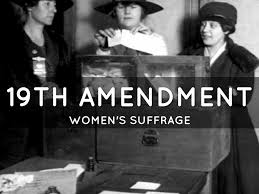
Which amendment guarantees women the right to vote?
a)
1st Amendment
b)
4th Amendment
c)
19th Amendment
d)
12th Amendment
13.
Which Southern politician upheld his pledge to uphold "segregation now, segregation tomorrow, segregation forever" by literally standing in their way at the University of Alabama?
a)
George Wallace
b)
Orval Faubus
c)
Lester Maddox
d)
Strom Thurmond
14.
What main problem does MLK address in the "I Have a Dream" speech?
a)
African Americans still do not have the rights guaranteed by the Constitution and Declaration of Independence
b)
African Americans do not have the same religious freedom as other groups
c)
African Americans have more rights than whites and are discriminating against them
d)
No one reads the speeches of Abraham Lincoln anymore
15.
This U.S. president was president during the Cuban Missile Crisis and supported the Civil Rights Movement. He was also assassinated for his support. 
a)
John F. Kennedy
b)
Robert F. Kennedy
c)
MLK
d)
FDR
16.
Birmingham's Public Safety Commissioner who was very racist and did anything he could to stop integration
a)
Bull Conner
b)
E.D. Nixon
c)
Z. Alexander Looby
d)
Robert Kennedy
17.

This established that separate public schools for black and white students was unconstitutional.

a)

Brown v Board of Education

b)

Dred Scott v Sandford

c)

Roe v Wade

d)

Plessy v Ferguson

18.

Sit-ins, freedom rides, & marches were all examples of...

a)

Attempts to expand opportunities for minorities

b)

New forms of exercise in the 60s

c)

Ways to connect the North & South US

d)

Economic growth for minorities

19.

What was the goal of "freedom rides"?

a)

Encourage the federal gov't to enforce rulings against discriminating in interstate transportation.

b)

To allow minority groups access to all forms of travel

c)

To show economic impact in discriminatory actions using transportation

d)

To connect southern and northern United States through bus routes

20.

This ended racial segregation in the armed forces

a)

Executive Order 9981 (Harry Truman)

b)

Civil Rights Act-1964

c)

Voting Rights Act

d)

Nineteenth Amendment

21.

Organized by Cesar Chavez & Dolores Huerta, this group worked for improvements for migrant workers.

a)

Safety and Health Administration

b)

United Farm Workers

c)

NAACP

d)

Latino Works Movement

22.
Organization of the Native American Civil Rights movement. Focused on recognition of their rights, temporarily seized some federal government properties.
a)
American Indian Organization (AIO)
b)
American Indian Opposition (AIO) 
c)
American Indian Movement (AIM)
d)
American Indian Management (AIM) 
23.

Which of the following best describes the Montgomery Bus Boycott?

a)

Segregation on buses became illegal after a couple of days of boycotting

b)

Segregation on buses became illegal after months of boycotting and it effectively marked the beginning of the modern civil rights movement.

c)

African-Americans blocked the streets preventing buses from operating

d)

Martin Luther King was arrested for not giving up his seat

24.
The Court Decisions in Delgado v Bastrop ISD and Hernandez v Texas held that --
a)
racially segregated schools are inherently unequal
b)
a student has no guaranteed rights while in a public school
c)
a student's right to privacy is limited under certain conditions.
d)
Mexican Americans were entitled to protection from discrimination under the 14th Amendment
25.
How did the approach of the Black Panthers differ from the methods used by Dr. Martin Luther King, Jr?
a)
Black Panthers were willing to use violence, while Dr. King used only nonviolence
b)
Black Panthers believed in nonviolence, while Dr King favored civil disobedience
c)
Black Panthers sought to use the court system, while Dr. King preferred passive resistance
d)
Black Panthers employed peaceful demonstrations, while Dr. King favored sit-ins and freedom rides
26.
What was significant about sending federal troops to protect African American students in Little Rock, Arkansas in 1957?
a)
It led to federal takeover of many Southern public schools.
b)
It strengthened control of education by state governments.
c)
It was the 1st time martial law had been declared in the US.
d)
It showed that the government would enforce court decisions on integration.
27.
Which Civil Rights leader also became the 1st African American to serve on the US Supreme Court?
a)
W.E.B. DuBois
b)
Martin Luther King Jr.
c)
Thurgood Marshall
d)
Rosa Parks
28.
In 1963, Matrin Luther King Jr., spoke his famous I Have A Dream speech. This speech expressed his desire to--
a)
unite all churches into one religion
b)
establish religious freedom for Americans
c)
replace racial segregation with an integrated society
d)
create a seperate nation for African Americans within the US
29.
The primary goal of Southern Democrats in Congress was to--
a)
end the practice of racial segregation in the South
b)
maintain the status quo in the South
c)
litigate for equal rights for all races in the South
d)
integrate the public schools throughout the South
30.
In his "Letter From a Birmingham City Jail," Dr King said, "I would agree with Saint Augustine that 'an unjust law is no law at all.'" This statement was used by Dr. King to show support for--
a)
Social Darwinism
b)
seperation of church and state
c)
Jim Crow Laws
d)
civil disobediance
31.
Amendments 15, 19, 26 deal particularly with which of the following? 
a)
Civil rights 
b)
State’s rights 
c)
Voting rights
d)
Women’s rights
32.
Which court case created the "separate-but-equal" doctrine, establishing legal segregation? 
a)
Plessy v. Ferguson
b)
Brown v. BOE (Board of Education of Topeka, Kansas)
c)
Sweatt v. Painter
d)
Regents of the University of California v. Bakke
33.
Which court case ended segregation in public schools? 
a)
Plessy v. Ferguson
b)
Brown v. BOE (Board of Education of Topeka, Kansas)
c)
Sweatt v. Painter
d)
Regents of the University of California v. Bakke
34.

What was the Little Rock Crisis?

a)

President sends troops to Little Rock to help integrate the schools

b)

The governor of Arkansas wants to integrate the Little Rock schools

c)

Freedom Riders staged protests at the local bus station

d)

Groups march for voting rights

35.

Texas case ending discrimination against poor school districts, redistributes property taxes equally across the state from richer districts to poorer districts.

a)

Mendez v Westminster

b)

Hernandez v Texas

c)

Edgewood ISD v Kirby

d)

Sweatt v Painter

36.
  • 14th, 15th, 16th amendments added to the U.S. Constitution
  • Passage of the 19th Amendment
  • Voting Rights Act of 1965
  • Passage of the 24th Amendment


These events show that the democratic process has been expanded by -

a)

non-violent protest

b)

presidential orders

c)

legislative actions

d)

court decisions

37.
Rosa Parks is most associated with
a)
March on Washington
b)
militant movements.
c)
Montgomery Bus Boycott
d)
Brown v. Board of Education
38.
Due to the sit-in protests, freedom rides, and the March on Washington it led to an expansion of political and economic opportunities for ____ citizens.
a)
minority
b)
judicial philosophy
c)
desegregation
d)
Civil Rights Act of 1964
39.
Governor Orval Faulbus of Arkansas challenged the _____ of the federal government when he refused to desegregate Little Rock High School.
a)
authority
b)
minority
c)
Employer Discrimination
d)
Conservative
40.
Which president desegregated the military in 1948?
a)
JFK
b)
LBJ
c)
Bill Clinton
d)
Harry S. Truman
41.
Who wrote The Feminine Mystique which helped launch the Women's Liberation Movement?
a)
Gloria Steinem
b)
Betty Friedan
c)
Rosa Parks
d)
Sandra Day O'Connor
42.
This bill was the most important civil rights legislation since Reconstruction.  It included prohibiting discrimination in most public accommodations and prohibiting discrimination in employment
a)
Voting Rights Act of 1965
b)
Civil Rights Act of 1964
c)
Twenty-third Amendment to the Constitution
d)
Twenty-sixth Amendment to the Constitution
43.
Who created the NAACP? 
a)
Booker T. Washington
b)
Martin Luther King Jr
c)
Malcolm X
d)
WEB DuBois
44.
What impact did Emmett Till's murder have on the Civil Rights movement?
a)
It scared blacks away for a while because they feared for their own safety
b)
Contributions to Civil Rights organizations soared and inspired new people to join the effort
c)
the vast majority of blacks responded with their own violence
d)
many blacks began to leave the U.S. for other countries
45.
What was the main tactic (or tactics) of Dr. Martin Luther King, Jr.?
a)
Civil disobedience and non-violence
b)
Civil disobedience and violence if necessary
c)
radical violence
d)
violence carried out a night wearing black robes
46.
When Arkansas's governor sent his state's National Guard to prevent the so-called "Little Rock Nine" from being enrolled, how did President Eisenhower react?
a)
He immediately sent federal marshals to reverse the situation
b)
He waited almost three weeks before sending 1,200 troops to enforce the court's order
c)
He agreed with the governor and did nothing
47.
Which element of Dr. Martin Luther King, Jr.’s “Letter from Birmingham Jail” MOST affected future civil rights movements?
a)
its call for civil disobedience against unjust laws
b)
its support for violent resistance of government authority
c)
its focus on economic equality for all minorities
d)
its criticism of judicial decisions in civil rights cases
48.
Prohibition against discrimination; exceptions. No person in the United States shall, on the basis of [gender], be excluded from participation in, be denied the benefits of, or be subjected to discrimination under any education program or activity receiving Federal financial assistance. . . . ? Which title BEST completes this citation line?
a)
Voting Rights Act of 1965
b)
Brown v. Board of Education, 1954
c)
Title IX Amendments of 1972
d)
Gideon v. Wainwright, 1963
49.
Use the excerpt below to answer the question. Section 1. The right of citizens of the United States to vote in any primary or other election for President or Vice President, for electors for President or Vice President, or for Senator or Representative in Congress, shall not be denied or abridged by the United States or any State by reason of failure to pay poll tax or other tax. —24th Amendment, U.S. Constitution Which statement BEST justifies the need for this amendment?
a)
Voter registration drives were poorly organized.
b)
Citizen participation in elections was based on education
c)
Segregated polling stations were used in federal elections.
d)
Economic status excluded some citizens from voting
50.
The writings and actions of Martin Luther King, Jr. MOST challenged
a)
charitable organizations to provide food for people in need of assistance.
b)
mainstream society to examine its moral conscience.
c)
city governments to improve living conditions for the working poor
d)
federal agencies to regulate large corporations.
51.
What was the overall goal of the court cases listed in this timeline?
Sweatt v. Painter (1950), Brown v Board of Education (1954) and Brown v Board of Education (1955)
a)
to increase funding for school teachers nationally
b)
to eliminate poll taxes in school elections
c)
to promote equality in military base schools
d)
to end the practice of segregation in public schools
52.

Who was Thurgood Marshall?

a)

First man in space

b)

First man on the moon

c)

Lawyer during Brown v. BOE case

d)

Framer of the constitution

e)

John F. Kennedy's best friend

53.

Refers to the steps taken to increase the representation of women and minorities in areas of employment, education, and business from which they have been historically excluded; developed from ideas introduced in Executive Order 10925 issued by President John F. Kennedy in 1961

a)

Title IX

b)

Affirmative Action

c)

Federal Housing Authority

d)

Great Society

54.

Which two decades in U.S. History were similarly characterized by heightened social tensions between those who held traditional values and those advocating changes?

a)

1930s and 1950s

b)

1920s and 1960s

c)

1940s and 1950s

d)

1970s and 1990s

55.

Who was chosen to lead the group that organized the Montgomery Bus Boycott? (HINT: It launched his career as a spokesman for the civil rights movement)

a)

Martin Luther King Jr.

b)

Jo-Ann Robinson

c)

E.D. Nixon

d)

Ralph Abernathy

56.
How does the 14th Amendment protect individual rights?
a)
It made slavery illegal
b)
Women could now vote in all elections
c)
It made poll taxes illegal
d)
It defined citizenship so all citizens have the same rights
57.
Which of the following responses best supports the 15th Amendment of the Constitution?
a)
A person cannot be denied the right to vote based on gender.
b)
A person cannot be denied the right to vote based on race.
c)
A person cannot be denied the right to vote based on age.
d)
No one can be denied the right to vote. 
58.

The Civil Rights movement in the United States began as a reaction to

a)

equality in public education

b)

Jim Crow Laws

c)

integration

d)

desegregation

59.
What was César Chávez’s goal for the United Farm Workers (UFW)?
a)
higher wages for migrant workers
b)
more opportunities for women to farm
c)
federal loans for future farmers
d)
safety regulations on farm equipment
60.

Cesar Chávez was a migrant farm worker who wanted to improve the lives of other migrant workers. Which of the following best completes the diagram above?

a)

Cesar Chávez married Helen Fabela and had eight children.

b)

Cesar Chávez was arrested for decreasing production on migrant farms.

c)

Grape growers in California accepted the United Farm Workers union.

d)

Migrant workers ignored Cesar Chávez and his attempts to help.
