
 Worksheets
Ch15 Earth, Moon, Sun Practice
Total questions: 30
Worksheet time: 22mins
About how many days does it take to Moon to go through a complete phase cycle?
7 days
365 days
29 days
20 days

Why do we always see the same side of the moon from Earth?
because the phases change
because it rotates and revolves at the same rate
because half of the moon always receives sunlight
The moon changes positions
The earth is tilted on its _____
line
equator
axis
core
Earth does a complete revolution every _______
10 years
12 hours
24 hours and 12 minutes
365.25 days
The Earth rotates every ___
24 hours
15 hours
365 days
month
Which of the following is the definition of axis?
an imaginary line that goes across the middle of the earth
an imaginary line that goes through the North Pole and South Pole that the Earth rotates onn
a long line around the Earth
Something used to chop down trees
It takes the earth 365 1/4 days to go around the sun. What do we do with the 1/4 day?
we ignore it
it gives us daylight savings time
it gives us leap years
Nap
The central, darker part of a shadow where light is totally blocked:
umbra
solstice
equinox
penumbra
The daily rise and fall of sea level:
tsuanami
waning phase
thermocline
tide
The lighter part of a shadow where light is partially blocked:
maria
penumbra
eclipse
umbra
The study of the moon, stars, and other objects in space.
Axis
Solstice
Astronomy
Phases
The path of an object as it revolves around another object in space.
Latitude
Orbit
Solstice
Tides
The partial or total blocking of one object by another.
Solar Eclipse
Lunar Eclipse
Eclipse
Penumbra
The blocking of sunlight to Earth that occurs when the moon is between the sun and Earth.
Lunar Eclipse
Eclipse
Tides
Solar Eclipse
A tide with the greatest difference between low and high tides.
Neap Tide
Spring Tide
Tide
Phases
A tide with the least difference between low and high tides.
Spring Tide
Tides
Garvity
Neap Tide
The distance from the Earth to the Sun is approximately ___.
93 million miles
93,000 miles
250, 000 miles
1 light year
The distance from the Earth to the Moon is approximately ___.
250, 000 miles
93 million miles
93,000 miles
1 Astronomical Unit or A.U.
The word tide refers to ___.
gravity
water
snow
Earth
the Moon
A solar eclipse only happens during a ________ moon.
New
Cresent
Gibbous
Full
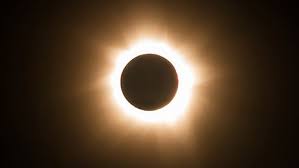
During a solar eclipse...
The Sun is blocked
The Earth is blocked
The Moon is blocked

The word solar comes from:
Spanish word for universe
Latin word for sun
English word for Brock
Vulcan word for space

If the Moon needs to be Full to have a lunar eclipse and New to have a solar eclipse, and we have a New Moon and a Full Moon once per month, why do we not have eclipses every month?
The planes of the orbits are not always aligned.
We do have eclipses every month.
The Earth is flat but the Moon is a tetradecahedron.
The Earth is a tetradecahedron but the Moon is flat.

