
 Worksheets
Settlement - Urban and Rural
Total questions: 37
Worksheet time: 20mins
Name
Class
Date
1.
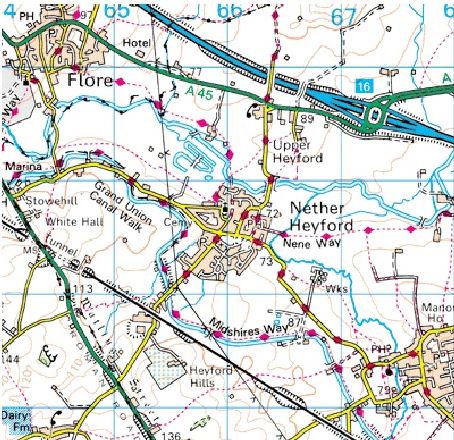
What is the shape of this settlement?
a)
Linear
b)
Nucleated
c)
Dispersed
2.
Which of the following is not a function of town ?
a)
Cultural
b)
Port
c)
Fishing
d)
SS Great Britain
3.
Which of the following is not a function of town ?
a)
Cultural
b)
Port
c)
Fishing
d)
SS Great Britain
4.
Which of these is a pull factor to Mumbai for people living in rural areas?
a)
Lack of education
b)
Promise of more pet varieties
c)
Lack of healthcare
d)
Promise of more job opportunities
5.
Why spend money restoring the urban environment?
a)
Make people want to live there
b)
Investment reduces the spiral of decline
c)
Gain a lot of money
d)
Attract tourists
6.
What is the definition of urbanisation
a)
The outward growth of urban areas
b)
An increase in the proportion of people living in urban areas compared to rural areas
c)
An increase in the amount of people living in urban areas
d)
An increase in the birth rate compared to death rate
7.
A mega-city is defined as
a)
a city with more than 10 million people
b)
a city with more than 20 million people
c)
a city that has global influence
d)
a city that receives more migrants than loses emmigrants
8.
the two ways that urban areas grow are
a)
nitrogen and phospherous
b)
natural increase and migration
c)
increasing birth rates and migration
9.
In the last few years, the % of people in the world living in urban areas has surpassed
a)
25%
b)
-25%
c)
65%
d)
50%
10.
reasons for counter-urbanization include
a)
high land prices, pollution, high crime
b)
reinvestment into inner-city areas, gentrification
c)
attractions such as the olympics and new skyscapers
11.
Which is NOT considered a megacity
a)
Hong Kong
b)
Tokyo
c)
Osaka
d)
Shanghai
12.
According to moedls, as you move away from the city center, quality of life
a)
Increaes in MEDC, Decreases in LEDC
b)
Increases in LEDC, Decreases in MEDC
c)
Does not change
13.
Which is not typically features of CBD in MEDC
a)
High density of pedestrians, PLVI
b)
concentration of banks and businesses
c)
low residential areas, areas of high shopping quality
d)
low rents, poor transport links
14.
Which are NOT factors leading to the decline of the CBD
a)
congestion reduces accessibility of CBD
b)
city centers perceived to be unsafe and dirty
c)
gov't policies that increase infrastructure spending in the CBD
15.
which is NOT a strategy to improve shanty towns
a)
legalize them
b)
improve water infrastructure
c)
relocate familes in especially high risk areas (like landslide zones)
d)
charging higher rents
16.
The urban area modifies the climate in several ways:
a)
wind speed, temperature, precipitation
b)
noise levels, waste overburden, congenstion
c)
termperature
17.
the urban heat island is most evident
a)
in rural areas
b)
in the summer time
c)
at night
18.
urban areas are often warmer than the surrounding rural areas because
a)
changes in surface to less reflective ones
b)
tall building can block wind movement
c)
increased airconditioner use and low level pollution increase trapped heat
d)
All of these
19.
Urban patterns is a concept that looks at where _____ and ______ are distributed within urban space.
a)
People & Persons
b)
Buildings & Police Stations
c)
People & Activities
d)
Activities & Sports
20.
The Central Business District (CBD) is also known as
a)
Downtown
b)
Suburb
c)
Uptown
d)
Rural Area
21.
The CBD, in general, is the easiest part of the city to reach from the rest of the region.
a)
True
b)
False
22.
Restaurants and hotels are an examples of
a)
Public & Semi-Public Services
b)
Business Services
c)
Consumer Services
23.
Which of the following are PUSH factors that encouraged some people to move away from the CBD?
a)
High Rents
b)
Crime
c)
Poverty
d)
All of the Above
24.
Which of the following are PULL factors that encouraged some people to move into suburbs?
a)
High rents
b)
Crime
c)
Larger homes for less money
d)
Poverty
25.
People are distributed randomly within urban areas
a)
True
b)
False
26.

The following is a picture of which urban land use model?
a)
sector
b)
concentric zone
c)
multiple nuclei
27.

The following is a picture of which urban land use model?
a)
sector
b)
concentric zone
c)
multiple nuclei
28.

The following is a picture of which urban land use model?
a)
sector model
b)
concentric zone
c)
multiple nuclei
29.
What is the purpose of urban models?
a)
Explains where different types of people live
b)
Explains why people live where they live
c)
Depends on the use of Census Data
d)
All of the above
30.
Outlying area or community around a city
a)
Urban
b)
Suburb
c)
Rural
d)
City
31.

Name the model
a)
The Sector Model
b)
Concentric Zone Model
c)
Multiple Nuclei Model
d)
British Urban land Use Model
32.

Name this theory
a)
Rent-bid
b)
Rent to buy
c)
Bid-Rent
d)
Land value
33.
Name the model: The concept is drawn from ecology, with the physical expansion of the city occurring by invasion and succession.
a)
The Sector Model
b)
Concentric Zone Model
c)
Multiple Nuclei Model
d)
British Urban land Use Model
34.
Name the model: Business agglomerates in the CBD, surrounding this is the zone of transition that is dominated by older housing, flats and light industry. This zone includes a large proportion of ethnic minorities. Better housing would be found further out in the suburbs. FInally, the commutor zone extended beyond the city (counterurbanisation)
a)
The Sector Model
b)
Concentric Zone Model
c)
Multiple Nuclei Model
d)
British Urban land Use Model
35.
Name the model: Cities develop around a series of centres. These can then merge through urban sprawl. Some centres will be created through planning, for example, the development of an industrial estate. A very rapid growth of a city may lead to some activities moving to the outskirts (Shopping centres) and therefore creating a new nuclei
a)
The Sector Model
b)
Concentric Zone Model
c)
The Multiple-Nuclei Model
d)
British Urban land Use Model
36.
Name the model: Based on the city of Chicago
a)
The Sector Model
b)
Concentric Zone Model
c)
Bid-rent
d)
British Urban land Use Model
37.
Name the model: Cities develop around a series of centres. These can then merge through urban sprawl. Some centres will be created through planning, for example, the development of an industrial estate. A very rapid growth of a city may lead to some activities moving to the outskirts (Shopping centres) and therefore creating a new nuclei
a)
The Sector Model
b)
Concentric Zone Model
c)
The Multiple-Nuclei Model
d)
British Urban land Use Model
100 %

