
NEW
Font size
 Worksheets
Revision Quiz (Chapter 1, 2, 3)
Total questions: 20
Worksheet time: 4hrs 36mins

What connects the processor and memory?
Buses
Cache
NIC
Control Unit

What are the two main parts of the processor?
Control Unit & Arithmetic Logic Unit
RAM & ROM
RAM & Cache
Control Unit & Cache
The address bus is:
Unidirectional
Bidirectional
Which of the following statements about RAM and ROM is true?
Volatile - loses contents when switched off
Non-volatile - doesn't lose contents when switched off
RAM is volatile, ROM is non-volatile
RAM is non-volatile, ROM is volatile
Both RAM and ROM are volatile
Both RAM and ROM are non-volatile

Which type of device is shown?
Solid state drive
Hard disk drive
Recorder
ROM
What is the purpose of using the ALU?
performing calculations on data
controlling calculations on data
controlling the speed of calculations
save memory onto hard drive
"Technique of replacing two or more similar problems or solutions with a single, more general problem or solution.” The above paragraph describes___________________.
Generalisation
Decomposition
Visualisation
Differentiation
Why do we look for patterns in problems?
It helps in identifying common solutions that can be applied to similar problems.
It becomes more difficult to solve complex problems using patterns.
The patterns would be pulled out from the problems as they are unnecessary.
The patterns help us to define and state a problem clearly.
Decomposition is a technique of breaking down a ______________ into __________________.
complex problem, easier problems
simple problem, smaller problems
complex problem, sub-problems
simple problem, complex problems
Two common approaches to decomposing a problem are
Incremental approach and Molecular approach
Incremental approach and Modular approach
Iterative approach and Modular approach
Incremental approach and Sorting approach
“Solve simple examples of the problem manually and identify tasks that are of different nature. Usually, these tasks can be separated from each other to become distinct (and sometimes unrelated) sub-problems. This usually results in sub-problems that are different
from each other.” The above paragraph describes a ___________________approach.
Modular
Iterative
Incremental
Sequential
Which of the following is NOT a component of Computational Thinking?
Abstraction
Decomposition
Disintegration
Algorithm

What does this symbol represent?
Input/Output
Start
Stop
Decision
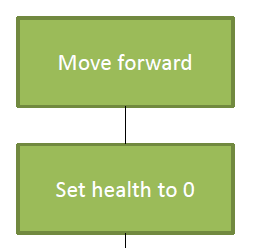
What's missing from this part of a flowchart?
An Arrow
A Line
A Square
A Diamond
How many arrows should come out of a decision symbol in a flowchart?
0
1
2
3
In a flowchart a calculation (process) is represented by
A rectangle
A rhombus
A parallelogram
A circle

Assume n1 = 6 ... n2 = 4 ... n3 = 2
What will be displayed as output?
3
4
5
6
A section in a flowchart that requires an action from a user is known as a...
decision
loop
wait
input

What type of flowchart is shown here?
selection
iteration / loop
sequence
A symbol that starts or ends a flow chart is known as a...
terminator
decision
loop
sequence

