
NEW
Font size
S
M
L
XL
 Worksheets
Earth
Total questions: 40
Worksheet time: 33mins
Name
Class
Date
1.
The outermost solid layer of the Earth is called the
a)
mantle
b)
outer core
c)
inner core
d)
crust
2.
This layer of the Earth is found between the core and the crust.
a)
mantle
b)
outer core
c)
inner core
d)
crust
3.
The layer that lies beneath the mantle and surrounds the inner core.
a)
mantle
b)
outer core
c)
inner core
d)
crust
4.

Identify the letter in the diagram. Identify letter E
a)
Lithosphere
b)
Asthenosphere
c)
Mantle
d)
Outer Core
5.
Identify the letter in the diagram. Identify letter A
a)
Lithosphere
b)
Asthenosphere
c)
Mantle
d)
Outer Core
6.
Identify the letter in the diagram. Identify letter B
a)
Crust
b)
Convection Current
c)
Inner Core
d)
Outer Core
7.

What layer has a solid inner part and a liquid outer part?
a)
Crust
b)
Mantle
c)
Core
d)
none
8.

What layer is the thinnest?
a)
Crust
b)
Mantle
c)
Core
d)
They are all the same size
9.

Which layer is the thickest?
a)
Crust
b)
Mantle
c)
Core
d)
All of them are the same size
10.
What are the three main layers of the Earth?
a)
Center, Middle, Outer
b)
Center, Mantle, Crush
c)
Core, Mantle, Crust
d)
Core, Middle, Crush
11.

True or False...You can touch only one of the Earth's layers.
a)
True
b)
False
12.

Which is the best choice to go in the center of this Venn Diagram?
a)
Solid
b)
Liquid
c)
Densest
d)
Thicker than the mantle
13.
Which type of rock results from melting and cooling of magma?
a)
Igneous
b)
Metamorphic
c)
Sedimentary
d)
Extrusive
14.
Which type of rock forms from extreme heat and pressure?
a)
Igneous
b)
Sedimentary
c)
Organic
d)
Metamorphic
15.
A metamorphic rock changes into an igneous rock by what two processes?
a)
Melting and cooling
b)
Extreme heat and pressure
c)
Compaction and cementation
d)
Weathering and erosion
16.
Wind, water, and ice breaking down rock is called
a)
Erosion
b)
Deposition
c)
Compaction
d)
Weathering
17.
The process in which dissolved minerals crystallize and glue sediment together.
a)
compaction
b)
deposition
c)
organic rock
d)
cementation
18.

When sediments are pressed together tightly, this is called ____________.
a)
Compaction
b)
Cementation
c)
Weathering
d)
Erosion
19.
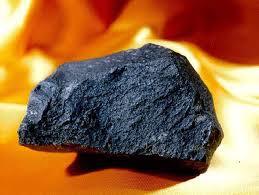
This rock was found near the mouth of a volcano. What type of rock is this?
a)
Sedimentary
b)
Igneous
c)
Metamorphic
20.
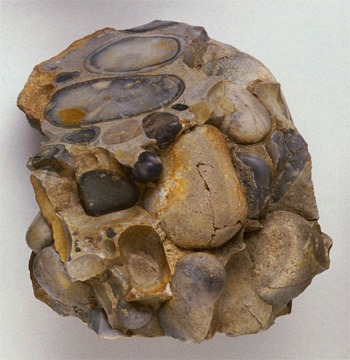
This rock was formed by smaller pieces of rock that settled at the bottom of a lake millions of years ago. What type of rock is this?
a)
Sedimentary
b)
Igneous
c)
Metamorphic
21.

Each rock type can follow only one pathway of the rock cycle.
a)
True
b)
False
22.
Which of the following are nonrenewable resources?
a)
Plants and animals
b)
Wind and water
c)
Sunlight and water
d)
Coal and petroleum
23.
A rock that contains fossil seashells was most likely formed as a result of?
a)
Volcanic activity
b)
Sedimentation
c)
Heat and pressure
d)
. Magma and cooling
24.
Sedimentary rock is formed when grains of sediment undergo
a)
metamorphism
b)
compaction and cementation
c)
melting
d)
solidification
25.
¿Qué debe pasar con los sedimentos para que se conviertan en roca?
a)
meteorización, erosión y deposición
b)
compactación y cementación
c)
fusión, enfriamiento y solidificación
d)
calor y presión
26.
Cuando las rocas sufren erosión, intemperie, compactación y cementación, se convierte en:
a)
magma
b)
roca ignea
c)
roca sedimentaria
d)
conos volcanicos
27.

What type of rock is formed due to pressure and heat within the earth?
a)
igneous
b)
sedimentary
c)
metamorphic
28.

What type of rock is formed when magma from a volcano cools and hardens on the earth's surface?
a)
sedimentary
b)
metamorphic
c)
igneous
d)
lava
29.

Rocks are classified by how:
a)
they look
b)
are formed
c)
they feel
30.

What type of rock are fossils often found in?
a)
igneous
b)
metamorphic
c)
sedimentary
d)
magma
31.

What is the molten rock that rises and explodes from within a volcano?
a)
igneous rocks
b)
sediments
c)
magma
d)
steam
32.

The ___________ _______________ is the process of one type of rock transforming into a different type of rock.
a)
Weathering
b)
Erosion
c)
The Rock Cycle
33.
Which layer of Earth is the thinnest?
a)
crust
b)
outer core
c)
mantle
d)
inner core
34.
Which layer of Earth do scientists believe is most likely made of solid metals?
a)
crust
b)
outer core
c)
inner core
d)
mantle
35.
The lithosphere combines what two layers?
a)
Lower Mantle & Crust
b)
Inner Core & Outer Core
c)
Mantel & Athenosphere
d)
Crust & Upper Mantle
36.
What happens to temperature as we move from the crust to the inner core?
a)
Decreases
b)
Increases
37.
What layer of the Earth do convection currents occur in?
a)
crust
b)
outer core
c)
mantle
d)
inner core
38.

Identify Layer D
a)
Mesosphere
b)
Asthenosphere
c)
Lithosphere
d)
Outer Core
39.
The hottest layer
a)
crust
b)
inner core
c)
mantle
d)
outer core
40.
Is Mr. Hernandez cool?
a)
Yes
b)
Maybe
Reset

